Bill of Rights | American Government
TL;DR
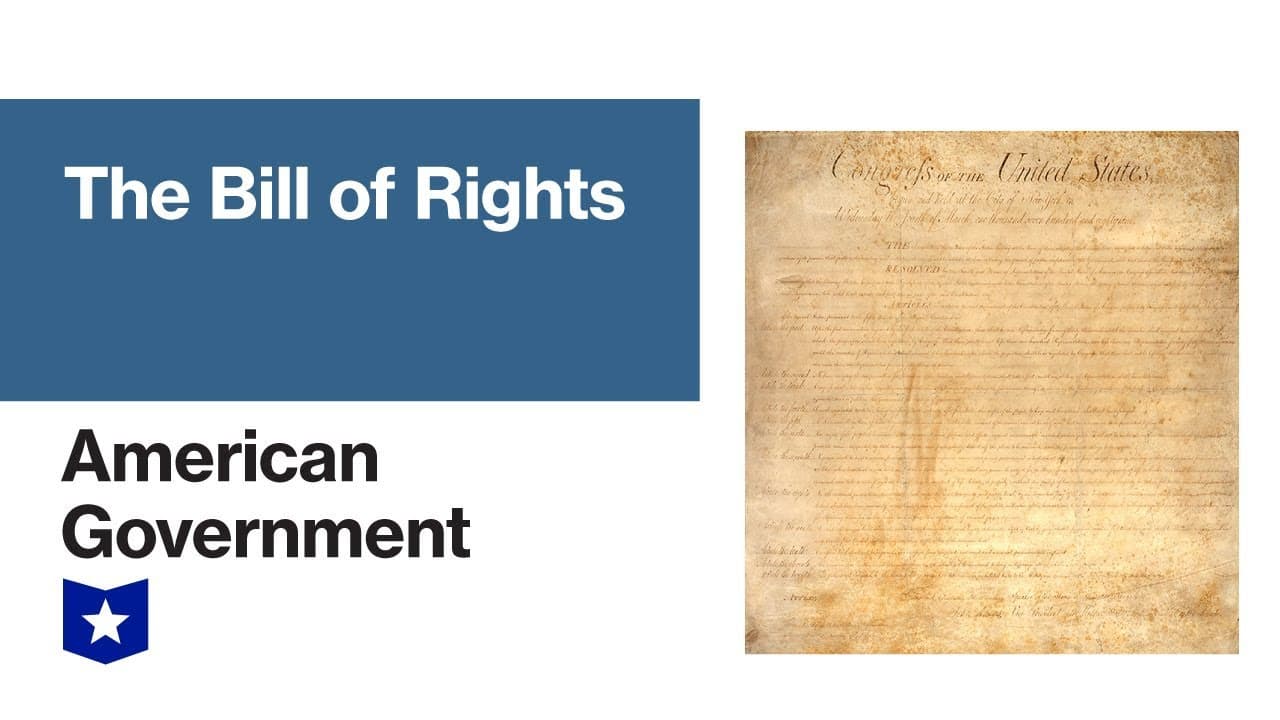
The Bill of Rights, added to the US Constitution in 1789, guarantees crucial individual freedoms from government interference.
Transcript
although the rights guaranteed by the bill of rights are so deeply enshrined in American values there was no such guarantee of individual liberties contained in the Constitution drafted by the framers in Philadelphia in 1787 that caused fear among some politicians and ratification of the Constitution injured in several states on the promise of addi... Read More
Key Insights
- 🪜 The Bill of Rights was added to the US Constitution in 1789, guaranteeing essential individual freedoms.
- 📜 Historical documents like the Magna Carta and Virginia's Declaration of Rights influenced the creation of the Bill of Rights.
- 🥺 The ratification debate highlighted the need for specific protections of individual liberties, leading to the inclusion of the Bill of Rights.
- 🫵 Federalists and Anti-Federalists had differing views on the Constitution's ratification and the need for a Bill of Rights.
- 🖐️ James Madison's change of view and influence played a crucial role in securing the passage of the Bill of Rights in Congress.
- 😑 The Bill of Rights includes guarantees such as freedom of speech, press, religion, and protections against unreasonable searches and cruel punishment.
- ❓ The interpretation of the Bill of Rights has been debated for centuries, addressing the breadth and restrictions of individual freedoms.
Install to Summarize YouTube Videos and Get Transcripts
Explore YouTube Video Summarizer or Get YouTube Transcript Extractor
Questions & Answers
Q: What historical documents influenced the creation of the Bill of Rights?
The Magna Carta and Virginia's Declaration of Rights set the foundation for the principles enshrined in the Bill of Rights, protecting essential liberties.
Q: How did the debate over ratification impact the addition of the Bill of Rights?
The debate highlighted concerns about the lack of specific protections for individual liberties, leading to the inclusion of the Bill of Rights in the Constitution.
Q: Who were the Federalists and Anti-Federalists in the ratification process?
Federalists supported a strong central government, while Anti-Federalists opposed the Constitution's ratification due to concerns about centralized power and lack of individual rights protections.
Q: How did James Madison's influence contribute to the passage of the Bill of Rights?
Madison initially believed a Bill of Rights was unnecessary but later championed it, securing ratification in key states and influencing its passage in Congress.
Summary & Key Takeaways
-
The Bill of Rights, added to the US Constitution in 1789, guarantees fundamental individual liberties.
-
The historical roots of the Bill of Rights can be traced back to England's Magna Carta and Virginia's Declaration of Rights.
-
The debate over ratification of the Constitution highlighted the necessity of adding a Bill of Rights to secure individual freedoms.
Read in Other Languages (beta)
Share This Summary 📚
Summarize YouTube Videos and Get Video Transcripts with 1-Click
Try YouTube Summary with ChatGPT & Claude or YouTube Transcript Generator
Explore More Summaries from Course Hero 📚




Summarize YouTube Videos and Get Video Transcripts with 1-Click
Try YouTube Summary with ChatGPT & Claude or YouTube Transcript Generator