Why the Wingdings font exists
TL;DR
Wingdings is a symbolic font with historical roots in printing.
Transcript
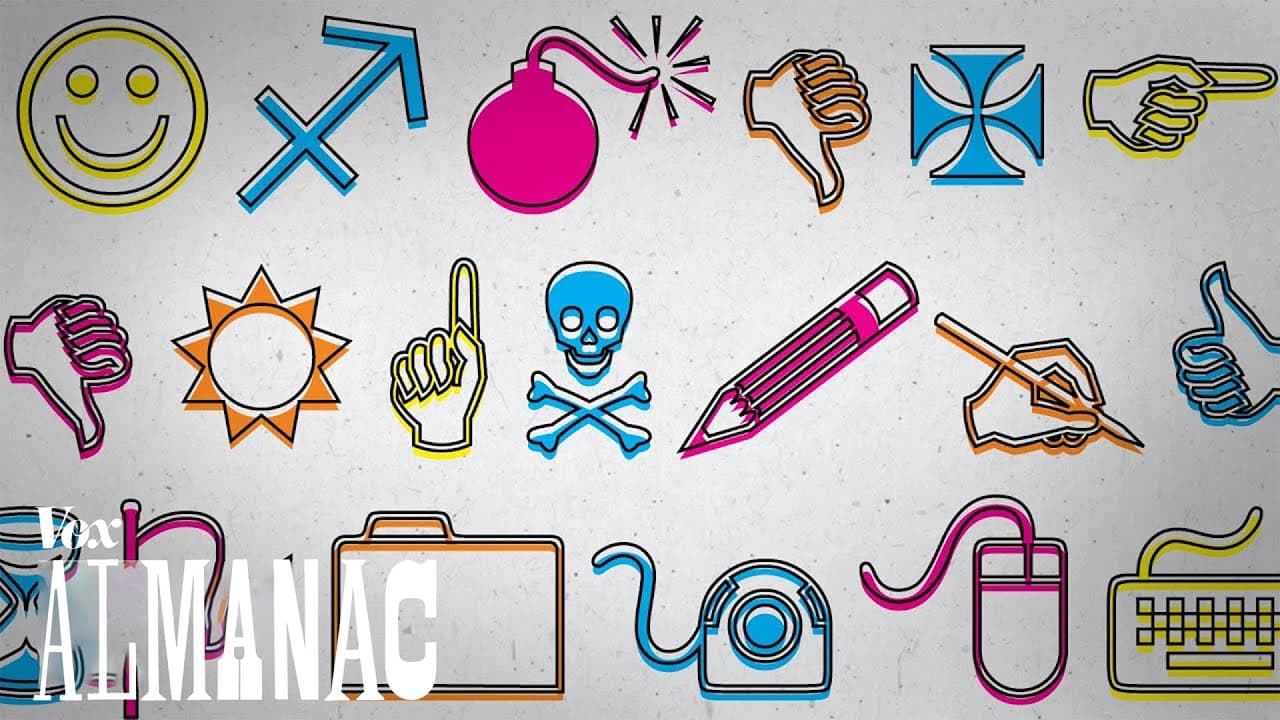
Celtic cross, finger pointing, Star of David does the Wingdings font exist? How many people are sending crucial interoffice memos that chronicle the saga of a mailbox? It turns out that Wingdings has a purpose — and a history — that ties back to the very beginning of printing. Printing wasn’t always typing. It involved manually setting every letter... Read More
Key Insights
- Wingdings font is composed entirely of symbols, designed to serve as a unique communication tool resembling emojis, but with greater utility in the pre-internet era.
- The origins of Wingdings trace back to dingbats, ornamental pieces used by printers to efficiently decorate text without manually setting each letter and word.
- Hermann Zapf, a renowned typographer, created Zapf Dingbats in the late 70s, bridging traditional and digital typography, and inspiring the creation of Wingdings.
- Wingdings was designed by Charles Bigelow and Kris Holmes, inspired by Zapf's work, and was later acquired by Microsoft, combining elements of Windows and Dingbats.
- Despite its utility, Wingdings faced controversy in 1992 when typing 'NYC' in Wingdings appeared to spell an anti-semitic message, leading to conspiracy theories.
- The font was never meant for typing words; it was intended to save time by using pictures, similar to how emojis are used today.
- Charles Bigelow, one of the creators, favored fleurons in Wingdings, inspired by flowers from his garden, showcasing the personal touch in its design.
- Wingdings remains relevant as a precursor to emojis, highlighting the evolution of visual communication in digital media.
Install to Summarize YouTube Videos and Get Transcripts
Explore YouTube Video Summarizer or Get YouTube Transcript Extractor
Questions & Answers
Q: What is the historical origin of the Wingdings font?
Wingdings originated from dingbats, ornamental pieces used in printing to efficiently decorate text. These dingbats saved time and effort in the manual printing process, and their concept was adapted into digital typography by Hermann Zapf, leading to the creation of Wingdings by Charles Bigelow and Kris Holmes.
Q: Why did Wingdings face controversy in 1992?
In 1992, typing 'NYC' in Wingdings appeared to spell an anti-semitic message, causing public outcry and conspiracy theories. This controversy arose because people misunderstood the purpose of Wingdings, which was not intended for typing coherent text but for quick visual communication through symbols.
Q: How did Hermann Zapf influence the creation of Wingdings?
Hermann Zapf, a renowned typographer, created Zapf Dingbats in the late 70s, bridging traditional and digital typography. His work inspired Charles Bigelow and Kris Holmes to design Wingdings, a digital dingbat font. Zapf's embrace of change and history was pivotal in the development of modern symbolic fonts.
Q: What was the intended purpose of Wingdings?
Wingdings was intended to serve as a unique tool for quick communication using symbols, akin to modern-day emojis. It was not designed for typing sentences but to provide a visual shorthand that could save time and effort in an era when creating pictures was challenging.
Q: How did Microsoft come to own Wingdings?
Microsoft acquired the rights to Wingdings from its creators, Charles Bigelow and Kris Holmes. The font combined elements of Windows, Dingbats, and the festive feel of a 'wingding,' aligning with Microsoft's vision of enhancing digital communication through innovative typography.
Q: What personal elements influenced the design of Wingdings?
Charles Bigelow, one of the creators of Wingdings, favored fleurons in the font, inspired by real flowers growing in his and Kris Holmes's garden. This personal touch reflects the creators' artistic influences and their connection to the natural world in designing the symbolic font.
Q: How does Wingdings relate to modern emojis?
Wingdings serves as a precursor to modern emojis, designed to communicate quickly through symbols. While emojis are widely used in digital communication today, Wingdings provided a similar utility in the pre-internet era, highlighting the evolution of visual shorthand in digital media.
Q: What challenges did printers face before the invention of dingbats?
Before dingbats, printers had to manually set every letter, word, and line on each page, making the printing process tedious and time-consuming. Creating aesthetically pleasing text required even more effort, prompting the invention of dingbats to efficiently decorate text and save time in the printing process.
Summary & Key Takeaways
-
Wingdings is a symbolic font that originated from dingbats, ornamental pieces used in printing to save time and beautify text. Created by Charles Bigelow and Kris Holmes, it was inspired by Hermann Zapf's work and acquired by Microsoft, combining elements of Windows and Dingbats.
-
Despite its utility, Wingdings faced controversy in 1992 when typing 'NYC' appeared to spell an anti-semitic message. However, its purpose was never to type words but to facilitate quick communication through symbols, similar to modern-day emojis.
-
Wingdings continues to endure as a unique tool for visual communication, with its design inspired by personal elements like the fleurons favored by its creators. It highlights the evolution of typography from traditional printing to digital media.
Read in Other Languages (beta)
Share This Summary 📚
Summarize YouTube Videos and Get Video Transcripts with 1-Click
Try YouTube Summary with ChatGPT & Claude or YouTube Transcript Generator
Explore More Summaries from Vox 📚

Summarize YouTube Videos and Get Video Transcripts with 1-Click
Try YouTube Summary with ChatGPT & Claude or YouTube Transcript Generator