What Is Five Hole Paper Tape Technology?
TL;DR
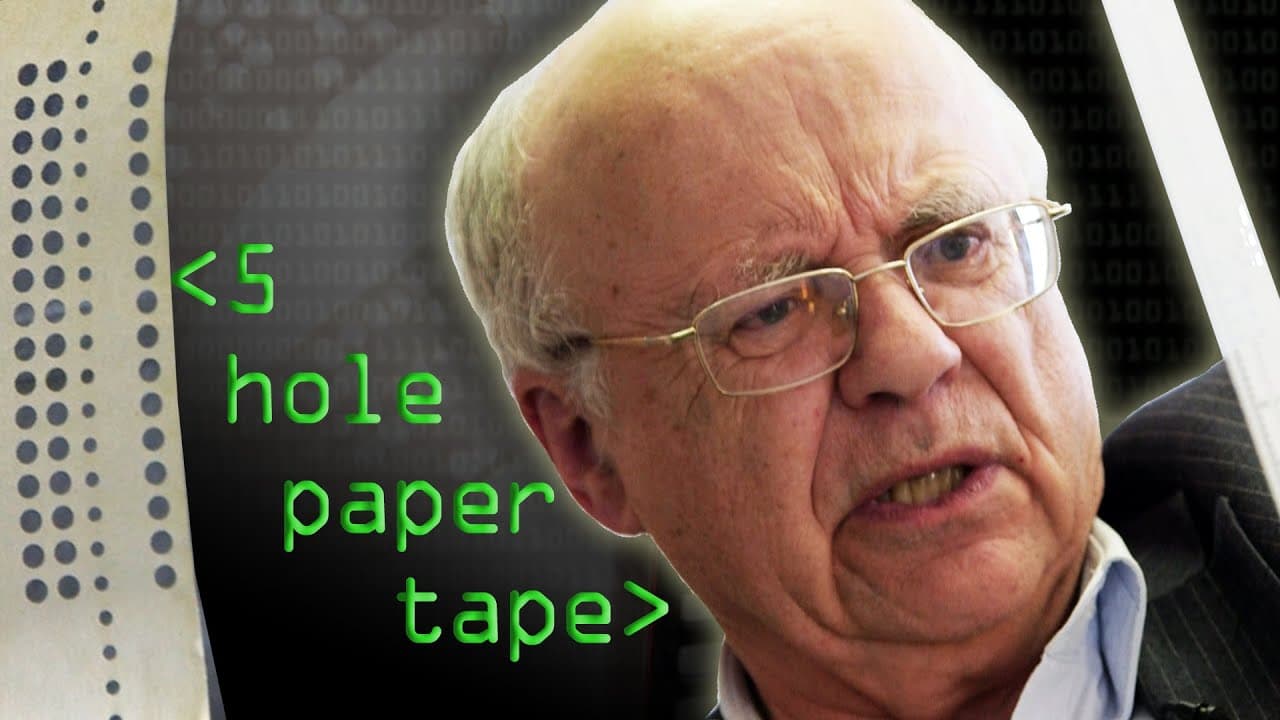
Five hole paper tape technology is a pioneering method of data input for early computers, originating from telegraph systems. It employs a fixed 5-bit code, allowing for the representation of characters through patterns of punched holes, and incorporates modes for letters and figures to manage different types of data efficiently.
Transcript
we've done punch cards already but we've not really talked about tape input solutions for computers I think the thing to make very clear to people of course is that this really goes back a long way end of xix beginning of the 20th century because it can't come out a computer industry it came out of the Telegraph industry there they were you know se... Read More
Key Insights
- 🫦 Tape input solutions for computers originated from the Telegraph industry using a fixed length 5-bit code.
- 🫦 The 5-bit code was initially invented by Bordeaux and later adapted by Murray.
- 📳 Different modes were used to accommodate different characters.
- ❓ Tape reading could be done mechanically or photoelectrically.
- ❓ Accuracy in tape punching and reading was essential.
- 👻 Tape copying allowed for replication of the original tape.
- 💌 The adoption of 7 and 8-bit ASCII codes eliminated the need for letter shift and figure shift.
Install to Summarize YouTube Videos and Get Transcripts
Explore YouTube Video Summarizer or Get YouTube Transcript Extractor
Questions & Answers
Q: Where did tape input solutions for computers originate from?
Tape input solutions originate from the Telegraph industry, as a means of sending telegraph signals using a fixed length 5-bit code.
Q: Who invented the 5-bit code used in tape input solutions?
The 5-bit code was invented by a Frenchman named Bordeaux and later adapted by a telegraph company employee named Murray.
Q: How were different characters accommodated in the tape input solutions?
Different modes, such as letter shift and figure shift, were used to indicate whether the characters represented alphabetic characters, numbers, or punctuation.
Q: What were the challenges with tape punching and reading?
Tape punching required accuracy, as incorrectly punched holes could lead to erroneous characters. Tape reading could be done mechanically, using sensors that pushed through the holes, or photoelectrically, using photoelectric cells.
Summary & Key Takeaways
-
Tape input solutions for computers came from the Telegraph industry, utilizing a fixed length 5-bit code.
-
The code was invented by a Frenchman called Bordeaux and adapted by a telegraph company employee named Murray.
-
Different modes, such as letter shift and figure shift, were used to accommodate alphabetic characters, numbers, and punctuation.
Read in Other Languages (beta)
Share This Summary 📚
Summarize YouTube Videos and Get Video Transcripts with 1-Click
Try YouTube Summary with ChatGPT & Claude or YouTube Transcript Generator
Explore More Summaries from Computerphile 📚





Summarize YouTube Videos and Get Video Transcripts with 1-Click
Try YouTube Summary with ChatGPT & Claude or YouTube Transcript Generator