Is the StarFive Vision 5 RISC-V Board Worth It?
TL;DR
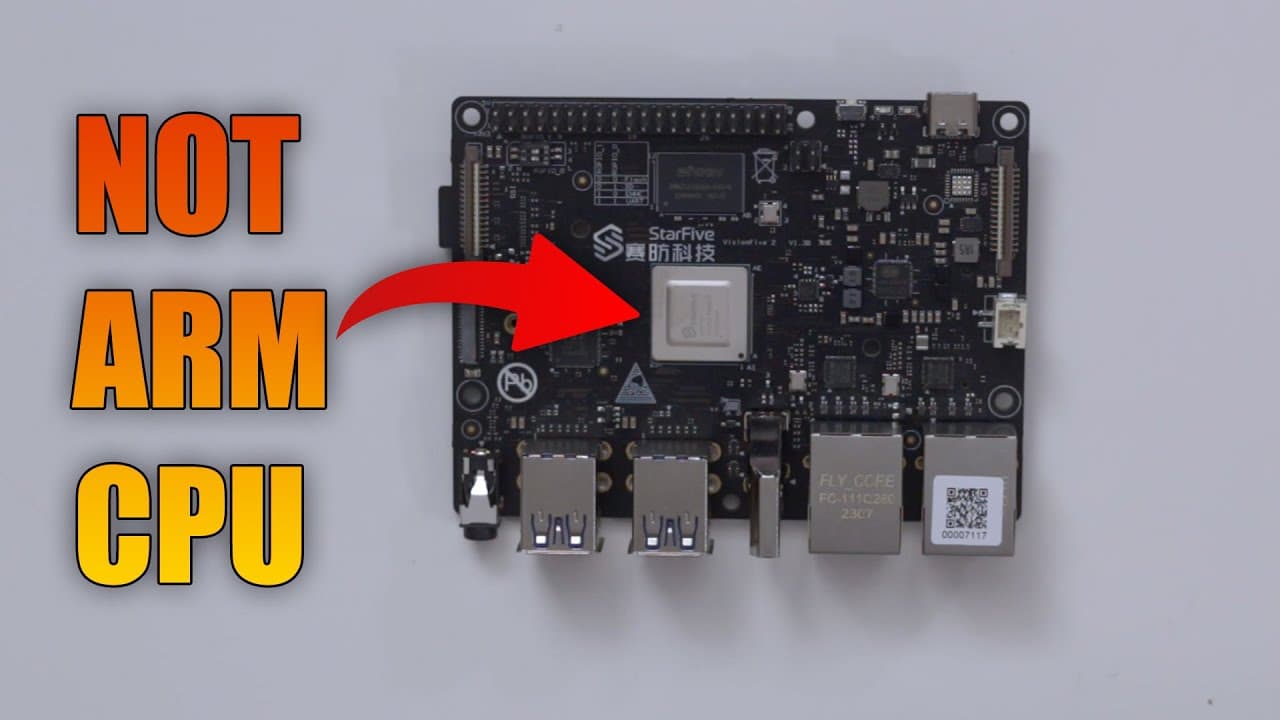
The StarFive Vision 5 board, featuring a RISC-V CPU, is not yet competitive with ARM processors due to performance limitations and software instability. It runs Linux, has various I/O options, but struggles with video playback and frequent crashes while using the experimental Debian OS. While it shows promise for development, further improvements in software are essential before it can be recommended for broader use.
Transcript
hey guys what's going on it's Don here from Nova Spirit Tech and welcome back to the channel and today we're going to be checking out the vision 52 board from Star five with the risk 5 CPU so let's get started now I do want to thank elro for sending this over to me today for review I've worked with them plenty of times in the past with other produc... Read More
Key Insights
- 🉐 RISC-V architecture is gaining traction in the tech community, yet it is still in the early stages of development and optimization.
- 🎮 The Vision 5 has a variety of input/output options, including USB Type-C and multiple video output capabilities, making it versatile for different applications.
- 💨 Benchmarks show it is not as fast as Raspberry Pi 4, which underscores the performance gap between emerging and established technologies.
- 🎮 Video playback is limited, with significant issues observed in both Chromium and Firefox browsers, highlighting the need for further software optimization.
- ✊ Power efficiency remains a concern, as power consumption peaks significantly under load conditions, unlike many competing boards.
- 😀 Debian running on the board is still experimental, indicating that users may face unpredictable crashes and bugs that detract from the overall experience.
- 🤩 The growing community around RISC-V suggests future improvements, but as of now, compatibility and software stability are key obstacles.
Install to Summarize YouTube Videos and Get Transcripts
Explore YouTube Video Summarizer or Get YouTube Transcript Extractor
Questions & Answers
Q: What is the primary processor on the Vision 5 board?
The Vision 5 board is powered by the RISC-V JH 7110 CPU, which is a quad-core processor capable of achieving speeds up to 1.5 GHz. This architecture is notable for its open-source nature, allowing for a variety of experimental projects. However, its performance is still less robust compared to some established processors from the ARM family.
Q: How does the power consumption of the Vision 5 board compare to other boards?
The Vision 5 board exhibits higher power consumption, notably reaching around 6 amps under full load, while idling consumes about 3 amps at 4 watts. This indicates a relatively hungry power demand, which users should account for, especially when integrating the board into more extensive projects where power efficiency may be crucial.
Q: What operating system is currently running on the Vision 5 board, and how does it perform?
The Vision 5 currently runs an experimental version of Debian. Users have reported performance issues, including freezing and program crashes, which may hamper the reliability for use in production environments. Benchmarks show mixed results, with the board struggling in graphical performance and overall stability, leading to a less than ideal user experience.
Q: Are there plans for more operating systems to be compatible with the Vision 5 board?
While the current mainstay operating system is Debian, there are indications that Android could be adapted for the RISC-V architecture in the future. This could potentially enhance usability and application variety. However, until more stable versions of operating systems are available, the board will likely remain a niche product primarily for developers and enthusiasts.
Summary & Key Takeaways
-
The Vision 5 board features a RISC-V CPU and is capable of running Linux, offering a nearly complete computer experience for users and developers interested in open-source hardware.
-
While the Vision 5 board includes various features and connectivity options, it displays performance limitations, particularly with video playback and benchmark comparisons to existing Raspberry Pi models.
-
The software experience remains unstable, as the experimental Debian operating system causes frequent freezes, indicating that the RISC-V architecture has further development needs before it can rival established ARM processors.
Read in Other Languages (beta)
Share This Summary 📚
Summarize YouTube Videos and Get Video Transcripts with 1-Click
Try YouTube Summary with ChatGPT & Claude or YouTube Transcript Generator
Explore More Summaries from Novaspirit Tech 📚

Summarize YouTube Videos and Get Video Transcripts with 1-Click
Try YouTube Summary with ChatGPT & Claude or YouTube Transcript Generator