How is China Spreading Authoritarianism?
TL;DR
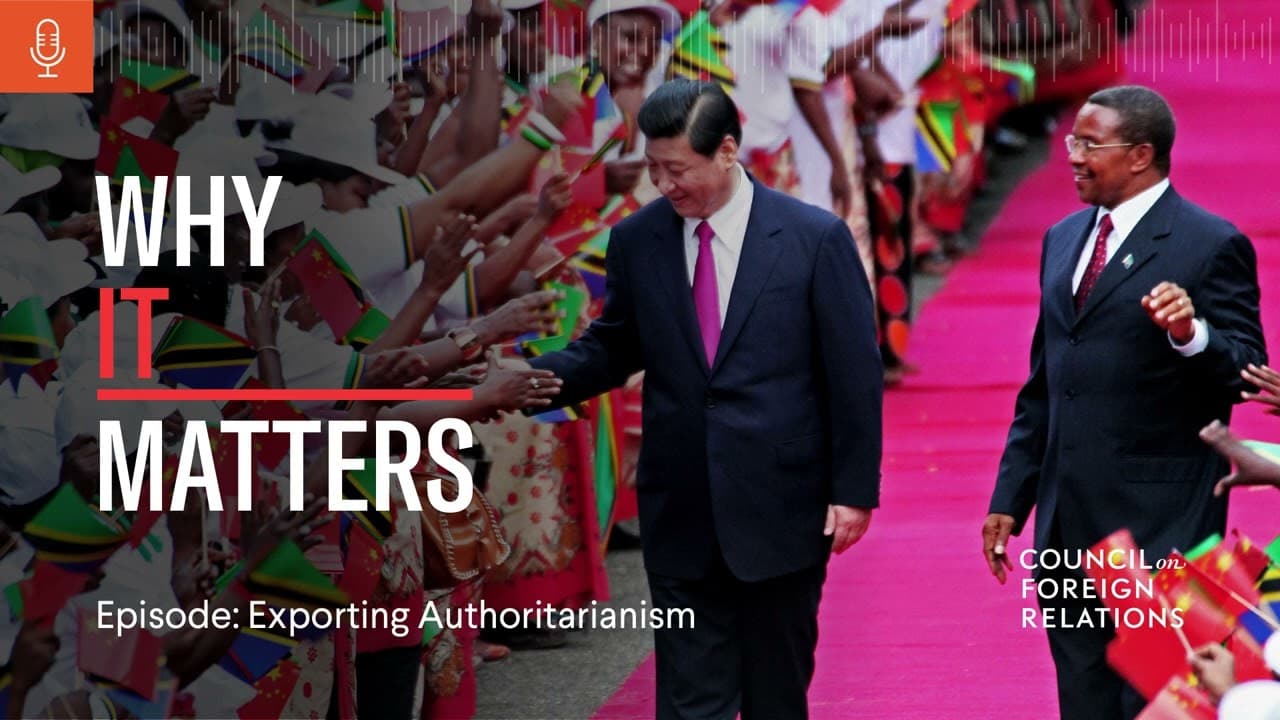
China's global strategy involves exporting authoritarianism through infrastructure projects and technology.
Transcript
SIERRA: Hey, everyone. So, even though Why It Matters is moving onto other topics, there's still a lot of questions about COVID-19, and a great place to find information is a new site from the Council called ThinkGlobal Health. It features some incredible reporting and they're doing a ton of fascinating work on the pandemic. There's a lot of ... Read More
Key Insights
- China's Belt and Road Initiative is a significant global infrastructure project aimed at expanding China's influence by funding projects worldwide and offering loans to developing countries.
- Critics argue that China is exporting its authoritarian model, eroding democratic norms, and using its economic power to influence international institutions and norms.
- Xi Jinping's leadership is characterized by a push for China's rejuvenation and a more central role on the global stage, with ambitions to reform global governance systems.
- China's surveillance technology, including safe city initiatives, is attractive to authoritarian regimes for its potential to monitor and control citizens, raising concerns about human rights abuses.
- China's foreign policy has evolved significantly since 2008, with a focus on expanding its economic and political influence globally, often through strategic investments and partnerships.
- The Belt and Road Initiative, while extensive, involves less investment than perceived, with China primarily providing loans that benefit Chinese companies and labor.
- China's efforts to export its governance model include training foreign officials and providing technology that supports authoritarian practices, raising concerns about global democratic erosion.
- China's influence extends to international organizations, where it seeks to reshape norms on human rights and governance to align with its values, often leveraging economic ties to gain support.
Install to Summarize YouTube Videos and Get Transcripts
Explore YouTube Video Summarizer or Get YouTube Transcript Extractor
Questions & Answers
Q: What is the Belt and Road Initiative?
The Belt and Road Initiative is a global infrastructure project launched by China to expand its influence by funding and building infrastructure projects worldwide. It involves offering loans to developing countries, which often use Chinese labor and materials, benefiting China's economy and extending its political reach.
Q: How does China use surveillance technology to influence other countries?
China exports surveillance technology, such as safe city initiatives, to authoritarian regimes, providing tools to monitor and control citizens. This technology is attractive for its potential to enhance security and reduce crime, but it also raises concerns about human rights abuses and the erosion of privacy and free speech.
Q: What are the criticisms of China's global influence strategy?
Critics argue that China is exporting its authoritarian model through initiatives like the Belt and Road, eroding democratic norms, and using its economic power to influence international institutions. China's efforts to reshape global governance and norms, especially in human rights, are seen as undermining democratic values.
Q: How has China's foreign policy evolved since 2008?
Since 2008, China's foreign policy has focused on expanding its economic and political influence globally. This shift was prompted by China's rising status, marked by events like hosting the Olympics and the global financial crisis. Under Xi Jinping, China's strategy emphasizes rejuvenation and a central role on the global stage.
Q: What role does Xi Jinping play in China's global strategy?
Xi Jinping's leadership is characterized by a focus on China's rejuvenation and expanding its global influence. He aims to reform global governance systems and increase China's centrality on the global stage. Xi's approach includes exporting China's governance model and reshaping international norms to align with Chinese values.
Q: How does China leverage its economic power to influence international norms?
China uses its economic power to influence international norms by leveraging its market size and economic ties. It seeks to reshape norms on human rights and governance in international organizations and uses strategic investments and partnerships to gain support for its positions, often aligning other countries with its values.
Q: What are the potential risks of China's global influence strategy?
China's global influence strategy risks eroding democratic norms and human rights, as it exports its authoritarian model and reshapes international governance. The use of surveillance technology raises privacy concerns, and China's economic leverage can coerce countries into supporting its positions, challenging global democratic values.
Q: How does China's strategy impact democratic and authoritarian countries differently?
China's strategy impacts authoritarian countries by providing tools and support for controlling citizens, appealing to regimes with similar governance models. In democratic countries, China's influence can lead to concessions on free speech and human rights, as economic ties and market access pressures them to align with Chinese norms.
Summary & Key Takeaways
-
China's Belt and Road Initiative is a massive infrastructure project aimed at expanding China's global influence, with critics arguing it exports authoritarianism. Xi Jinping's leadership emphasizes China's rejuvenation and centrality on the global stage. Surveillance technology is a key tool in China's strategy, appealing to authoritarian regimes.
-
China's foreign policy has evolved since 2008, focusing on expanding economic and political influence through strategic investments. The Belt and Road Initiative involves less investment than perceived, primarily offering loans that benefit Chinese companies. China also seeks to reshape international norms to align with its values.
-
China's influence extends to international organizations, where it seeks to reshape norms on human rights and governance. The debate centers on whether China's actions are defensive or an offensive strategy to change global norms. China's tactics include economic leverage and training foreign officials to support authoritarian practices.
Read in Other Languages (beta)
Share This Summary 📚
Summarize YouTube Videos and Get Video Transcripts with 1-Click
Try YouTube Summary with ChatGPT & Claude or YouTube Transcript Generator
Explore More Summaries from Council on Foreign Relations 📚

Summarize YouTube Videos and Get Video Transcripts with 1-Click
Try YouTube Summary with ChatGPT & Claude or YouTube Transcript Generator