What Is Noh and Kyogen Theater?
TL;DR
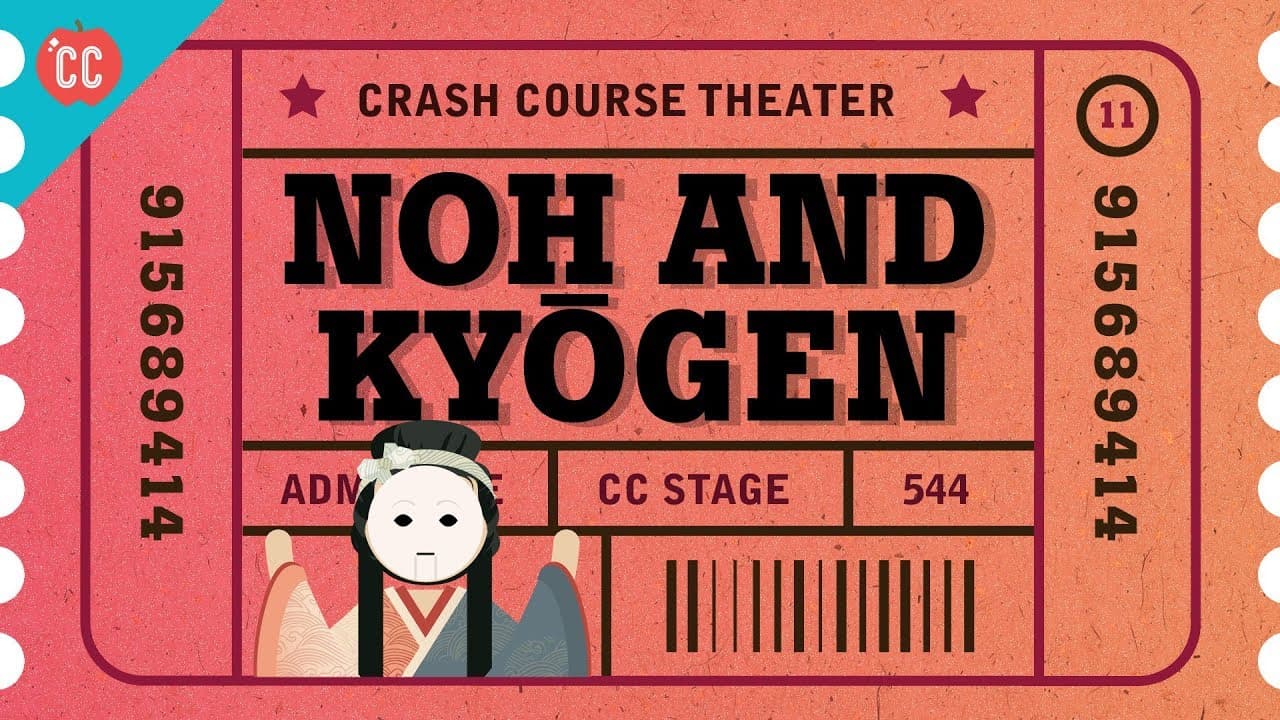
Noh is a traditional form of Japanese theater that emerged in the 14th century, known for its philosophical themes and slow pacing. It features masked actors and a chorus, with performances often lasting several hours. Kyogen, its comedic counterpart, provides lighthearted interludes. Both forms are still performed today, preserving cultural heritage.
Transcript
Hey there I'm Mike Rugnetta, this is crash course theater and today we're exeunt in late medieval Europe and headed to late medieval Japan introducing one of the world's most distinct and Lasting theatrical styles, Noh. What's that York? No. It's no it's called Noh. Yes Noh. No, Noh is the name no, spelled n o h The H is silent, handle it dude. Any... Read More
Key Insights
- Noh is a classical Japanese theater form that originated in the 14th century.
- It combines elements of dance, drama, music, and poetry.
- Noh plays are characterized by their philosophical themes and slow, deliberate pacing.
- The main character in a Noh play, called the Shite, wears a mask.
- Kyogen are comedic interludes performed between Noh plays to provide contrast.
- Noh performances can last up to eight hours, featuring multiple plays.
- Noh theater is heavily influenced by Shinto and Buddhist philosophies.
- Despite its ancient origins, Noh is still performed today as a living art form.
Install to Summarize YouTube Videos and Get Transcripts
Explore YouTube Video Summarizer or Get YouTube Transcript Extractor
Questions & Answers
Q: What is Noh theater?
Noh theater is a traditional Japanese performing art that combines elements of drama, music, and dance. Originating in the 14th century, it is known for its slow pacing, philosophical themes, and use of masks. Noh plays often feature a chorus and an orchestra, with performances lasting several hours.
Q: What is the role of Kyogen in Noh performances?
Kyogen serves as comedic interludes between Noh plays, offering a lighter, humorous contrast to the more serious and philosophical Noh performances. These short scenes often parody Noh plays or depict everyday life, providing audiences with relief during the lengthy Noh performances.
Q: How did Noh theater originate?
Noh theater originated in Japan during the 14th century, evolving from earlier forms of performance such as Dengaku and Sarugaku. It was influenced by Shinto sacred dances and Buddhist rituals, with Zeami Motokiyo playing a significant role in its development by writing many of the canonical plays and formalizing its style.
Q: What are the characteristics of a Noh play?
Noh plays are characterized by their philosophical themes, slow pacing, and minimalistic staging. They often involve supernatural elements and feature a main character, the Shite, who wears a mask. The plays are supported by a chorus and an orchestra, and they emphasize mood and atmosphere over action.
Q: What is the significance of masks in Noh theater?
In Noh theater, masks are worn by the main character, the Shite, to symbolize different roles such as gods, demons, men, women, or the elderly. The masks help convey the character's emotions and identity, adding depth to the performance by allowing the actor to embody various personas.
Q: How is Noh theater performed today?
Noh theater continues to be performed in Japan by traditional troupes who have inherited techniques passed down through generations. While it faced challenges in the late 19th and early 20th centuries, Noh is now regarded as an essential part of Japanese cultural heritage, with performances held in theaters and cultural festivals.
Q: What are the main types of Noh plays?
There are five main types of Noh plays: Kami Mono, which involve sacred stories; Shura Mono, about warriors; Katsura Mono, or wig plays about women; Gendai Mono, featuring naturalistic stories; and Kichiku Mono, which involve demons. Each type explores different themes and characters, offering a diverse range of narratives.
Q: What is the role of the chorus in Noh theater?
The chorus in Noh theater, consisting of six to ten people, plays a crucial role by narrating the story, describing the characters' actions and emotions, and sometimes taking over the lines of the Shite when they are engaged in dance. This adds a layer of depth and richness to the performance, enhancing the overall experience.
Summary & Key Takeaways
-
Noh theater, originating in 14th century Japan, is a unique blend of dance, drama, and music, characterized by its philosophical themes and deliberate pacing. The main character, or Shite, wears a mask, and performances often feature a chorus and orchestra. Noh plays are typically followed by Kyogen, comedic interludes that provide a lighter contrast.
-
Noh's roots can be traced back to Shinto sacred dances and Buddhist rituals, evolving through influences from Dengaku and Sarugaku. The art form was perfected by Zeami Motokiyo, who wrote many of the plays still performed today. Noh's emphasis on mood over action distinguishes it from other theatrical traditions.
-
While Noh plays are primarily philosophical, Kyogen offers comedic relief with parodies and everyday life scenes. Noh's minimalist stage design features symbolic elements like a pine tree backdrop and a bridge for character entrances. Despite challenges, Noh remains an integral part of Japanese cultural heritage, performed by traditional troupes.
Read in Other Languages (beta)
Share This Summary 📚
Summarize YouTube Videos and Get Video Transcripts with 1-Click
Try YouTube Summary with ChatGPT & Claude or YouTube Transcript Generator
Explore More Summaries from CrashCourse 📚






Summarize YouTube Videos and Get Video Transcripts with 1-Click
Try YouTube Summary with ChatGPT & Claude or YouTube Transcript Generator