Why Elon Musk says we're living in a simulation
TL;DR
Elon Musk suggests our reality might be a computer simulation.
Transcript
Elon Musk thinks it's almost certain that we are living in a computer simulation. "There's a one in billions chance that this is base reality." He says that humans are basically some advanced version of The Sims. Yes, that idea sounds pretty absurd. But we shouldn’t just write this off. People used to think the solar system worked like this. But al... Read More
Key Insights
- Elon Musk believes there's a high probability we are living in a computer simulation, echoing ideas from philosopher Nick Bostrom.
- Musk argues that technological advancements in simulations, from Pong to photorealistic 3D games, suggest future capabilities for simulating entire universes.
- Three scenarios are proposed: extinction before simulation capability, ethical disinterest in simulations, or currently living in a simulation.
- Musk suggests that if simulations are possible, it’s more likely we are in one than not, due to the vast number of potential simulated realities.
- Nick Bostrom estimates a 20% chance that we are living in a simulation, offering a naturalistic analogy to religious concepts of a higher being.
- The potential for simulations raises ethical concerns about the suffering of simulated beings, questioning the morality of creating such realities.
- Musk humorously notes that discussions about simulations have become so frequent that he and his brother banned them in certain settings.
- The conversation about simulations is part of a broader inquiry into the future of human civilization and technological advancement.
Install to Summarize YouTube Videos and Get Transcripts
Explore YouTube Video Summarizer or Get YouTube Transcript Extractor
Questions & Answers
Q: What is Elon Musk's stance on living in a simulation?
Elon Musk believes there is a high probability that we are living in a computer simulation. He suggests that advancements in technology, from simple games to complex simulations, indicate that future capabilities could allow for entire simulated universes. This belief aligns with ideas from philosopher Nick Bostrom.
Q: What are the three scenarios proposed in the simulation theory?
The three scenarios proposed are: 1) Humans go extinct before achieving the capability to run large-scale simulations. 2) Humans choose not to run ancestor simulations due to ethical concerns or lack of interest. 3) We are currently living in a simulation. Elon Musk believes the likelihood of the first two scenarios is low.
Q: How does Nick Bostrom's view differ from Elon Musk's?
Nick Bostrom estimates a 20% chance that we are living in a simulation, which is more conservative compared to Elon Musk's strong belief in the likelihood of a simulated reality. Bostrom's perspective provides a philosophical framework for understanding the implications of such a possibility.
Q: What ethical concerns arise from the simulation hypothesis?
The simulation hypothesis raises ethical concerns about the potential suffering of simulated beings. If simulations can produce experiences indistinguishable from reality, the morality of creating worlds where beings endure suffering becomes a significant philosophical question. This issue could influence whether future civilizations choose to run simulations.
Q: Why does Elon Musk think it's better to be in a simulation?
Elon Musk suggests it's preferable to be in a simulation because it implies the continuation of civilization and technological advancement. If we are not in a simulation, it could mean civilization has reached a ceiling or faced extinction. Thus, a simulated reality might indicate a more hopeful future for humanity.
Q: What technological advancements support the simulation theory?
Technological advancements from simple games like Pong to complex, photorealistic 3D simulations support the simulation theory. These developments suggest a trajectory where future technology could simulate entire universes, making it plausible that our current reality is one of many potential simulations.
Q: How does the simulation theory relate to religious concepts?
The simulation theory relates to religious concepts by suggesting a higher-level being that controls or creates the simulated reality. This idea parallels traditional religious views of a god or creator, offering a naturalistic analogy to such beliefs within the context of advanced technological capabilities.
Q: What humorous anecdote does Elon Musk share about simulation discussions?
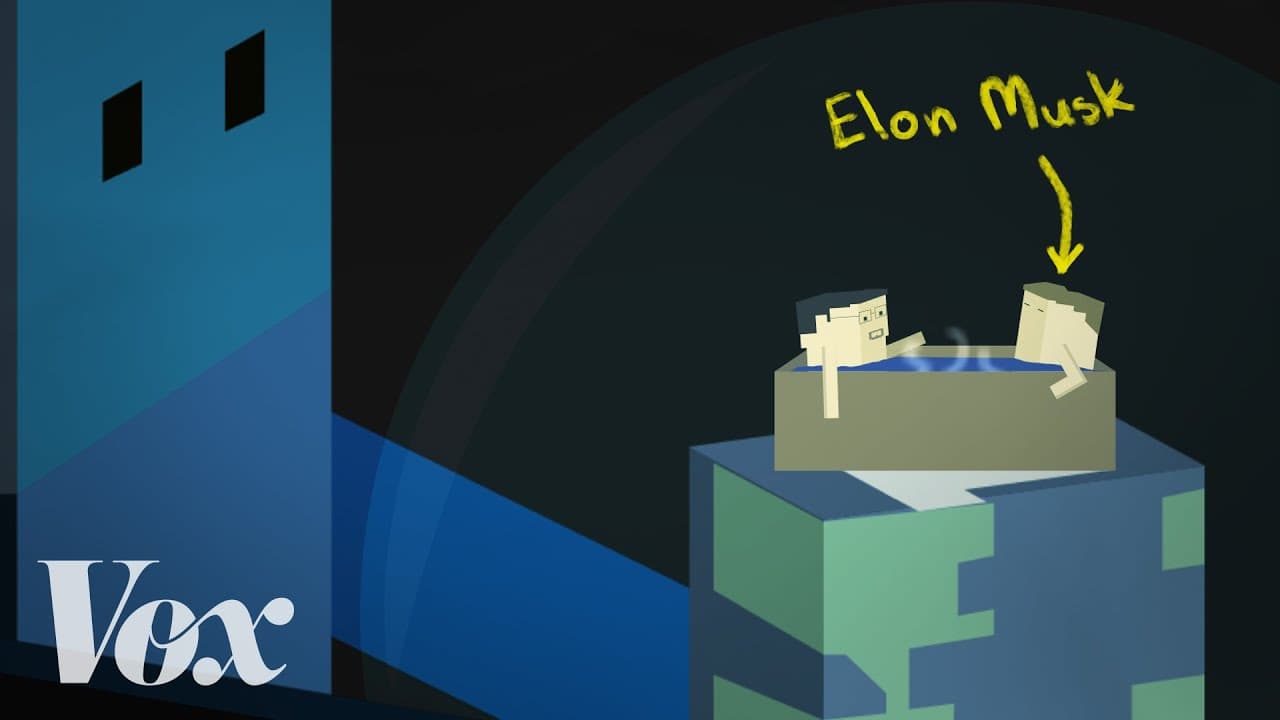
Elon Musk shares a humorous anecdote about how discussions on simulations became so frequent that he and his brother decided to ban them in certain settings, such as while in a hot tub. This highlights the pervasive nature of the topic in his personal and professional life.
Summary & Key Takeaways
-
Elon Musk posits that we are likely living in a computer simulation, supported by advancements in technology and ideas from philosopher Nick Bostrom. Three scenarios are proposed: human extinction before achieving simulation capabilities, ethical disinterest, or currently living in a simulation.
-
Musk argues that the progression from simple games like Pong to complex simulations suggests a future where entire universes could be simulated. This raises philosophical questions about reality and the potential for a higher-level being, akin to religious concepts.
-
The discussion touches on ethical considerations of simulating realities where beings experience suffering, and Musk humorously notes the frequency of such conversations in his life. Bostrom estimates a 20% chance of our reality being a simulation, sparking further debate.
Read in Other Languages (beta)
Share This Summary 📚
Summarize YouTube Videos and Get Video Transcripts with 1-Click
Try YouTube Summary with ChatGPT & Claude or YouTube Transcript Generator
Explore More Summaries from Vox 📚


Summarize YouTube Videos and Get Video Transcripts with 1-Click
Try YouTube Summary with ChatGPT & Claude or YouTube Transcript Generator