The Mental Health AI Chatbot Made for Real Life | Alison Darcy | TED
TL;DR
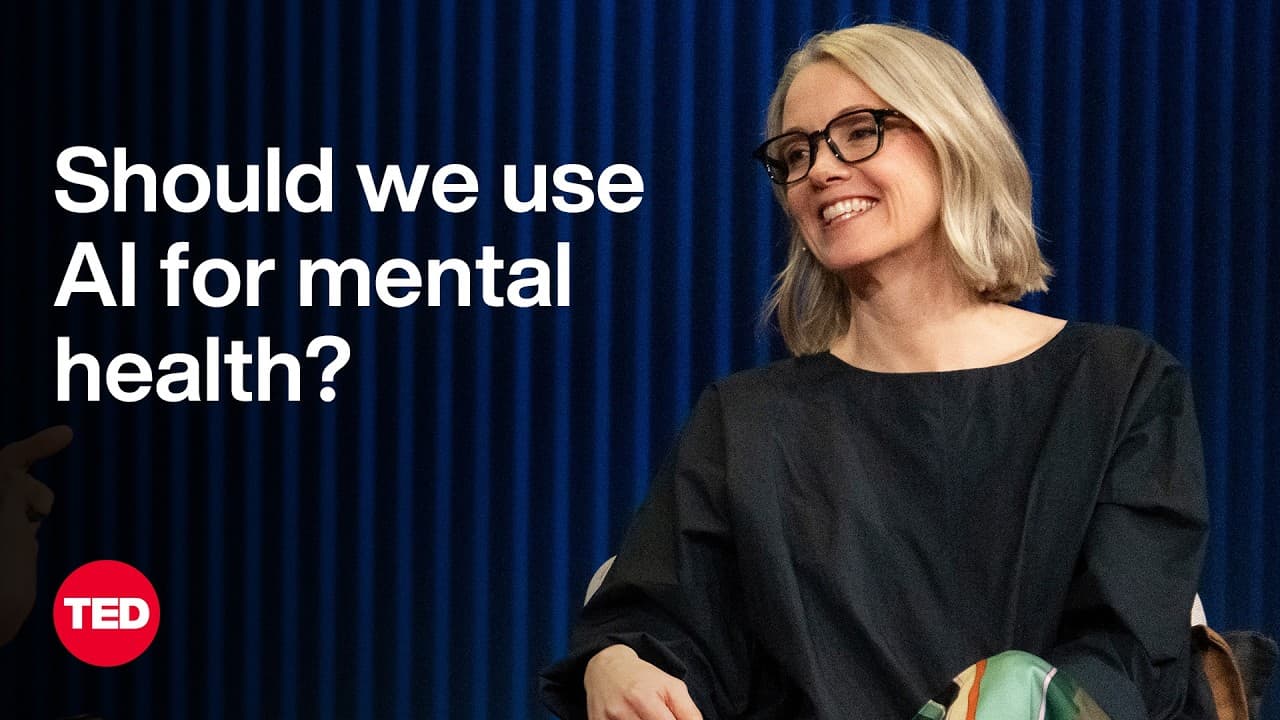
Woebot offers AI-driven mental health support for critical moments.
Transcript
Kelly Corrigan: So will you describe for us the average Woebot interaction? Alison Darcy: Sure. So, well, first of all, I suppose it's important to say that we built Woebot to meet an unmet need. In 2017, depression was already the leading cause of disability worldwide. And I'm team human, too. And I also really believe in what human therapists do.... Read More
Key Insights
- Woebot addresses the unmet need for mental health support during critical moments when human therapists are unavailable, such as during late-night panic attacks.
- The average interaction with Woebot lasts about six and a half minutes, with most conversations occurring outside regular clinic hours, highlighting its accessibility.
- Woebot is designed with safety in mind, using scripted interactions supervised by clinical psychologists, ensuring it never generates unscripted responses.
- Generative AI is effective for roleplays, enhancing Woebot's ability to simulate scenarios that help users practice responses to real-life situations.
- Users tend to disclose sensitive information more readily to AI than humans, especially regarding stigmatized topics, due to the lack of perceived judgment.
- Woebot is built to encourage independence and self-reliance, aiming to foster human growth rather than creating dependency on AI.
- The business model involves partnerships with health systems, focusing on brief, impactful interactions rather than prolonged engagement to avoid addiction.
- Woebot promotes real-life interactions by encouraging users to apply learned skills in their daily lives and holding them accountable for follow-through.
Install to Summarize YouTube Videos and Get Transcripts
Explore YouTube Video Summarizer or Get YouTube Transcript Extractor
Questions & Answers
Q: What is the primary purpose of Woebot?
Woebot is designed to provide mental health support during critical moments when human therapists are unavailable, such as during late-night panic attacks. It aims to meet the unmet need for accessible and approachable mental health care, helping users manage their mental health challenges independently.
Q: How does Woebot ensure user safety during interactions?
Woebot ensures user safety by using scripted interactions that are supervised by clinical psychologists. This rules-based approach prevents the AI from generating unscripted responses, maintaining a controlled and safe environment for users to interact with the chatbot.
Q: Why do users tend to disclose more to AI than humans?
Users tend to disclose more to AI than humans because they perceive AI as non-judgmental, especially regarding stigmatized topics. The lack of perceived judgment and the anonymity offered by AI encourage users to share sensitive information more freely than they would with a human therapist.
Q: What is Woebot's approach to fostering user independence?
Woebot fosters user independence by encouraging self-reliance and personal growth. It aims to help users develop their own resources and apply learned skills in real-life situations. The chatbot promotes accountability by following up on users' commitments to engage in real-life interactions.
Q: How does Woebot's business model support its mission?
Woebot's business model involves partnerships with health systems, focusing on brief, impactful interactions rather than prolonged engagement. This approach aligns with its mission to provide accessible mental health support without creating dependency, ensuring the AI serves human well-being.
Q: What role does generative AI play in Woebot's functionality?
Generative AI plays a significant role in Woebot's functionality by enhancing its ability to conduct roleplays. This feature allows the chatbot to simulate scenarios that help users practice responses to real-life situations, improving their coping skills and decision-making abilities.
Q: How does Woebot encourage real-life interactions?
Woebot encourages real-life interactions by prompting users to apply the skills they learn from the chatbot in their daily lives. It holds users accountable by following up on their commitments to engage with others, reinforcing the importance of human connections and personal growth.
Q: What are some of Woebot's limitations and boundaries?
Woebot has several limitations and boundaries to ensure ethical use. It does not give advice, diagnose, sell or give away data, or engage in flirting. These restrictions maintain the focus on its primary purpose of providing mental health support and ensuring user safety and privacy.
Summary & Key Takeaways
-
Woebot is a mental health AI chatbot designed to provide support during critical moments when human therapists are unavailable. It offers brief, scripted interactions supervised by clinical psychologists to ensure safety and effectiveness.
-
The chatbot is particularly useful for roleplays and encourages users to disclose sensitive information without fear of judgment. Woebot's design focuses on fostering independence and self-reliance, avoiding prolonged engagement to prevent addiction.
-
Woebot partners with health systems, emphasizing short, impactful interactions. It encourages users to apply skills in real life and holds them accountable, promoting real-life interactions and personal growth.
Read in Other Languages (beta)
Share This Summary 📚
Summarize YouTube Videos and Get Video Transcripts with 1-Click
Try YouTube Summary with ChatGPT & Claude or YouTube Transcript Generator
Explore More Summaries from TED 📚




Summarize YouTube Videos and Get Video Transcripts with 1-Click
Try YouTube Summary with ChatGPT & Claude or YouTube Transcript Generator