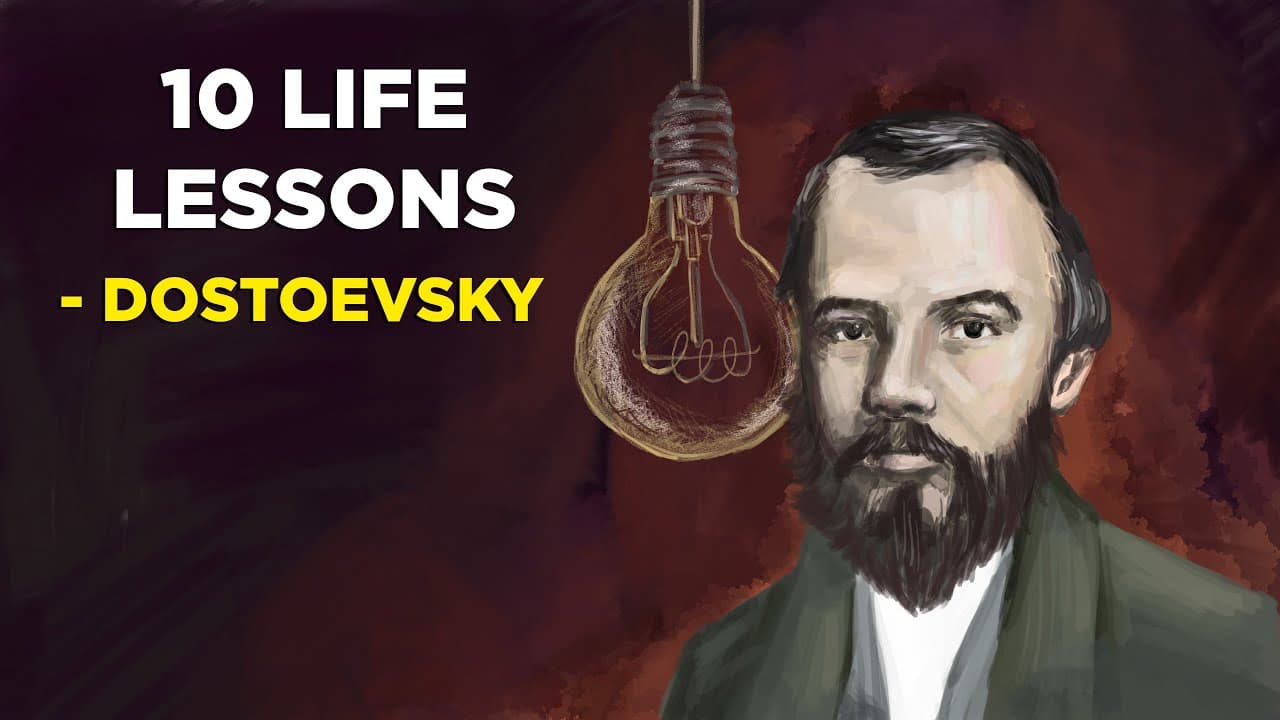
10 Life Lessons From Fyodor Dostoevsky (Existentialism)
TL;DR
Dostoevsky's novels convey deep life lessons on pride, self-improvement, emotional intelligence, love, and compassion.
Transcript
Fyodor Dostoevsky was a 19th century novelist and philosopher, considered by many to be one of the most influential authors in all of world literature. Born and raised in Tsarist Russia, Dostoevsky was heavily exposed to the misery and injustice characteristic of his time. Among his more marking experiences, he spent four years in a Siberian labour... Read More
Key Insights
- 🥰 Excessive pride leads to isolation, hindering meaningful connections and preventing the experience of compassion and love.
- 🤳 Self-improvement should stem from personal growth and internal desires rather than societal expectations or seeking external validation.
- 😃 Embracing suffering as part of life's journey can lead to personal growth, strength, and a deeper appreciation for joy and happiness.
- 🥺 Moral corruption leads to inner torment, emphasizing the importance of maintaining virtue and ethical behavior.
- 🥰 Compassion, empathy, and love are powerful tools in combating evil and alienation, fostering connections and understanding in the world.
- 🙃 Life's meaning lies in experiencing it fully, accepting its ups and downs, and finding peace within oneself.
- 🛟 Balancing rationality and emotion is essential for making thoughtful decisions and navigating life's complexities.
Install to Summarize YouTube Videos and Get Transcripts
Explore YouTube Video Summarizer or Get YouTube Transcript Extractor
Questions & Answers
Q: How did Dostoevsky's personal experiences influence his writings?
Dostoevsky's time in Siberia and struggles with gambling addiction shaped his views on suffering, compassion, and the human condition, reflected in his novels.
Q: What life lessons can we learn from the character Raskolnikov in Crime and Punishment?
Raskolnikov's journey warns against excessive pride, self-improvement for external validation, and the importance of love, empathy, and compassionate connections.
Q: How does Dostoevsky address the balance between rationality and emotion in his works?
Dostoevsky critiques the dangers of solely relying on rationality, as seen in characters like Raskolnikov, emphasizing the need to listen to emotions alongside reason for a balanced approach to life.
Q: What does Dostoevsky teach us about the relationship between good and evil?
Dostoevsky portrays the ongoing struggle against evil with compassion and virtue as the key to overcoming one's inherent inclination toward wrongdoing, emphasizing the importance of moral integrity.
Summary & Key Takeaways
-
Fyodor Dostoevsky, a renowned novelist and philosopher, delved into themes like suffering, compassion, and moral corruption in his works.
-
His characters, like Raskolnikov, highlight the dangers of pride, misguided self-improvement, and rationality overpowering emotions.
-
Dostoevsky advocated for living life fully, embracing suffering, loving others, and fighting evil with compassion.
Read in Other Languages (beta)
Share This Summary 📚
Summarize YouTube Videos and Get Video Transcripts with 1-Click
Try YouTube Summary with ChatGPT & Claude or YouTube Transcript Generator
Explore More Summaries from Philosophies for Life 📚




Summarize YouTube Videos and Get Video Transcripts with 1-Click
Try YouTube Summary with ChatGPT & Claude or YouTube Transcript Generator