Trade wars, explained
TL;DR
Trade wars impact everyday life through tariffs on imports.
Transcript
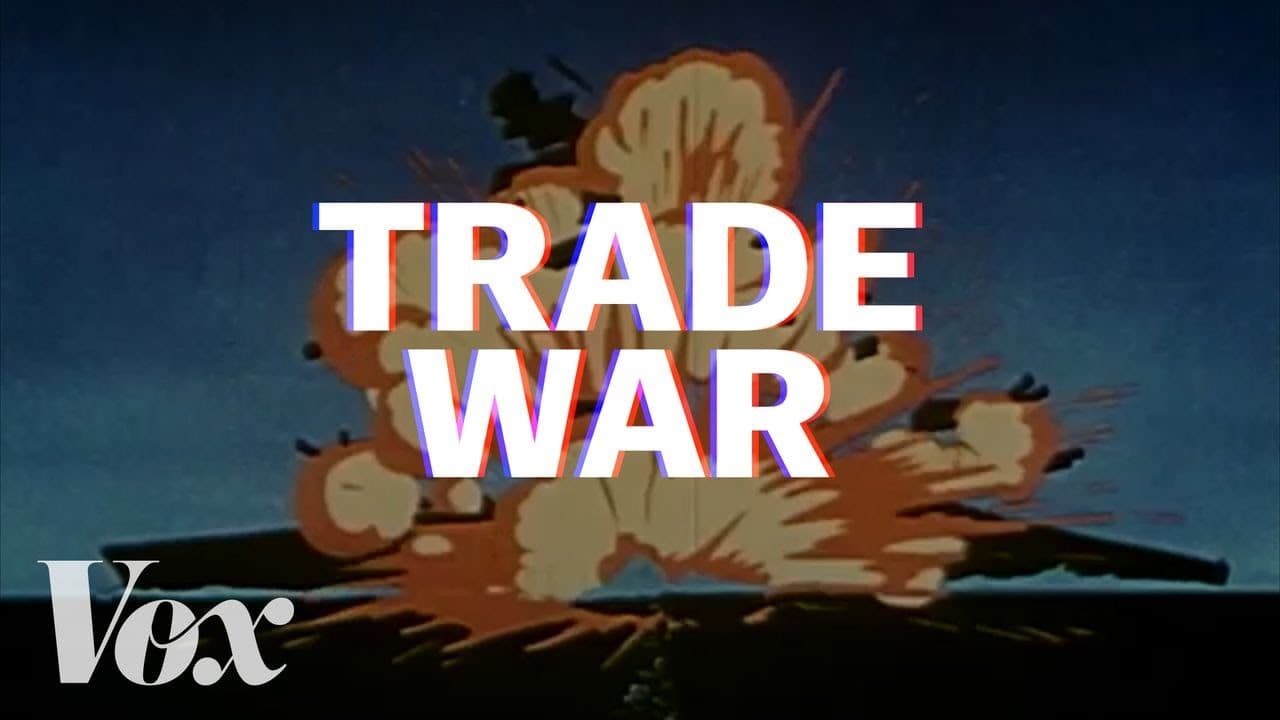
What do you think of when you hear the word “war?” Is it this? Or maybe this? Well, there’s a different type of war you may have heard a lot about recently. Trade war worries igniting. Is the trade war back on? Trade war. Trade war. Full-blown trade war. The “weapons” in a trade war are everywhere. It's the food you eat. The train you ride to work.... Read More
Key Insights
- Trade wars use tariffs as 'weapons,' affecting everyday goods like food, transportation, and electronics, leading to increased consumer costs.
- Countries may initiate trade wars to protect domestic industries or to penalize other nations for unfavorable practices.
- The Smoot-Hawley Tariff Act of the 1930s illustrates how trade wars can lead to economic shifts, benefiting uninvolved countries.
- Trade wars often harm poorer consumers, as tariffs on basic goods disproportionately affect those with lower incomes.
- President Trump's approach to trade wars is characterized by unpredictability and has destabilized global trade relations.
- Trade wars can escalate quickly, with countries retaliating through reciprocal tariffs, as seen in recent US-China trade tensions.
- Economists argue that countries with fewer exports may endure trade wars better, as they have fewer goods subject to tariffs.
- Trade wars can have ripple effects on economies, reducing consumer spending on non-essential goods and slowing economic growth.
Install to Summarize YouTube Videos and Get Transcripts
Explore YouTube Video Summarizer or Get YouTube Transcript Extractor
Questions & Answers
Q: What are the 'weapons' used in a trade war?
The 'weapons' in a trade war are tariffs, which are taxes imposed on imports. These tariffs affect everyday goods such as food, transportation, and electronics, leading to higher consumer costs. By increasing the price of imported goods, tariffs aim to protect domestic industries or penalize foreign nations.
Q: Why do countries engage in trade wars?
Countries engage in trade wars to protect domestic industries or as a punitive measure against other nations. By imposing tariffs, countries can give domestic producers a competitive edge or retaliate against unfair trade practices. However, trade wars can also lead to increased consumer prices and economic instability.
Q: How did the Smoot-Hawley Tariff Act affect global trade?
The Smoot-Hawley Tariff Act of the 1930s imposed steep tariffs on imports to protect American industries, leading to retaliatory tariffs from other countries. This trade war caused shifts in global trade dynamics, with some countries abandoning the US as a trading partner and others, like Soviet Russia, gaining new trading opportunities.
Q: How do trade wars impact poorer consumers?
Trade wars often harm poorer consumers by increasing the prices of basic goods. Tariffs are frequently higher on low-end products like clothing, shoes, and sugar, which make up a significant portion of spending for less affluent individuals. This can lead to decreased disposable income and reduced economic activity.
Q: What is unique about President Trump's approach to trade wars?
President Trump's approach to trade wars is marked by unpredictability and aggressive rhetoric. His willingness to impose tariffs and make threats without adhering to traditional trade negotiation norms has destabilized global trade relations, particularly with major trading partners like China and Mexico.
Q: How do trade wars escalate?
Trade wars escalate through reciprocal tariffs, where countries respond to tariffs imposed by others with their own tariffs. This tit-for-tat approach can quickly lead to a full-blown trade war, as seen in the recent US-China tensions, where both countries have imposed multiple rounds of tariffs on each other's exports.
Q: Why might countries with fewer exports endure trade wars better?
Countries with fewer exports may endure trade wars better because they have fewer goods subject to punitive tariffs. With fewer targets for retaliation, these countries may experience less economic disruption and can potentially outlast their trading partners in prolonged trade conflicts.
Q: What are the economic ripple effects of trade wars?
Trade wars can have significant economic ripple effects by reducing consumer spending on non-essential goods. As tariffs increase the cost of essentials, consumers have less disposable income for other purchases, dampening economic growth. This can lead to slower economic activity and potential negative impacts on employment and investment.
Summary & Key Takeaways
-
Trade wars involve the use of tariffs as economic weapons, impacting everyday goods and leading to increased consumer costs. They are initiated to protect domestic industries or penalize other nations, but often harm poorer consumers by raising prices on basic goods.
-
Historically, trade wars like those triggered by the Smoot-Hawley Tariff Act have led to shifts in global trade dynamics, sometimes benefiting uninvolved countries. In modern times, President Trump's unpredictable approach to trade negotiations has destabilized international trade relations.
-
Countries with fewer exports may have an advantage in enduring trade wars, as they have fewer goods subject to punitive tariffs. However, the overall economic impact can be negative, reducing consumer spending on non-essential goods and slowing economic growth.
Read in Other Languages (beta)
Share This Summary 📚
Summarize YouTube Videos and Get Video Transcripts with 1-Click
Try YouTube Summary with ChatGPT & Claude or YouTube Transcript Generator
Explore More Summaries from Vox 📚


Summarize YouTube Videos and Get Video Transcripts with 1-Click
Try YouTube Summary with ChatGPT & Claude or YouTube Transcript Generator