Obama on the goal of his foreign policy
TL;DR
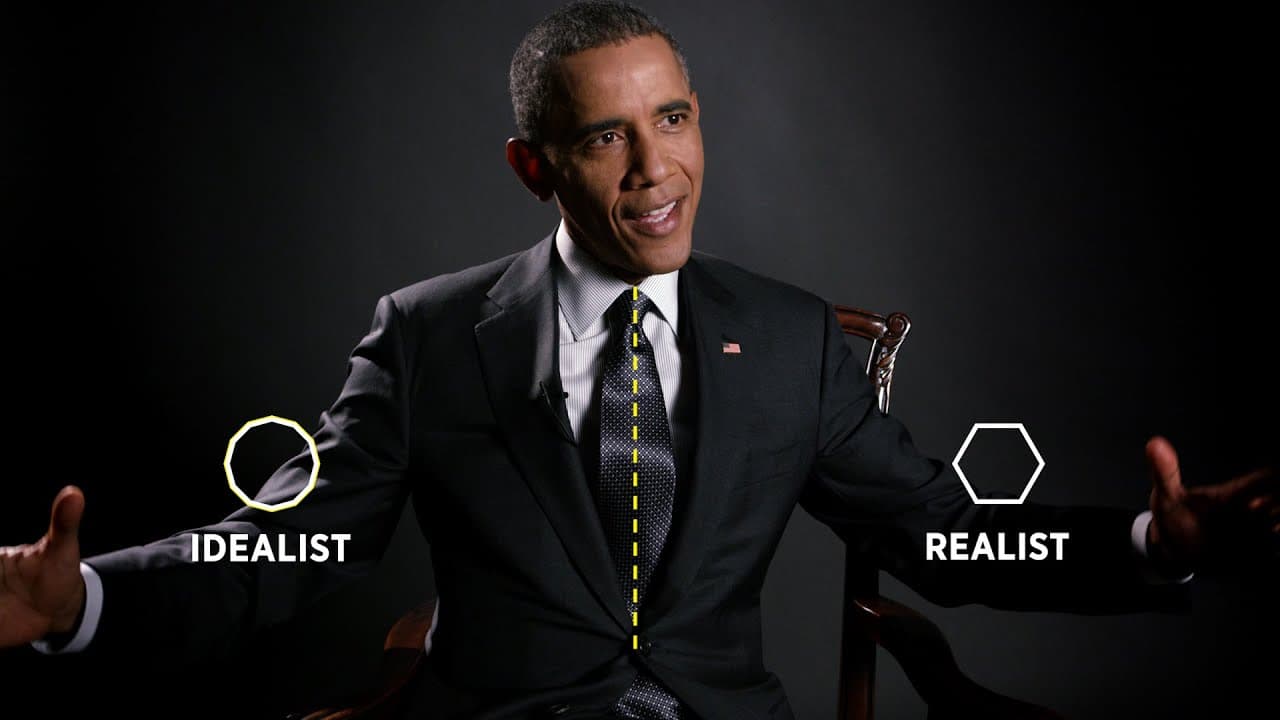
Obama rejects realist and idealist labels for his foreign policy.
Transcript
Matt Yglesias: Over the years, I've heard a number of different members of your team refer to your kind of philosophy in foreign affairs as realism. Is that a term you would use? Barack Obama: You know, traditionally, a lot of American foreign policy has been divided into the realist camp and the idealist camp and so if you're an idealist you're li... Read More
Key Insights
- Obama's foreign policy is neither purely realist nor idealist; it seeks a balanced approach recognizing global complexities.
- He emphasizes that military solutions are not applicable to every global issue in the 21st century.
- Ending wars in Iraq and Afghanistan was strategic, allowing focus on emerging threats like cyber security and health crises.
- Partnerships with countries like Egypt and Saudi Arabia are complex, acknowledging their authoritarian regimes but recognizing gradual progress.
- Obama believes old authoritarian governments will weaken in the modern internet age, impacting global governance.
- He stresses that progress in countries with limited democratic experience will be incremental, not immediate.
- Foreign policy should have ideals and aspirations while being grounded in realistic assessments of global conditions.
- Obama's approach seeks to improve global situations, not achieve perfection, by addressing current realities effectively.
Install to Summarize YouTube Videos and Get Transcripts
Explore YouTube Video Summarizer or Get YouTube Transcript Extractor
Questions & Answers
Q: What is Obama's stance on the use of military solutions in foreign policy?
Obama believes that military solutions are not applicable to every problem in the 21st century. He emphasizes the need to focus on non-military approaches, such as addressing cyber security threats and health crises like Ebola, to effectively tackle global challenges.
Q: How does Obama view the partnerships with countries like Egypt and Saudi Arabia?
Obama acknowledges the complexities of partnering with authoritarian regimes like Egypt and Saudi Arabia. He recognizes their human rights issues but sees these partnerships as necessary, with an understanding that progress in such regions will happen incrementally rather than through immediate democratic transformations.
Q: What is Obama's perspective on the sustainability of authoritarian governments?
Obama believes that the capacity of old-style authoritarian governments to sustain themselves will weaken in the modern internet age. He suggests that the global shift towards more open and democratic governance is inevitable, though it may occur gradually over time.
Q: How does Obama define a smart foreign policy?
Obama defines a smart foreign policy as one that balances ideals and aspirations with a realistic understanding of the world. It involves recognizing current global conditions and working strategically to improve situations, rather than striving for unattainable perfection.
Q: What was the significance of ending wars in Iraq and Afghanistan according to Obama?
Ending the wars in Iraq and Afghanistan was significant for reallocating resources to address new global challenges. Obama saw it as a strategic move to focus on emerging threats like cyber security and health crises, rather than relying solely on military interventions.
Q: Why does Obama reject the labels of realist and idealist for his foreign policy?
Obama rejects the labels of realist and idealist because he believes they oversimplify the complexities of global politics. His approach seeks a balanced strategy that incorporates elements of both schools of thought, focusing on realistic assessments and pragmatic solutions.
Q: What is Obama's view on progress in countries with limited democratic experience?
Obama views progress in countries with limited democratic experience as a gradual process. He acknowledges that in regions lacking democratic institutions or civil society, change will occur in steps rather than leaps, requiring patience and strategic engagement.
Q: How does Obama approach foreign policy goals and aspirations?
Obama approaches foreign policy goals with a vision that incorporates ideals and aspirations while being grounded in realistic assessments. He aims to improve global situations by recognizing current realities and strategically working towards better outcomes, rather than seeking unattainable perfection.
Summary & Key Takeaways
-
Obama's foreign policy does not fit neatly into the categories of realism or idealism. Instead, it incorporates a pragmatic approach that acknowledges the complexities of the modern world. He emphasizes the importance of non-military solutions to global issues, focusing on emerging threats and opportunities.
-
The strategic withdrawal from Iraq and Afghanistan was aimed at reallocating resources to address new global challenges. Obama stresses the importance of recognizing the limitations of military intervention and the need for a broader understanding of global dynamics.
-
Partnerships with authoritarian regimes are seen as complex but necessary, with an understanding that progress in such regions will be gradual. Obama believes that foreign policy should balance ideals with realistic assessments, aiming for improvement rather than perfection.
Read in Other Languages (beta)
Share This Summary 📚
Summarize YouTube Videos and Get Video Transcripts with 1-Click
Try YouTube Summary with ChatGPT & Claude or YouTube Transcript Generator
Explore More Summaries from Vox 📚




Summarize YouTube Videos and Get Video Transcripts with 1-Click
Try YouTube Summary with ChatGPT & Claude or YouTube Transcript Generator