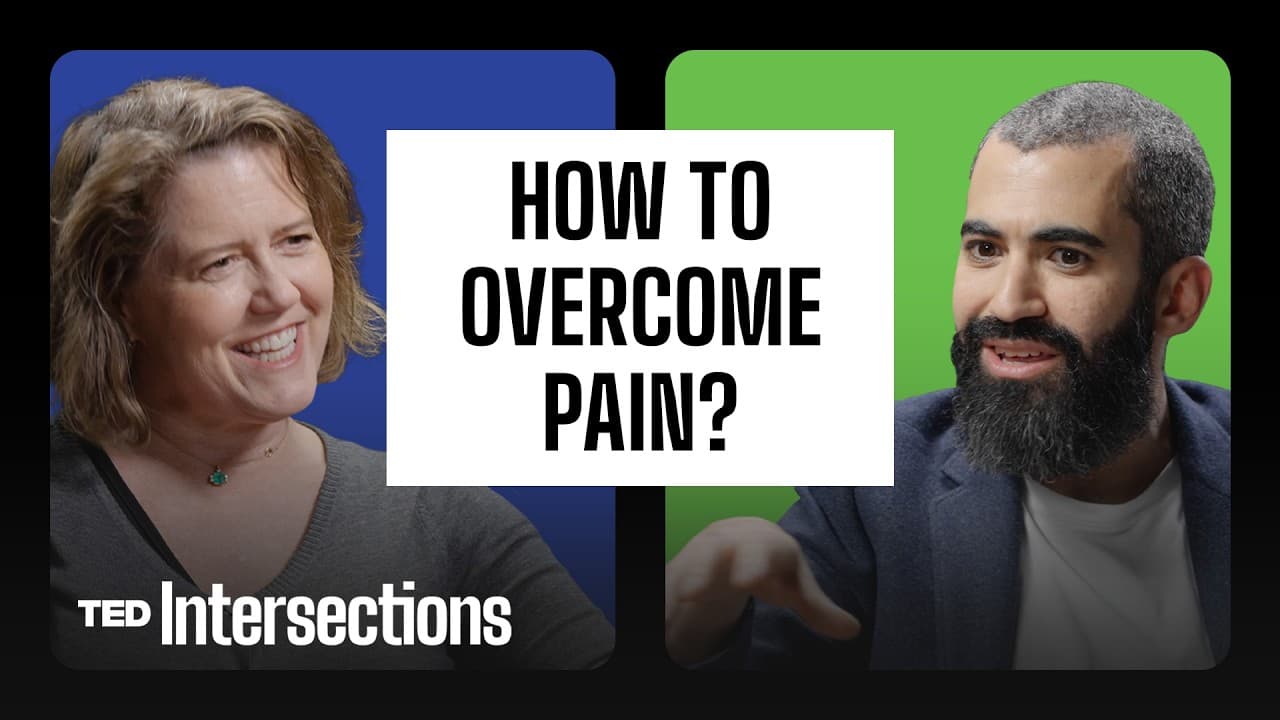
A Doctor + a Cartoonist on Creativity and Healing | TED Intersections
TL;DR
A doctor and cartoonist explore creativity's role in healing.
Transcript
Navied Mahdavian: Every artist will say their medium is the highest art form, but they’re wrong, because cartooning is the highest art form. Because you can say so much with so little. And with just like a few lines, you can express happiness and smugness and sadness. Because every time I am drawing something, I mean, I find that I'm recreating the... Read More
Key Insights
- Cartooning is considered a high art form by Navied Mahdavian due to its ability to convey complex emotions through simple lines.
- Amy Baxter finds intersections between medicine and creativity, emphasizing the importance of finding common threads in seemingly disparate fields.
- Creating art, like cartoons and books, involves a continuous process of refining one's craft, leading to a constant desire for improvement.
- Moving frequently can be destabilizing, but it prompts a search for a sense of home, which is a recurring theme in Mahdavian's work.
- Cultural differences significantly influence the expression and perception of pain, highlighting the importance of understanding diverse perspectives.
- Cartooning distills complex emotions into simple representations, making it a powerful tool for communication across cultures.
- Focusing on specific details in art can help process grief, similar to meditation techniques used for managing physical pain.
- Interdisciplinary conversations, like those between a doctor and a cartoonist, can lead to innovative ideas and new perspectives.
Install to Summarize YouTube Videos and Get Transcripts
Explore YouTube Video Summarizer or Get YouTube Transcript Extractor
Questions & Answers
Q: What does Navied Mahdavian consider the highest art form?
Navied Mahdavian considers cartooning the highest art form because it can express complex emotions with minimal lines. He believes that the ability to convey happiness, smugness, and sadness through simple drawings makes cartooning a powerful medium for communication.
Q: How does Amy Baxter view the relationship between art and medicine?
Amy Baxter views the relationship between art and medicine as an opportunity to find common threads and intersections. She believes that creativity and innovation can emerge from interdisciplinary conversations, allowing for new approaches to healing and understanding complex concepts.
Q: What challenges does Mahdavian face when creating longer projects like books?
Mahdavian faces the challenge of continuous improvement in his craft when working on longer projects like books. He finds that his drawing style evolves over time, leading to a desire to revisit and refine earlier work. This ongoing process of refinement is both rewarding and frustrating.
Q: How does moving frequently impact Mahdavian's sense of home?
Moving frequently has prompted Mahdavian to explore the concept of home in his work. He views home as a dynamic construct, influenced by immediate surroundings and broader community connections. The search for stability and belonging is a recurring theme in his creative projects.
Q: What cultural differences does Baxter note regarding pain expression?
Baxter notes that cultural differences significantly impact how pain is expressed and perceived. Some cultures encourage openly expressing pain, while others value stoicism. Understanding these differences is crucial for effective communication and empathy in medical contexts.
Q: How does cartooning transcend cultural barriers?
Cartooning transcends cultural barriers by distilling complex emotions into universally recognizable expressions. The phenomenon of face pareidolia allows people to see faces in simple drawings, making cartoons an effective tool for cross-cultural communication and understanding.
Q: How does Mahdavian use art to process grief?
Mahdavian uses art to process grief by focusing on specific details, such as his grandmother's hands. This approach allows him to explore complex emotions and memories in a manageable way, similar to meditation techniques that help individuals focus and cope with pain.
Q: What is the significance of interdisciplinary conversations according to Baxter?
Baxter emphasizes that interdisciplinary conversations are crucial for innovation. By engaging with individuals from different fields, new ideas and perspectives can emerge, leading to breakthroughs in both art and medicine. Such dialogues encourage creative thinking and problem-solving.
Summary & Key Takeaways
-
Navied Mahdavian and Amy Baxter discuss the intersections of art and medicine, focusing on how creativity can aid in healing. Mahdavian highlights cartooning's ability to convey complex emotions, while Baxter shares her experiences with creating pain management tools.
-
The conversation explores how moving frequently and adapting to new environments can be destabilizing but also prompts a search for belonging. Mahdavian uses his art to explore themes of home and identity, drawing from personal experiences.
-
Baxter and Mahdavian emphasize the importance of interdisciplinary collaboration for innovation. By finding commonalities in different fields, they highlight how diverse perspectives can lead to new insights and breakthroughs in both art and medicine.
Read in Other Languages (beta)
Share This Summary 📚
Summarize YouTube Videos and Get Video Transcripts with 1-Click
Try YouTube Summary with ChatGPT & Claude or YouTube Transcript Generator
Explore More Summaries from TED 📚
Summarize YouTube Videos and Get Video Transcripts with 1-Click
Try YouTube Summary with ChatGPT & Claude or YouTube Transcript Generator