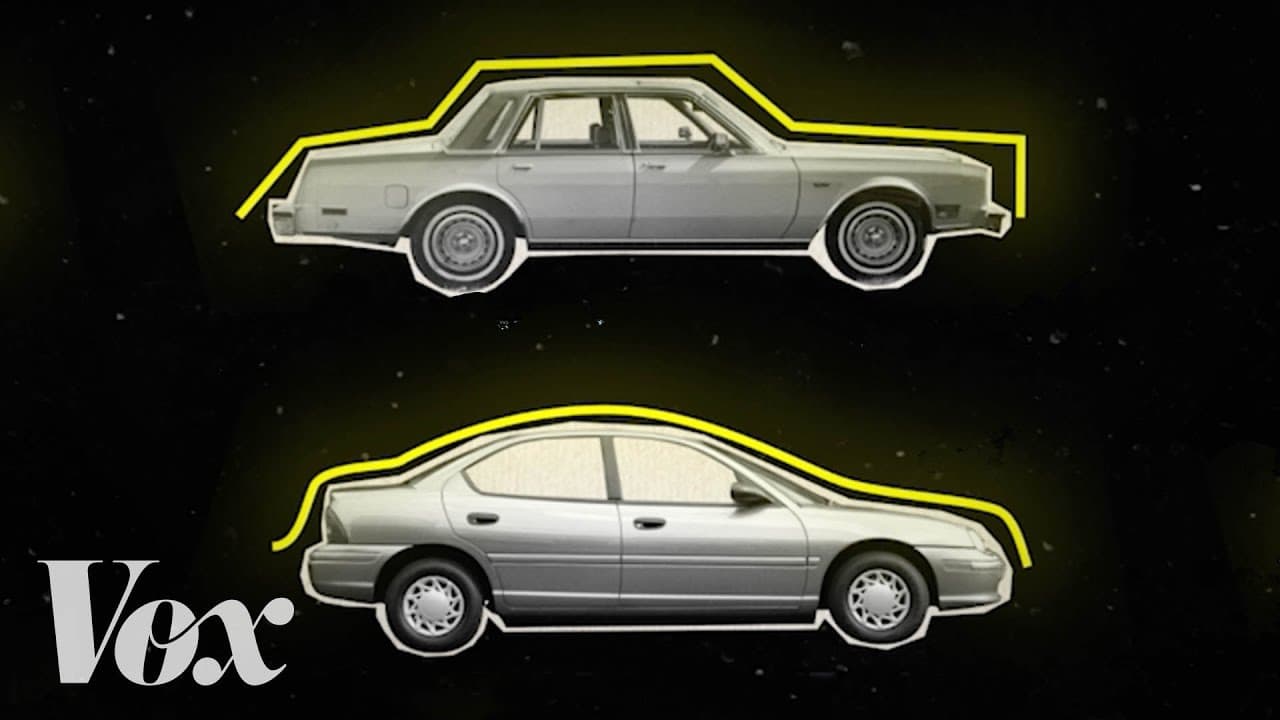
How cars went from boxy to curvy
TL;DR
Car designs evolved from boxy to curvy due to fuel efficiency needs.
Transcript
If you look at cars from the 1970s and cars from the 1990s, there’s really one big difference in their designs. The ones from the 70s are boxy, and the ones from the 90s are curvy. For some car models, you can even tell the exact year when that change happened. Just look at this commercial for the Buick LeSabre, showing the 1991 model — and then th... Read More
Key Insights
- The transition from boxy to curvy car designs occurred primarily between the 1970s and 1990s, driven by aesthetic and functional needs.
- European car manufacturers began experimenting with aerodynamic designs in response to high fuel prices, influencing global design trends.
- The 1986 Ford Taurus was a pivotal model that popularized curvy designs in the mass market, saving Ford from financial struggles.
- Fuel efficiency regulations in the US during the late 1970s prompted manufacturers to adopt more aerodynamic designs to meet new standards.
- Computer modeling advancements in the 1980s facilitated the design and production of cars with curved lines, making the process more efficient.
- The shift to curvy designs was initially met with skepticism, as seen with the 1982 Ford Sierra, but eventually gained widespread acceptance.
- Aerodynamic design became a cost-effective method for improving fuel efficiency compared to engineering changes under the hood.
- Modern car designs, even those perceived as boxy, incorporate rounded elements, reflecting the lasting influence of the curvy design trend.
Install to Summarize YouTube Videos and Get Transcripts
Explore YouTube Video Summarizer or Get YouTube Transcript Extractor
Questions & Answers
Q: What prompted the shift from boxy to curvy car designs?
The shift from boxy to curvy car designs was primarily prompted by the need for improved fuel efficiency. As fuel prices rose and new regulations demanded higher fuel economy standards, manufacturers turned to aerodynamic designs to reduce wind resistance and enhance efficiency. European manufacturers initially drove this trend due to their higher fuel costs, which later influenced American car designs.
Q: Which car model was pivotal in popularizing curvy designs in the US?
The 1986 Ford Taurus was pivotal in popularizing curvy car designs in the US market. Introduced as a mass-market vehicle with a revolutionary design for its time, it featured curved edges that appealed to consumers. The Taurus's success helped Ford recover financially and inspired other manufacturers to adopt similar aerodynamic designs, marking a significant shift in the automotive industry.
Q: How did computer modeling impact car design in the 1980s?
Computer modeling in the 1980s significantly impacted car design by making it easier and more efficient to create and manufacture vehicles with curved lines. This technological advancement allowed designers to experiment with more complex shapes and improve aerodynamic performance without the extensive manual effort previously required. As a result, the adoption of curvy designs became more feasible and widespread among manufacturers.
Q: Why did European manufacturers adopt aerodynamic designs earlier than American ones?
European manufacturers adopted aerodynamic designs earlier than American ones primarily due to higher fuel prices in Europe. With fuel being more expensive, European designers focused on creating more fuel-efficient vehicles through streamlined, aerodynamic designs to reduce wind resistance. This necessity for efficiency drove innovation in car design, which eventually influenced American manufacturers facing rising fuel costs and stricter regulations.
Q: What role did fuel efficiency regulations play in car design evolution?
Fuel efficiency regulations played a crucial role in the evolution of car design by mandating higher fuel economy standards for manufacturers. Introduced in the US starting in 1978, these regulations pressured automakers to find ways to improve fuel efficiency. Aerodynamic, curvy designs emerged as a cost-effective solution, allowing manufacturers to meet regulatory requirements while appealing to consumer preferences for modern aesthetics.
Q: How did the 1982 Ford Sierra influence car design?
The 1982 Ford Sierra, despite its initial unpopularity and ridicule as the 'jelly mould,' was influential in car design as it introduced a curvy aesthetic to the mass market. Although it faced criticism initially, its design philosophy paved the way for future models, demonstrating the potential of aerodynamic efficiency and eventually gaining acceptance as consumers became more accustomed to the new look.
Q: What challenges did early curvy car designs face?
Early curvy car designs faced challenges such as consumer skepticism and resistance to change. The 1982 Ford Sierra, for example, was mocked for its unconventional appearance and struggled with sales initially. However, as fuel efficiency became a priority and consumers grew accustomed to the aesthetic, the benefits of aerodynamic designs became more apparent, leading to broader acceptance and adoption by manufacturers.
Q: What is the lasting impact of the curvy design trend on modern cars?
The lasting impact of the curvy design trend on modern cars is evident in the continued emphasis on aerodynamic efficiency and aesthetic appeal. Even vehicles perceived as boxy today incorporate rounded elements, reflecting the influence of the curvy design era. This trend has shaped consumer expectations and design standards, ensuring that aerodynamic considerations remain integral to automotive design and engineering.
Summary & Key Takeaways
-
The shift from boxy to curvy car designs was driven by both aesthetic preferences and practical needs for improved fuel efficiency. European manufacturers led the way in adopting aerodynamic designs due to higher fuel costs, influencing global trends.
-
The 1986 Ford Taurus played a crucial role in popularizing curvy designs in the US market, helping Ford overcome financial difficulties and inspiring other manufacturers to follow suit. This shift was also supported by new fuel efficiency regulations.
-
Advancements in computer modeling during the 1980s made it easier for car manufacturers to design and produce vehicles with curved lines. Despite initial skepticism, curvy designs became widely accepted and continue to influence modern car aesthetics.
Read in Other Languages (beta)
Share This Summary 📚
Summarize YouTube Videos and Get Video Transcripts with 1-Click
Try YouTube Summary with ChatGPT & Claude or YouTube Transcript Generator
Explore More Summaries from Vox 📚




Summarize YouTube Videos and Get Video Transcripts with 1-Click
Try YouTube Summary with ChatGPT & Claude or YouTube Transcript Generator