2025 Religion and Foreign Policy Workshop: Bipartisan Religious Engagement in U.S. Foreign Policy
TL;DR
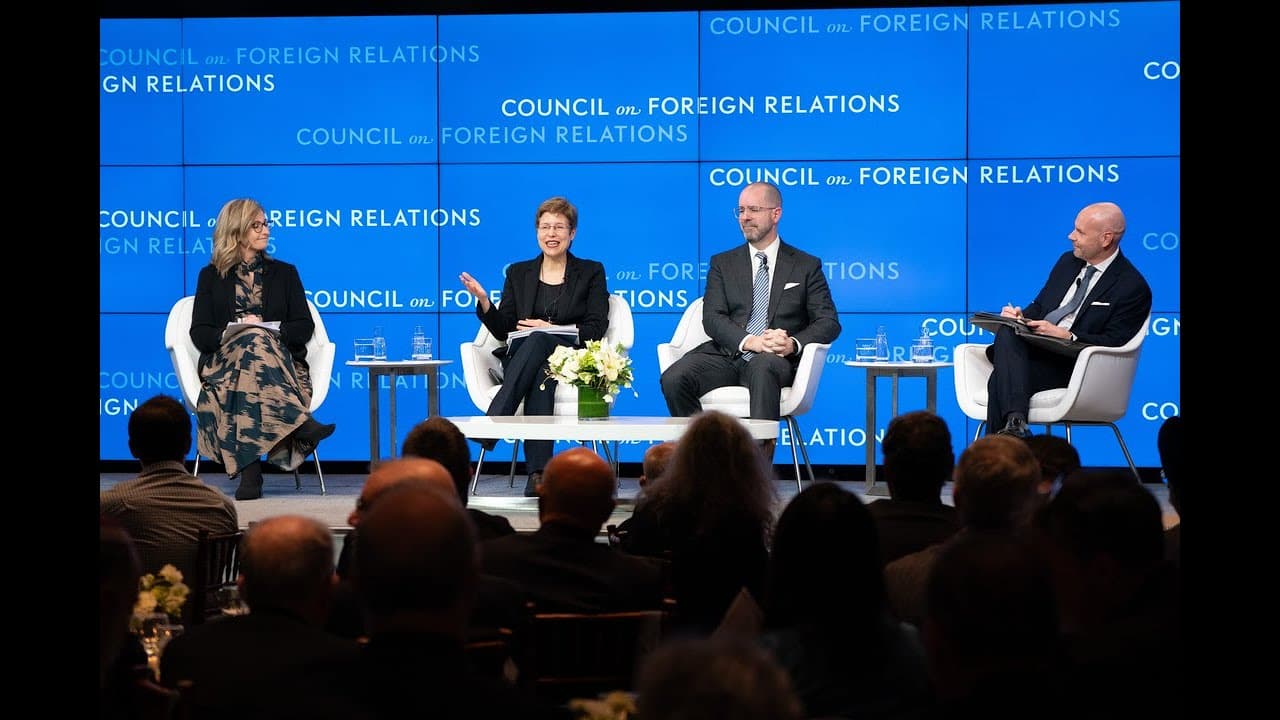
Panel discusses sustaining faith-based initiatives across U.S. administrations.
Transcript
FASKIANOS: Thank you all for joining us for the sixteenth annual Religion and Foreign Policy Workshop. I’m Irina Faskianos, vice president of the National Program and Outreach here at CFR. The Council on Foreign Relations Religion and Foreign Policy program is dedicated to being a resource for faith leaders and policymakers, and offers a foru... Read More
Key Insights
- The U.S. has historically engaged faith-based organizations in foreign policy, emphasizing bipartisan support for religious freedom and humanitarian aid.
- Religious freedom is increasingly seen as a national security imperative, not just a human right, due to global religious persecution.
- There is a disconnect between the Trump administration's achievements in religious engagement and current policy directions, raising concerns about continuity.
- USAID's role in promoting religious freedom and supporting faith-based initiatives is crucial but currently threatened by political dynamics and budget freezes.
- The Trump administration's dismantling of USAID is seen as detrimental, with calls for Congress to re-establish bipartisan support for foreign assistance.
- There is concern about the politicization of religious freedom, urging efforts to maintain it as a bipartisan initiative focused on humanitarian outcomes.
- The U.S. government's relationship with religion in policy is complex, needing careful navigation to respect constitutional guarantees and foster productive dialogue.
- Recent actions by Elon Musk and political figures have sparked debate on the role of private influence in public policy, particularly regarding foreign assistance.
Install to Summarize YouTube Videos and Get Transcripts
Explore YouTube Video Summarizer or Get YouTube Transcript Extractor
Questions & Answers
Q: How has the Trump administration engaged with faith-based organizations?
The Trump administration prioritized religious freedom in its foreign policy, notably through USAID's initiatives. It elevated religious engagement as a key component of diplomacy and development, partnering with faith-based organizations to address global religious persecution and humanitarian needs.
Q: What are the challenges facing USAID under the current administration?
USAID faces potential dismantling and budget freezes, which threaten its ability to continue faith-based initiatives and humanitarian programs. This shift is attributed to political dynamics and a lack of understanding of USAID's role in serving both American interests and global humanitarian needs.
Q: Why is religious freedom considered a national security imperative?
Religious freedom is increasingly viewed as a national security issue because religious persecution can lead to instability, conflict, and extremism. Promoting religious freedom helps create stable societies, reducing the risk of global threats that could impact U.S. interests.
Q: How can bipartisan support for religious engagement be maintained?
Maintaining bipartisan support requires recognizing religious freedom as a non-partisan issue, emphasizing its humanitarian and security benefits, and fostering dialogue across political and ideological lines to rebuild consensus around foreign assistance priorities.
Q: What impact does private influence have on public policy regarding foreign assistance?
Private influence, such as actions by figures like Elon Musk, can significantly impact public policy by shaping perceptions and priorities. This influence can disrupt established bipartisan support for foreign assistance, highlighting the need for transparency and accountability in policy decisions.
Q: How does the U.S. balance religion and government in policy-making?
Balancing religion and government involves respecting constitutional guarantees of religious freedom while engaging faith-based organizations in policy discussions. This requires careful navigation to ensure policies are inclusive and respectful of diverse beliefs, avoiding politicization of religious issues.
Q: What role does Congress play in supporting religious engagement initiatives?
Congress plays a crucial role by providing oversight and funding for USAID and other agencies engaged in religious initiatives. Bipartisan support in Congress is essential to sustain these efforts, requiring advocacy and education to emphasize their importance for U.S. interests and global stability.
Q: What are the implications of the current U.S. stance on global religious freedom?
The current U.S. stance, marked by policy shifts and budget constraints, risks undermining its leadership in promoting religious freedom globally. This could weaken international human rights efforts, making it vital to restore bipartisan support and ensure consistent advocacy for religious minorities worldwide.
Summary & Key Takeaways
-
The panel at the Council on Foreign Relations' workshop discussed the challenges and opportunities in sustaining bipartisan religious engagement in U.S. foreign policy. They emphasized the historical importance of faith-based partnerships and the need to maintain these initiatives across administrations.
-
Panelists highlighted the Trump administration's achievements in religious engagement, particularly through USAID, and expressed concerns about current policy directions and the potential dismantling of these efforts due to political pressures.
-
The discussion also touched on the broader implications of religious freedom as a national security issue, the role of private influence in public policy, and the need for renewed bipartisan support to ensure the U.S. continues to lead in promoting human rights globally.
Read in Other Languages (beta)
Share This Summary 📚
Summarize YouTube Videos and Get Video Transcripts with 1-Click
Try YouTube Summary with ChatGPT & Claude or YouTube Transcript Generator
Explore More Summaries from Council on Foreign Relations 📚

Summarize YouTube Videos and Get Video Transcripts with 1-Click
Try YouTube Summary with ChatGPT & Claude or YouTube Transcript Generator