Geometry Reflections
TL;DR
This video explains the rules for reflecting points across different axes and lines in coordinate geometry.
Transcript
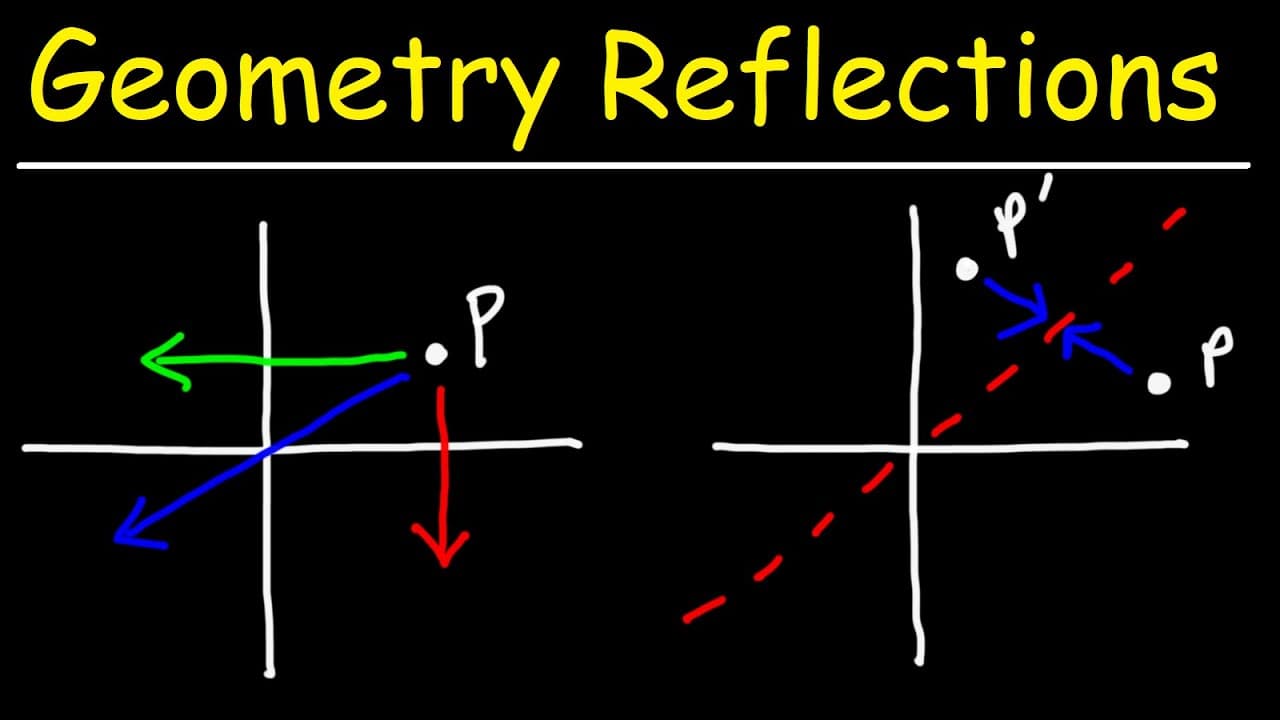
let's begin our discussion by going over some reflection rules let's say if you want to reflect the point X comma y about the x-axis how would you do it to reflect it about the x-axis all we need to do is change the y coordinate you need to change it from y to negative y so basically you need to negate the Y value now what about reflecting the same... Read More
Key Insights
- 💱 Reflecting a point about the x-axis changes the sign of the y-coordinate.
- 💱 Reflecting a point about the y-axis changes the sign of the x-coordinate.
- 💱 Reflecting a point about the origin changes both the x and y coordinates to their negative values.
- ❣️ Reflecting a point about the line y=x involves swapping the x and y coordinates.
- 💱 Reflecting a point about the line y=-x involves swapping the x and y coordinates and changing to negative values.
- 😥 The reflected point is equidistant from the axis or line as the original point.
- ❣️ The x and y values of a reflected point are reversed compared to the original point when reflecting about the line y=x.
- 🫥 Reflecting about a vertical line requires finding the distance from the line and subtracting it from the x-coordinate.
Install to Summarize YouTube Videos and Get Transcripts
Explore YouTube Video Summarizer or Get YouTube Transcript Extractor
Questions & Answers
Q: How do you reflect a point about the x-axis?
To reflect a point about the x-axis, you change the sign of the y-coordinate while keeping the x-coordinate the same. Additionally, the point will be equidistant from the x-axis as the original point.
Q: How do you reflect a point about the y-axis?
Reflecting a point about the y-axis involves changing the sign of the x-coordinate while keeping the y-coordinate unchanged. The reflected point will be equidistant from the y-axis as the original point.
Q: What happens when you reflect a point about the origin?
Reflecting a point about the origin requires changing both the x and y coordinates to their negative values. The reflected point will be equidistant from the origin as the original point.
Q: How do you reflect a point about the line y=x?
When reflecting a point about the line y=x, you need to swap the x and y coordinates. The reflected point will be equidistant from the line as the original point and their coordinates will be reversed.
Q: How do you reflect a point about the line y=-x?
Reflecting a point about the line y=-x involves swapping the x and y coordinates and changing both to negative values. The reflected point will be equidistant from the line as the original point and will have its coordinates negated.
Summary & Key Takeaways
-
Reflection about the x-axis involves changing the y-coordinate to its negative value, while the x-coordinate remains the same.
-
Reflection about the y-axis involves changing the x-coordinate to its negative value, while the y-coordinate remains the same.
-
Reflection about the origin involves changing both the x and y coordinates to their negative values.
-
Reflection about the line y=x involves swapping the x and y coordinates.
-
Reflection about the line y=-x involves swapping the x and y coordinates and changing both to negative values.
Read in Other Languages (beta)
Share This Summary 📚
Summarize YouTube Videos and Get Video Transcripts with 1-Click
Try YouTube Summary with ChatGPT & Claude or YouTube Transcript Generator
Explore More Summaries from The Organic Chemistry Tutor 📚



Summarize YouTube Videos and Get Video Transcripts with 1-Click
Try YouTube Summary with ChatGPT & Claude or YouTube Transcript Generator