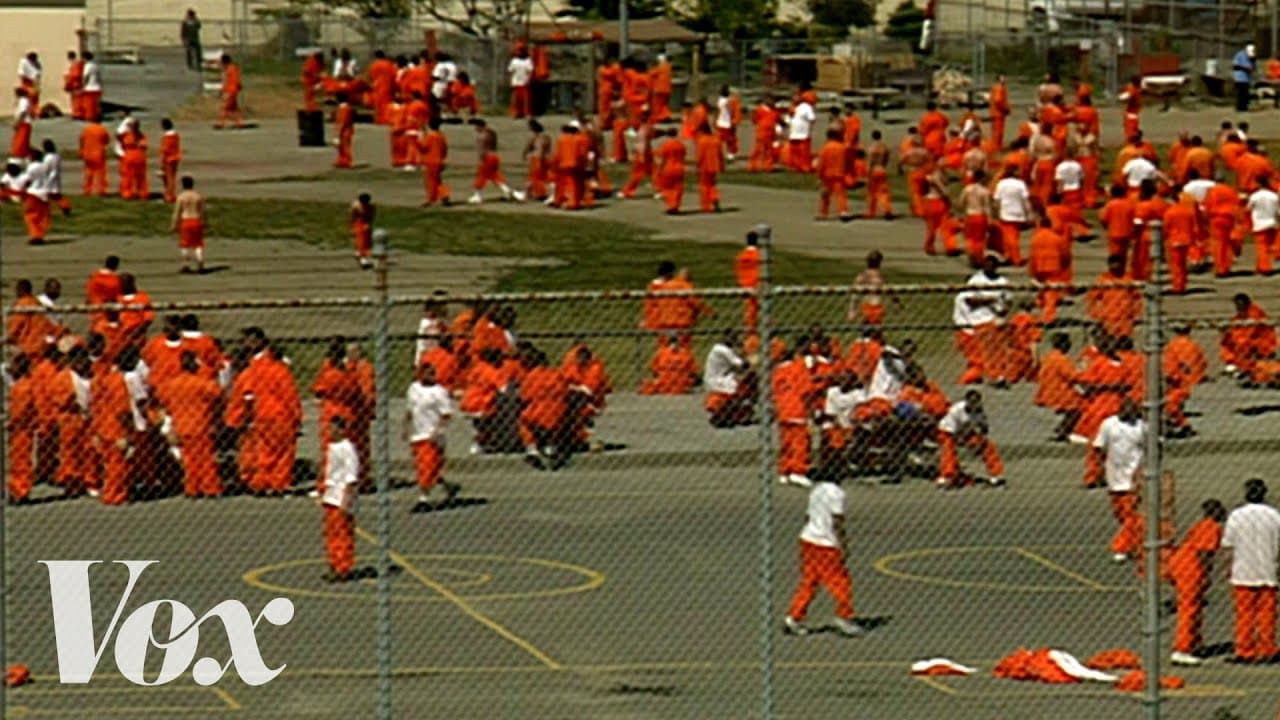
How mandatory minimums helped drive mass incarceration
TL;DR
Mandatory minimums have led to disproportionate racial impacts in sentencing.
Transcript
Barack Obama recently became the first sitting president to ever visit one of these: a federal prison. And the president used the occasion to call out a particularly poorly designed policy at the heart of our criminal justice system. Mandatory minimums require judges to hand out specific sentences for certain crimes deemed uniquely harmful to socie... Read More
Key Insights
- Mandatory minimums were introduced to combat drug crimes but have resulted in severe unintended consequences, particularly in terms of racial disparities in sentencing.
- The 1986 anti-drug bill created a significant sentencing disparity between crack and powder cocaine, disproportionately affecting black communities.
- These laws were initially supported by some black political leaders, complicating the narrative of racial bias in their creation.
- Mandatory minimums remove judicial discretion, leading to excessively harsh sentences for minor, nonviolent drug offenses.
- The failure of the drug war has opened up political space for bipartisan reform efforts to address these sentencing issues.
- A 2005 Supreme Court decision began to allow judges some flexibility in sentencing, marking a shift in the mandatory minimums regime.
- In 2010, federal legislation reduced the crack-powder sentencing disparity from 100-to-1 to 18-to-1, showing progress in reforming these laws.
- President Obama used his executive power to commute sentences for individuals serving excessive terms under mandatory minimums, highlighting ongoing reform efforts.
Install to Summarize YouTube Videos and Get Transcripts
Explore YouTube Video Summarizer or Get YouTube Transcript Extractor
Questions & Answers
Q: What was the original purpose of mandatory minimum sentences?
Mandatory minimum sentences were introduced to establish uniformly stringent punishments for certain crimes, especially drug offenses, with the aim of deterring criminal activity and incapacitating major drug traffickers. They were a response to the inner-city drug trade and were designed to remove judicial discretion in sentencing.
Q: How did the 1986 anti-drug bill affect sentencing disparities?
The 1986 anti-drug bill significantly widened sentencing disparities by establishing a 100-to-1 ratio between crack and powder cocaine offenses. This disparity meant that individuals, often black Americans, faced much harsher penalties for crack offenses compared to powder cocaine, contributing to racial inequities in the criminal justice system.
Q: Why is the narrative around mandatory minimums and racial bias complicated?
The narrative is complicated because, despite the racial disparities resulting from mandatory minimums, some black political leaders initially supported these laws. Their support was based on the belief that stringent laws would help combat the devastating effects of drugs in black communities, adding complexity to the argument of racial bias in policy creation.
Q: What impact have mandatory minimums had on nonviolent drug offenders?
Mandatory minimums have led to disproportionately harsh sentences for nonviolent drug offenders, often resulting in long prison terms for minor offenses. This has contributed to mass incarceration, particularly affecting young black men, and highlighted the need for reform to ensure proportionality and fairness in sentencing.
Q: What reforms have been made to address mandatory minimums?
Reforms include a 2005 Supreme Court decision allowing judges more discretion, the 2010 reduction of the crack-powder disparity from 100-to-1 to 18-to-1, and President Obama's commutations for nonviolent drug offenders. These changes reflect a growing recognition of the need for fairer sentencing practices.
Q: How did President Obama contribute to the reform of mandatory minimums?
President Obama contributed to reform efforts by using his executive power to commute the sentences of 46 individuals serving excessive mandatory terms for nonviolent drug offenses. His actions highlighted the ongoing issues with mandatory minimums and the need for continued reform to address these injustices.
Q: What role did bipartisan support play in reforming mandatory minimums?
Bipartisan support has been crucial in advancing reforms to mandatory minimums. A diverse coalition, including conservative and liberal figures, has recognized the failures of the drug war and the need for sentencing reform, leading to legislative changes and a shift in public policy towards more equitable justice practices.
Q: What challenges remain in achieving fair sentencing in the US?
Despite progress, challenges remain in achieving fair sentencing, including entrenched disparities, resistance from some policymakers, and the need for comprehensive legislative reform. Ongoing efforts must focus on eliminating remaining disparities, restoring judicial discretion, and ensuring that sentencing laws reflect principles of justice and proportionality.
Summary & Key Takeaways
-
Mandatory minimums were introduced in the 1980s to combat drug crime but have led to severe racial disparities in sentencing, particularly affecting black communities. These laws were supported by some black leaders, complicating the narrative of racial bias in their creation.
-
The 1986 anti-drug bill created a 100-to-1 sentencing disparity between crack and powder cocaine, leading to excessively harsh penalties for black Americans. This disparity has sparked a reform coalition and led to legislative changes reducing the disparity to 18-to-1.
-
Efforts to reform mandatory minimums have gained bipartisan support, with significant changes including a 2005 Supreme Court decision allowing judicial discretion and President Obama's commutation of sentences for nonviolent drug offenders. Despite progress, further reform is needed to ensure fair sentencing.
Read in Other Languages (beta)
Share This Summary 📚
Summarize YouTube Videos and Get Video Transcripts with 1-Click
Try YouTube Summary with ChatGPT & Claude or YouTube Transcript Generator
Explore More Summaries from Vox 📚

Summarize YouTube Videos and Get Video Transcripts with 1-Click
Try YouTube Summary with ChatGPT & Claude or YouTube Transcript Generator