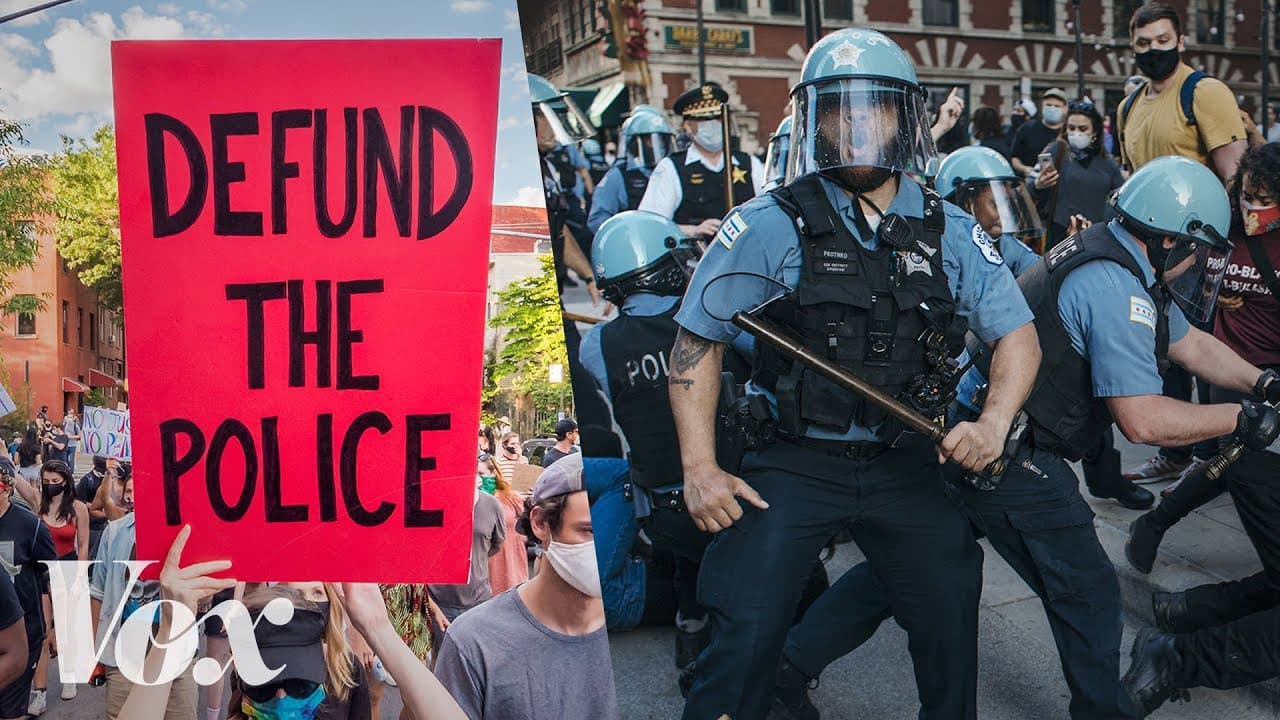
What "defund the police" really means
TL;DR
Defunding the police reallocates funds to social services for better public safety.
Transcript
On June 5th, the Washington DC mayor unveiled a statement, painted down the street leading to the White House, “Black Lives Matter.” Within 24 hours, Black Lives Matter activists responded with their own message: “Defund the Police.” This slogan caught on rapidly among tens of thousands of people protesting police brutality in the United States. Bu... Read More
Key Insights
- The 'defund the police' movement seeks to reallocate police budgets to social services, addressing disparities in funding and improving public safety.
- Current police budgets overshadow other essential services like health and housing, highlighting a need for reprioritization in public spending.
- Over-policing in minor offenses and under-policing in violent crimes lead to ineffective law enforcement and underserved communities.
- Police presence in schools often replaces essential roles like counselors and nurses, impacting student welfare negatively.
- Police are often first responders to mental health crises, leading to tragic outcomes, indicating a need for specialized response teams.
- Despite police reforms like body cameras, accountability measures have failed to reduce police violence, questioning the effectiveness of such reforms.
- Defunding the police involves not just budget cuts but redistributing resources to create alternative safety models like mental health teams.
- The movement aims to redefine public safety, with some advocating for eventual abolition of traditional policing structures.
Install to Summarize YouTube Videos and Get Transcripts
Explore YouTube Video Summarizer or Get YouTube Transcript Extractor
Questions & Answers
Q: What does 'defund the police' mean?
The 'defund the police' movement seeks to reallocate funds from police budgets to social services, addressing disparities in funding and improving public safety. It involves reducing the role of police in society and investing in alternative safety models, such as mental health teams, to better serve communities.
Q: How does police funding compare to other city services?
Police budgets often overshadow other essential services like health, housing, and education. For example, New York City allocated $5.9 billion to its police department, significantly more than what was spent on homeless services, health, housing, and jobs programs combined, highlighting a need for reprioritization in public spending.
Q: What are the effects of over-policing and under-policing?
Over-policing in minor offenses and under-policing in violent crimes lead to ineffective law enforcement and underserved communities. This approach disproportionately affects black and poor neighborhoods, where minor offenses are heavily policed, while violent crimes often see low arrest rates, leaving communities vulnerable.
Q: How does police presence in schools affect students?
Police presence in schools often replaces essential roles like counselors and nurses, impacting student welfare negatively. For instance, 1.7 million students attend schools with police but no counselors, and 3 million have police but no nurses, which can exacerbate issues rather than provide support.
Q: Why is police involvement in mental health crises problematic?
Police are often first responders to mental health crises, leading to tragic outcomes, as officers may not be trained to handle such situations. One in four deaths from police shootings involve individuals with mental health issues, indicating a need for specialized response teams to address these emergencies more effectively.
Q: Have police reforms been effective in reducing violence?
Despite reforms like body cameras, accountability measures have failed to reduce police violence. Studies show that body cameras have no detectable effect on police use of force, questioning the effectiveness of such reforms and prompting calls for defunding to address systemic issues within policing.
Q: What alternative safety models are proposed by the movement?
The movement proposes redistributing police funds to create alternative safety models like mental health teams and crisis intervention units. These models aim to provide specialized responses to certain emergencies, reducing the reliance on traditional policing and improving community safety through targeted support services.
Q: What is the ultimate goal of the 'defund the police' movement?
The ultimate goal of the 'defund the police' movement is to redefine public safety by reducing the role of traditional policing and investing in community-based services. Some advocates see defunding as a step towards the eventual abolition of current policing structures, aiming to protect marginalized communities and ensure equitable safety for all.
Summary & Key Takeaways
-
The 'defund the police' movement advocates reallocating police budgets to social services, aiming to address funding disparities and improve public safety. Current policing prioritizes punishment over meeting basic community needs, leading to ineffective law enforcement and underserved communities.
-
Police are often tasked with roles they are not trained for, such as responding to mental health crises, which can result in tragic outcomes. The movement calls for alternative safety models, including crisis intervention teams, to replace traditional policing in certain situations.
-
Despite reforms like body cameras, accountability measures have failed to reduce police violence, prompting calls for defunding. The movement seeks to redefine public safety, with some advocating for the eventual abolition of traditional policing structures to protect marginalized communities.
Read in Other Languages (beta)
Share This Summary 📚
Summarize YouTube Videos and Get Video Transcripts with 1-Click
Try YouTube Summary with ChatGPT & Claude or YouTube Transcript Generator
Explore More Summaries from Vox 📚




Summarize YouTube Videos and Get Video Transcripts with 1-Click
Try YouTube Summary with ChatGPT & Claude or YouTube Transcript Generator