How to Calculate Lift Force Using Bernoulli's Principle
TL;DR
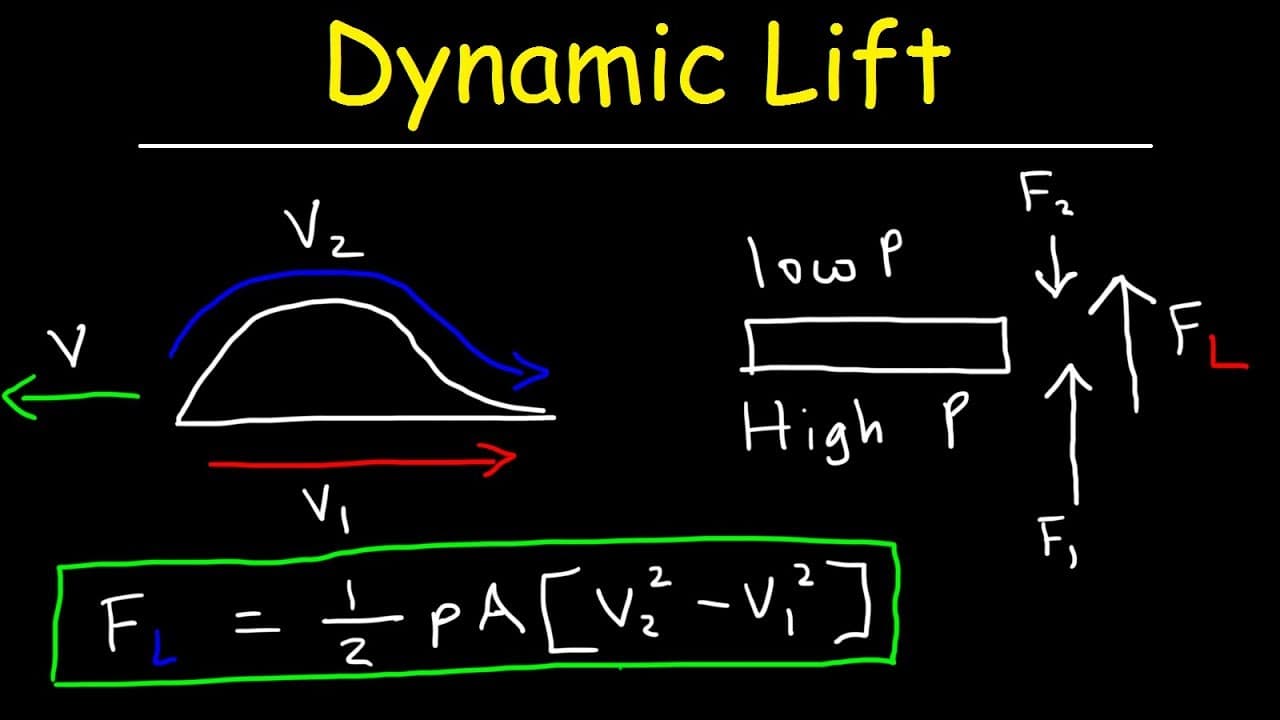
To calculate lift force using Bernoulli's principle, know the wind speed, surface area, and air density. The lift force is determined by the difference in pressure created by varying wind speeds above and below a surface, calculated as lift force equals one-half multiplied by the air density, surface area, and the square of the difference in wind speeds.
Transcript
a wind of 45 meters per second passes over a house with an area of 300 square meters what is the lift force created by this one so let's start with a picture so let's say this is the person's house let's say it's a rectangular house just to keep things simple and so there's a wind moving at 45 meters per second that passes over the house and this i... Read More
Key Insights
- 💨 Wind passing over a house creates a low pressure region on the roof, resulting in an upward lift force due to the higher pressure below.
- 💁 Bernoulli's principle explains the relationship between fluid velocity and pressure, forming the basis for calculating lift force.
- 💨 The lift force equation includes the density of air, area of the surface, and the square difference in wind speeds.
- 😘 Airplanes generate lift force through the curvature of their wings, which leads to differences in wind speed and pressure.
- 🏋️ The net vertical force on an airplane is the difference between the upward lift force and the weight force.
- 💨 Understanding lift force is crucial for designing wind-protected structures and optimizing airplane aerodynamics.
- 💨 Factors like wind speed, surface area, and air density affect the magnitude of lift force.
Install to Summarize YouTube Videos and Get Transcripts
Explore YouTube Video Summarizer or Get YouTube Transcript Extractor
Questions & Answers
Q: How is lift force created when wind passes over a house?
When wind passes over the top of a house, it creates a low pressure region on the roof, causing an upward lift force due to the higher pressure beneath the roof. This is according to Bernoulli's principle, which states that high velocity of a fluid results in low pressure.
Q: How can lift force be calculated using Bernoulli's equation?
By applying Bernoulli's equation, the pressure difference between the high and low regions can be determined. The lift force is equal to one-half times the density of air times the area times the square difference in wind speeds.
Q: Why do airplanes generate lift force?
Airplanes generate lift force through the curved shape of their wings. The longer distance that the wind has to travel on the top surface of the wings results in higher wind speed, leading to a low pressure region. Consequently, a net upward lift force is created due to the higher pressure underneath the wings.
Q: How can the net vertical force on an airplane be calculated?
The net vertical force on an airplane is the difference between the upward lift force and the weight force. The weight force is equal to the mass of the airplane multiplied by the acceleration due to gravity. Subtracting the weight force from the lift force gives the net vertical force.
Summary & Key Takeaways
-
Wind passing over a house creates a low pressure region on the roof, resulting in an upward lift force due to the higher pressure underneath.
-
Using Bernoulli's principle and the equation of lift force, the difference in pressure between the high and low regions can be calculated.
-
Applying the same principle to an airplane, the curved shape of its wings creates a difference in wind speed and pressure, generating a net upward lift force.
Read in Other Languages (beta)
Share This Summary 📚
Summarize YouTube Videos and Get Video Transcripts with 1-Click
Try YouTube Summary with ChatGPT & Claude or YouTube Transcript Generator
Explore More Summaries from The Organic Chemistry Tutor 📚




Summarize YouTube Videos and Get Video Transcripts with 1-Click
Try YouTube Summary with ChatGPT & Claude or YouTube Transcript Generator