Revenge of the BRICS
TL;DR
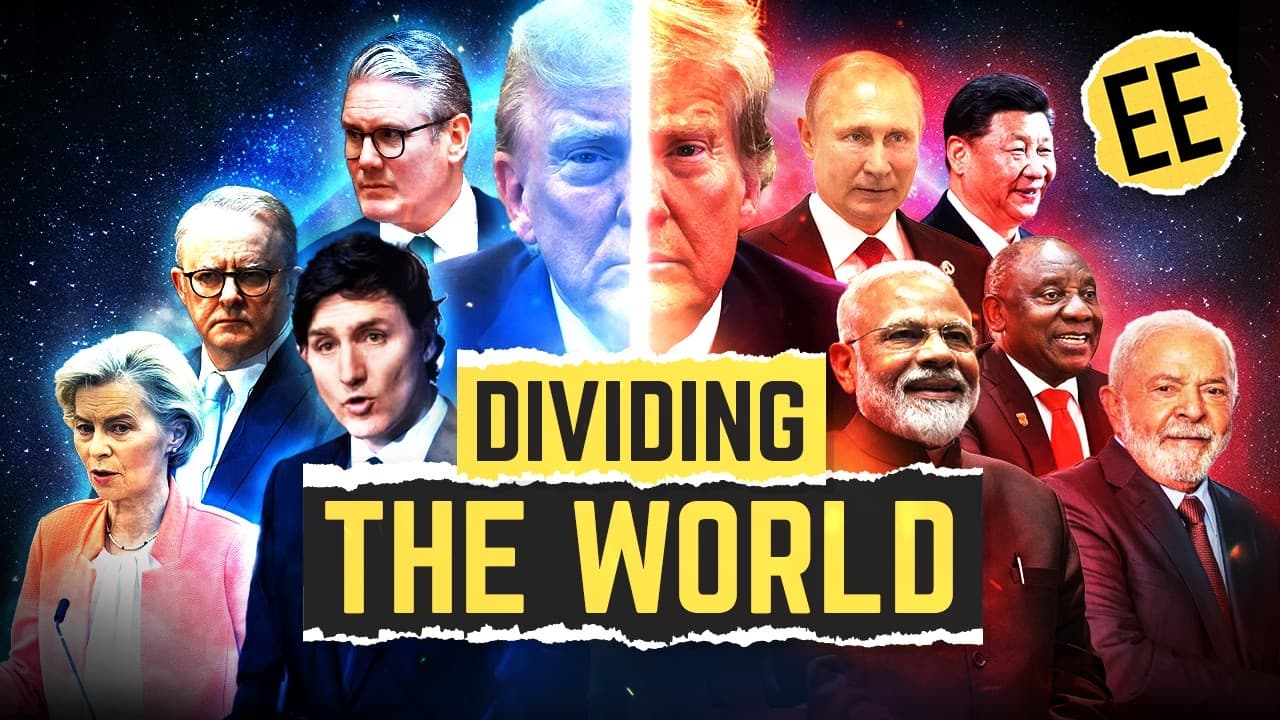
BRICS aims to challenge Western economic dominance amid global tensions.
Transcript
The world has seen some shake ups in the last few months that will have far-reaching economic consequences well into the future. Big headline issues like tariffs been thrown back and forth, sovereign states been eyeballed for invasion, uncertainty over Eastern Europe, government administration, semiconductors and the US federal debt being called in... Read More
Key Insights
- BRICS, comprising Brazil, Russia, India, China, and South Africa, has expanded with new members like Saudi Arabia and Indonesia, aiming to offer an alternative to the US-centric economy.
- The alliance controls vast global resources and population, yet struggles with institutional cohesion and internal conflicts among member states.
- Despite the potential, BRICS faces challenges in establishing a cohesive economic policy, similar to the European Union's structured governance.
- Internal conflicts, such as those between India and China, and external dependencies on Western economies, pose significant hurdles for BRICS' unified ambitions.
- The New Development Bank, established by BRICS, lacks the authoritative power of institutions like the IMF or World Bank, limiting its global influence.
- BRICS' vision of a self-sufficient economic bloc requires overcoming significant political and economic dependencies on Western systems.
- The alliance's success depends on building strong institutions and resolving internal conflicts, which currently impede its progress towards economic independence.
- BRICS could serve as an economic insurance policy against Western dominance, but achieving this requires substantial restructuring and collaboration.
Install to Summarize YouTube Videos and Get Transcripts
Explore YouTube Video Summarizer or Get YouTube Transcript Extractor
Questions & Answers
Q: What is the primary goal of the BRICS alliance?
The primary goal of the BRICS alliance is to offer an alternative to the US-centric global economy. By leveraging their combined resources and population, BRICS aims to establish a self-sufficient economic bloc that can operate independently of Western financial systems. This includes creating institutions like the New Development Bank to rival the IMF and World Bank.
Q: What challenges does BRICS face in achieving its goals?
BRICS faces several challenges in achieving its goals, including internal conflicts among member states, such as India and China's disputes, and dependencies on Western economies. The alliance also struggles with institutional cohesion, lacking the structured governance seen in the European Union. These factors hinder BRICS' ability to establish a unified economic policy and achieve economic independence.
Q: How does the New Development Bank fit into BRICS' strategy?
The New Development Bank, established by BRICS, is intended to serve as an alternative to Western financial institutions like the IMF and World Bank. However, it lacks the authoritative power and global influence of these institutions. The bank is part of BRICS' strategy to create a self-sufficient economic bloc, but its impact is limited by the alliance's institutional weaknesses and internal conflicts.
Q: What role does China play in the BRICS alliance?
China plays a crucial role in the BRICS alliance due to its economic power and influence. As the largest economy within BRICS, China is pivotal in driving the group's initiatives, such as the New Development Bank. However, China's dominance can also create tensions with other member states, like India, which have competing interests and concerns about China's influence within the alliance.
Q: Can BRICS realistically achieve economic independence from Western systems?
Achieving economic independence from Western systems is a challenging goal for BRICS. It requires overcoming significant political and economic dependencies on Western economies, as well as resolving internal conflicts and building strong institutions. While BRICS has potential due to its resources and population, achieving full independence would necessitate substantial restructuring and collaboration among its diverse member states.
Q: What potential benefits could BRICS offer its member countries?
BRICS could offer its member countries several potential benefits, including increased economic leverage on the global stage, reduced dependency on Western financial systems, and greater control over their economic policies. By collaborating on trade, finance, and development projects, BRICS members could enhance their economic resilience and create a more balanced global economic order.
Q: How do internal conflicts within BRICS affect its cohesion?
Internal conflicts within BRICS, such as those between India and China, significantly affect the alliance's cohesion. These disputes create distrust and hinder collaborative efforts, making it difficult for BRICS to establish a unified economic policy. Resolving these conflicts is essential for BRICS to function effectively as a cohesive economic bloc and achieve its long-term goals.
Q: What is the significance of BRICS' expansion with new members?
The expansion of BRICS with new members like Saudi Arabia and Indonesia signifies the alliance's growing influence and ambition to challenge the Western-led global economy. By including more countries, BRICS aims to increase its economic leverage and diversify its resources. However, this expansion also brings additional challenges, as it requires integrating diverse political and economic interests into a cohesive strategy.
Summary & Key Takeaways
-
BRICS, initially formed by Brazil, Russia, India, China, and South Africa, has expanded with new members like Saudi Arabia and Indonesia. The group aims to challenge the US-centric global economy by leveraging its control over significant resources and population, despite facing internal conflicts and institutional weaknesses.
-
The New Development Bank was created as an alternative to Western financial institutions, but BRICS lacks the cohesive governance seen in the European Union. Internal conflicts and dependencies on Western economies present significant challenges to BRICS' goal of establishing an independent economic bloc.
-
BRICS' ambition to become a self-sufficient economic powerhouse requires overcoming political and economic dependencies on Western systems. The alliance's success hinges on building strong institutions and resolving internal conflicts, which currently hinder its progress towards achieving economic independence.
Read in Other Languages (beta)
Share This Summary 📚
Summarize YouTube Videos and Get Video Transcripts with 1-Click
Try YouTube Summary with ChatGPT & Claude or YouTube Transcript Generator
Explore More Summaries from Economics Explained 📚



Summarize YouTube Videos and Get Video Transcripts with 1-Click
Try YouTube Summary with ChatGPT & Claude or YouTube Transcript Generator