Gravitational Waves Discovered for the First Time!
TL;DR
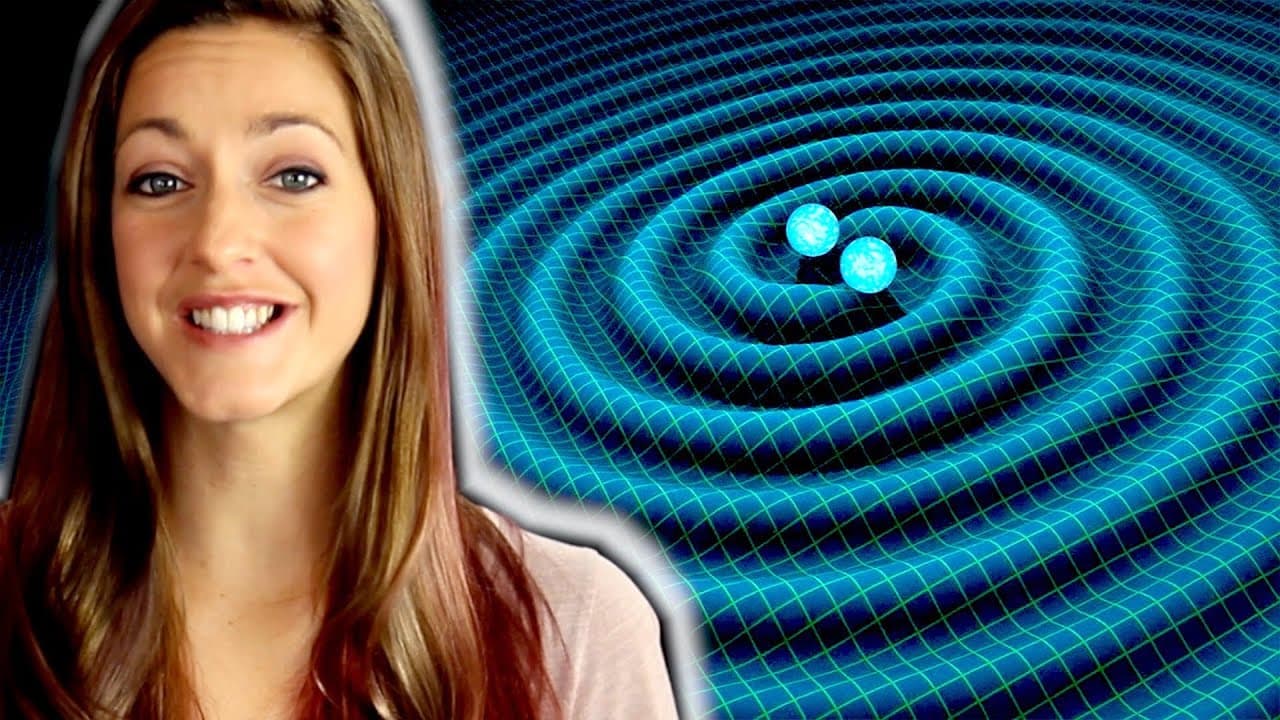
Scientists have invented a new method of observing the universe through gravitational waves, which are ripples in space caused by the curvature of space and time due to massive objects. This breakthrough in technology opens doors to understanding extreme events and objects like black holes, while also advancing science in various fields.
Transcript
Scientists just invented an entirely new way of observing the universe, and it's not with light, because what we've detected is waves in actual space. That is, the stretching and compression of space itself in a ripple passing by us. And as soon as we turn on the detector, we saw the merge of two black holes. Scientists have been dreaming of this f... Read More
Key Insights
- 💨 Gravitational waves confirm Einstein's theory of general relativity and provide a new way to observe the universe.
- 👋 The technology to detect gravitational waves had to advance significantly for the 2015 detection to be possible.
- 👋 Gravitational wave detection has practical applications in fields like cryogenics and optics.
- 👻 Studying gravitational waves allows for a new understanding of extreme events and objects, such as black holes.
Install to Summarize YouTube Videos and Get Transcripts
Explore YouTube Video Summarizer or Get YouTube Transcript Extractor
Questions & Answers
Q: How are gravitational waves different from light waves?
Gravitational waves are waves in the curvature of space itself, caused by massive objects, while light waves are electromagnetic waves that travel through space. Gravitational waves carry information about extreme events in the universe, such as the collision of black holes.
Q: Why is the detection of gravitational waves significant?
The detection of gravitational waves confirms Einstein's theory of general relativity and provides a new way to observe the universe. It opens doors to understanding extreme events, like the collision of black holes, and studying unknown objects, such as black holes.
Q: How does the LIGO detector work?
The LIGO detector consists of two vacuum tunnel arms with lasers reflecting off mirrors. Gravitational waves passing through the detector cause stretching or compression of space, affecting the travel time of laser beams. By measuring interference patterns of these beams, the detector can detect gravitational waves.
Q: What are the practical applications of studying gravitational waves?
While the immediate applications of studying gravitational waves may not be apparent, advancements in understanding the universe and technologies used for detection can have indirect practical benefits. For example, Einstein's theory of relativity, which underlies the study of gravitational waves, is essential for accurate GPS systems.
Summary & Key Takeaways
-
Scientists developed a method of detecting gravitational waves, which are ripples in space caused by the curvature of space and time due to massive objects.
-
The Laser Interferometer Gravitational Wave Observatory (LIGO) was founded in 1992 and successfully detected gravitational waves in 2015, produced by the collision of two black holes.
-
LIGO uses a highly sensitive detector that measures the interference of laser beams reflecting off mirrors, allowing scientists to observe the stretching and compression of space caused by passing gravitational waves.
Read in Other Languages (beta)
Share This Summary 📚
Summarize YouTube Videos and Get Video Transcripts with 1-Click
Try YouTube Summary with ChatGPT & Claude or YouTube Transcript Generator
Explore More Summaries from Physics Girl 📚




Summarize YouTube Videos and Get Video Transcripts with 1-Click
Try YouTube Summary with ChatGPT & Claude or YouTube Transcript Generator