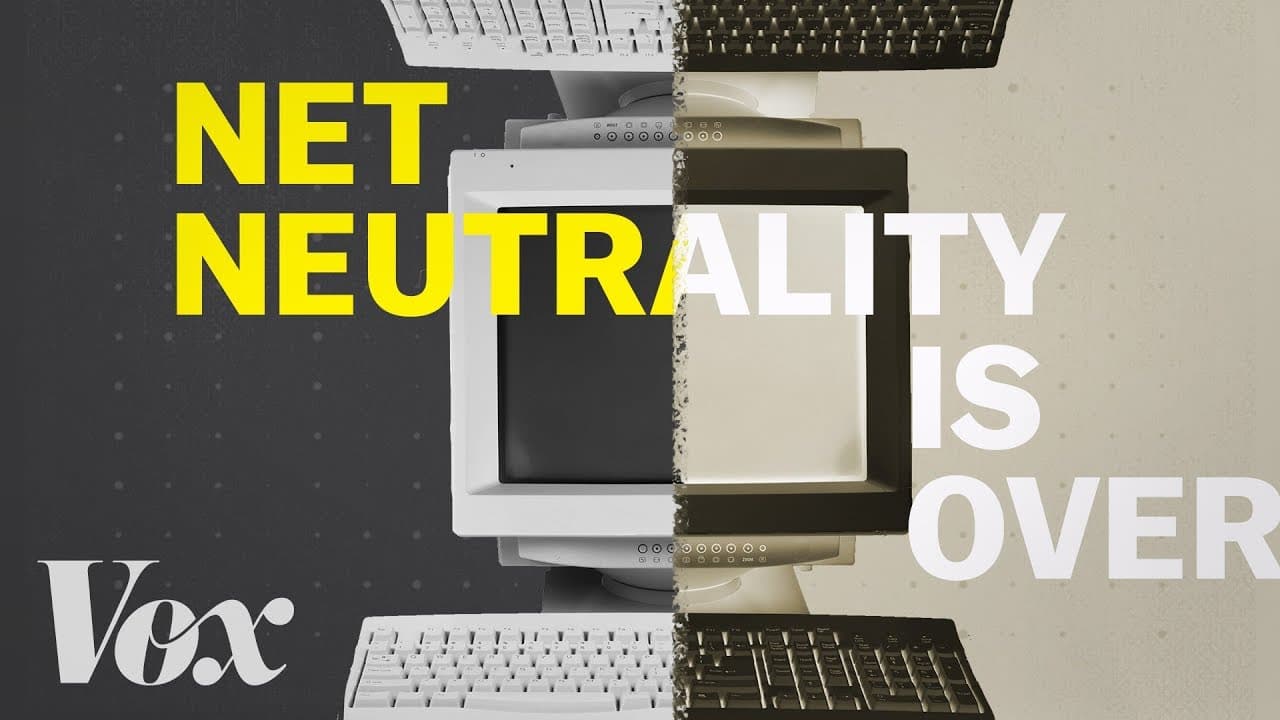
How the end of net neutrality could change the internet
TL;DR
FCC's repeal of net neutrality could reshape internet access.
Transcript
It's hard to overestimate just how much broadband changed the internet. Back when you had to connect to the internet using dial-up, information traveled slowly. Pages took forever to load and watching this video would have been impossible. Today's internet is a completely different creature, which is why it's so puzzling that the last time Congress... Read More
Key Insights
- The FCC's decision to repeal net neutrality rules could significantly alter how internet services are accessed and delivered.
- Net neutrality ensures that internet service providers treat all data equally, without favoring or blocking particular products or websites.
- Internet Service Providers (ISPs) like Comcast and Verizon oppose net neutrality because it limits their ability to charge extra for data-heavy services.
- The repeal could lead to ISPs creating tiered internet access plans, potentially increasing costs for consumers and affecting service accessibility.
- The lack of net neutrality could stifle innovation by making it difficult for new services to compete with established platforms like Instagram.
- Historically, ISPs were regulated as common carriers, ensuring competition and consumer choice in the internet service market.
- The 2005 FCC decision to stop treating ISPs as common carriers led to reduced competition and monopolistic tendencies in the broadband market.
- Despite bipartisan public support for net neutrality, political and regulatory inertia makes its reinstatement unlikely in the near future.
Install to Summarize YouTube Videos and Get Transcripts
Explore YouTube Video Summarizer or Get YouTube Transcript Extractor
Questions & Answers
Q: What is net neutrality?
Net neutrality is the principle that Internet Service Providers (ISPs) must treat all data on the internet the same way. They cannot discriminate or charge differently by user, content, website, platform, or application. This ensures that ISPs do not block, throttle, or prioritize certain content over others, maintaining an open and fair internet.
Q: Why do ISPs oppose net neutrality?
ISPs oppose net neutrality because it restricts their ability to charge extra for high-bandwidth services. Without net neutrality, ISPs could create tiered service plans, charging more for faster access to data-heavy services like streaming video. This could significantly increase their revenue but at the cost of consumer choice and fair competition.
Q: How could the repeal of net neutrality affect consumers?
The repeal of net neutrality could lead to higher costs for consumers, as ISPs may introduce tiered pricing models that charge more for access to certain websites or services. This could also limit access to new and innovative services, as established platforms may be prioritized, reducing consumer choice and innovation in the market.
Q: What historical regulations ensured competition among ISPs?
Historically, ISPs were classified as common carriers, which allowed the FCC to regulate them similarly to phone companies. This classification ensured competition by requiring ISPs to allow competitors to use their infrastructure. This regulation helped maintain a competitive market, providing consumers with multiple choices for internet service.
Q: What happened after ISPs were no longer treated as common carriers?
After the FCC stopped treating ISPs as common carriers in 2005, the market saw a decline in competition. This deregulation allowed ISPs to consolidate power, leading to monopolistic tendencies where many Americans now have limited choices for high-speed internet. This lack of competition can lead to higher prices and reduced service quality.
Q: How might the repeal of net neutrality affect innovation?
The repeal of net neutrality could stifle innovation by creating barriers for new services to enter the market. Without equal access to network resources, new platforms may struggle to compete with established services that can afford to pay for prioritized access. This could limit the diversity of available online services and slow technological advancement.
Q: What is the public opinion on net neutrality?
Public opinion on net neutrality is largely supportive, with majorities of both Republican and Democratic voters favoring its protections. Many people believe that net neutrality is essential for maintaining an open and fair internet, ensuring that all users have equal access to information and services without undue interference from ISPs.
Q: Is the reinstatement of net neutrality likely?
Despite strong public support, the reinstatement of net neutrality faces significant political and regulatory challenges. The current regulatory environment and political climate make it unlikely that Congress or the FCC will act to restore net neutrality protections in the near future, leaving the internet landscape vulnerable to monopolistic practices by ISPs.
Summary & Key Takeaways
-
The FCC's decision to repeal net neutrality rules could fundamentally change internet usage by allowing ISPs to charge more for certain services and potentially limit access to new platforms. This shift could lead to increased costs for consumers and reduced competition in the internet service market.
-
Net neutrality is a principle that ensures all internet traffic is treated equally, preventing ISPs from blocking or slowing down specific websites or services. The repeal of these protections could lead to a tiered internet access system, favoring established services and hindering new entrants.
-
Historically, ISPs were regulated to ensure competition and consumer choice. However, since 2005, deregulation has led to reduced competition in the broadband market. The FCC's recent decision to repeal net neutrality continues this trend, potentially increasing monopolistic behavior among ISPs.
Read in Other Languages (beta)
Share This Summary 📚
Summarize YouTube Videos and Get Video Transcripts with 1-Click
Try YouTube Summary with ChatGPT & Claude or YouTube Transcript Generator
Explore More Summaries from Vox 📚



Summarize YouTube Videos and Get Video Transcripts with 1-Click
Try YouTube Summary with ChatGPT & Claude or YouTube Transcript Generator