How to Design Plate Thickness for Infinite Life
TL;DR
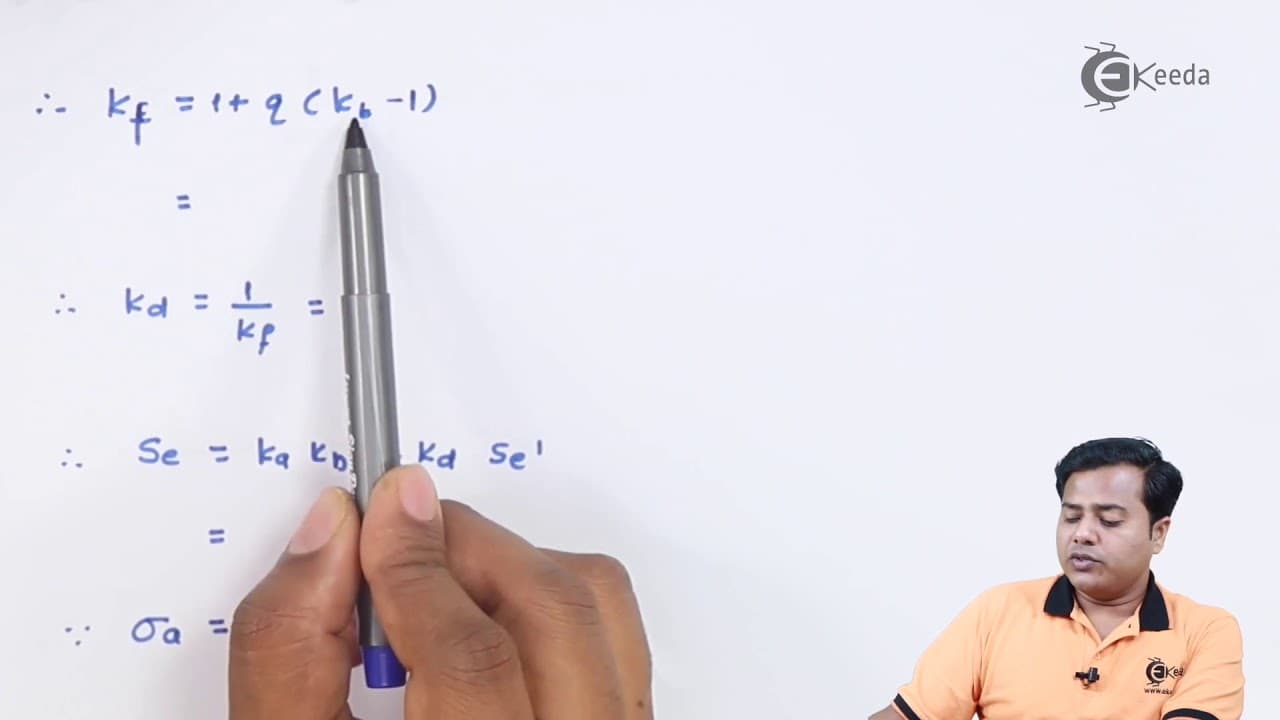
To design plate thickness for infinite life under reverse loading, start by calculating the theoretical endurance limit using ultimate stress and a safety factor. Incorporate adjustments for size, reliability, and stress concentration factors to find the corrected endurance limit, which will allow you to determine the required plate thickness.
Transcript
click the bell icon to get latest videos from ekeeda hello friends so welcome back to subject of motion design one in the last session we have seen the concepts of finite and infinite life design procedure for reverse loading in today's session we are going to start with the numerical based on their design procedure so let us begin with the first n... Read More
Key Insights
- 🧑🏭 The design procedure for plate thickness involves considering factors like size, reliability, and stress concentration to determine the corrected endurance limit.
- 🧑🏭 The theoretical endurance limit is calculated using the ultimate stress and a factor of safety.
- 🍽️ The plate thickness is determined by dividing the amplitude stress by the corrected endurance limit.
- 🍽️ Factors like hole diameter, plate width, notch sensitivity, and reliability percentage affect the design of plate thickness.
- 🍽️ The corrected endurance limit ensures that the plate can withstand stress and has a desired level of reliability.
- 🧑🏭 The size factor adjusts the endurance limit based on the dimensions of the plate.
- 🧑🏭 The reliability factor ensures a specific percentage of reliability for the plate.
Install to Summarize YouTube Videos and Get Transcripts
Explore YouTube Video Summarizer or Get YouTube Transcript Extractor
Questions & Answers
Q: What is the purpose of designing the plate thickness for infinite life?
Designing the plate thickness for infinite life ensures its reliability and endurance under reverse loading conditions with specific factors taken into account. It helps determine the suitable thickness to withstand stress and prevent failure.
Q: How is the theoretical endurance limit calculated?
The theoretical endurance limit is obtained by dividing the ultimate stress by the factor of safety (FoS). In this case, the FoS is 2, and the ultimate strength is 440, resulting in an endurance limit of 220 Newton per millimeter square.
Q: What are the factors considered to obtain the corrected endurance limit?
Factors such as a size factor, reliability factor, and stress concentration factor are considered. The size factor accounts for the dimensions of the plate, the reliability factor ensures a desired percentage of reliability, and the stress concentration factor takes into account the stress concentration caused by the circular hole in the plate.
Q: How is the plate thickness determined using the corrected endurance limit?
The plate thickness is calculated by dividing the amplitude stress (axial load divided by the area of cross-section) by the corrected endurance limit. This gives the required thickness to ensure the desired reliability and infinite life of the plate.
Summary & Key Takeaways
-
The video discusses the procedure for designing the plate thickness for infinite life, taking into account reverse loading and specific factors.
-
The theoretical endurance limit is calculated using the ultimate stress and a factor of safety.
-
Various factors such as size factor, reliability factor, and stress concentration factor are considered to obtain the corrected endurance limit, which is then used to determine the plate thickness.
Read in Other Languages (beta)
Share This Summary 📚
Summarize YouTube Videos and Get Video Transcripts with 1-Click
Try YouTube Summary with ChatGPT & Claude or YouTube Transcript Generator
Explore More Summaries from Ekeeda 📚


Summarize YouTube Videos and Get Video Transcripts with 1-Click
Try YouTube Summary with ChatGPT & Claude or YouTube Transcript Generator