The school-to-prison pipeline, explained
TL;DR
Schools' zero tolerance policies funnel students into the criminal justice system.
Transcript
There’s this phrase you hear in the news sometimes: the school-to-prison pipeline. It’s shorthand for how schools are funneling students — especially black students — into the criminal justice system. It started in the 90s, when schools responded to fears about crime with zero tolerance policies, which mandated suspensions and expulsions for certai... Read More
Key Insights
- The school-to-prison pipeline refers to the process by which schools contribute to students, particularly black students, entering the criminal justice system.
- Zero tolerance policies introduced in the 1990s led to increased suspensions and expulsions for minor infractions, contributing to the pipeline.
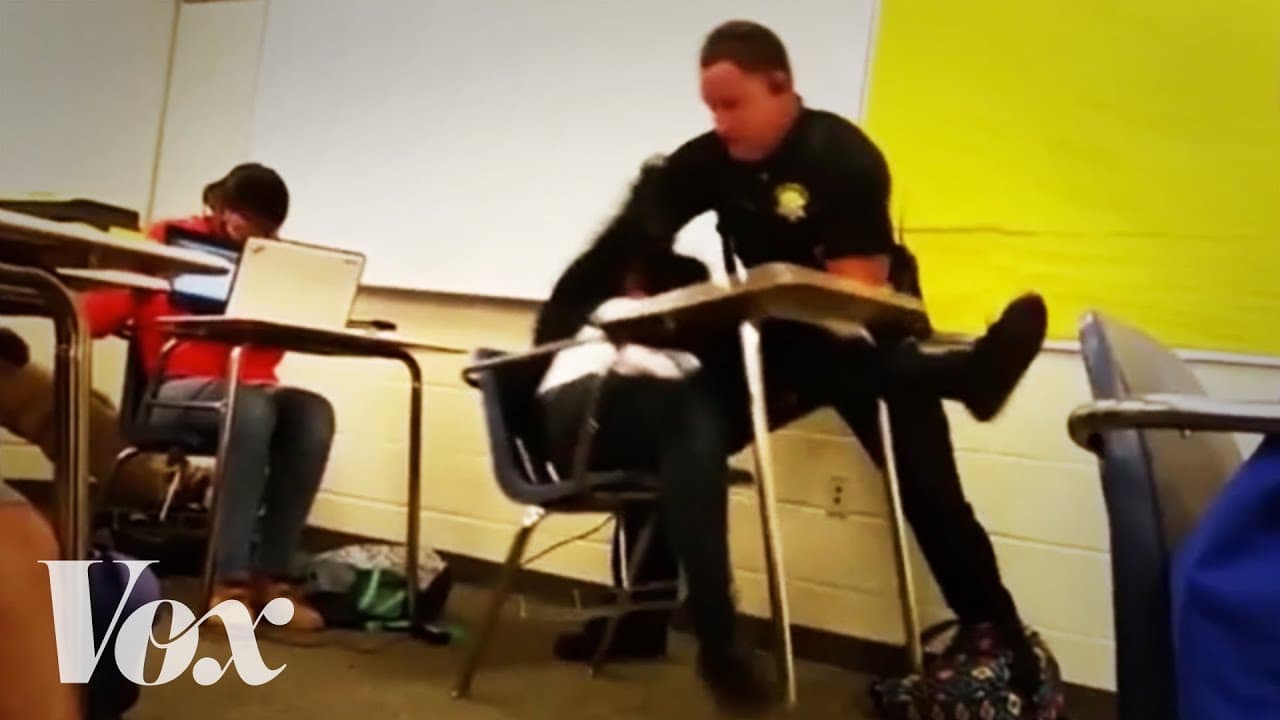
- The presence of police officers in schools has increased significantly, leading to more student arrests for minor misconduct.
- Racial disparities in school discipline are evident, with black students disproportionately affected by suspensions and expulsions.
- Studies indicate that behavioral differences do not fully explain the racial disparities in school discipline.
- Restorative justice practices in schools, such as those in Oakland, have shown promising results in reducing absenteeism and increasing graduation rates.
- The federal government encourages schools to use suspension and expulsion as last resorts to prevent students from entering the criminal justice system.
- There is a need for schools to adopt new disciplinary policies to prevent them from contributing to the school-to-prison pipeline.
Install to Summarize YouTube Videos and Get Transcripts
Explore YouTube Video Summarizer or Get YouTube Transcript Extractor
Questions & Answers
Q: What is the school-to-prison pipeline?
The school-to-prison pipeline is a term used to describe the process by which schools' disciplinary practices contribute to students, particularly black students, entering the criminal justice system. This phenomenon is largely driven by zero tolerance policies and the increased presence of police officers in schools, which lead to higher rates of suspensions, expulsions, and arrests for minor infractions.
Q: How did zero tolerance policies contribute to the pipeline?
Zero tolerance policies, introduced in the 1990s, mandated strict punishments like suspensions and expulsions for a wide range of infractions, including minor ones. These policies were originally intended to address serious issues like weapons and drugs in schools. However, they have led to an increase in disciplinary actions for minor offenses, disproportionately affecting minority students and contributing to the school-to-prison pipeline.
Q: What role do police officers play in schools?
Police officers stationed in schools, often called school resource officers, were initially introduced to prevent serious incidents like school shootings. However, their presence has led to an increase in student arrests for minor misconduct, such as disorderly conduct. This has effectively outsourced school discipline to law enforcement, which contributes to the school-to-prison pipeline by criminalizing student behavior.
Q: Why are black students disproportionately affected by school discipline?
Black students face harsher disciplinary actions than their white peers for similar infractions, a disparity not fully explained by differences in behavior. Studies suggest systemic bias and subjective interpretations of behavior contribute to these disparities. Black students are more likely to be punished for subjective reasons like insubordination, while white students face suspension for provable offenses like smoking.
Q: What is restorative justice and how does it help?
Restorative justice is an alternative disciplinary approach that focuses on resolving conflicts through dialogue rather than punishment. It involves both parties discussing the issue with a counselor to reach a resolution. Schools implementing restorative justice, like those in Oakland, have seen positive outcomes, including reduced absenteeism and increased graduation rates, helping to break the school-to-prison pipeline.
Q: What actions are being taken to address the pipeline?
To address the school-to-prison pipeline, the federal government encourages schools to use suspension and expulsion as last resorts. Schools are exploring alternative disciplinary measures, such as restorative justice, to reduce reliance on punitive actions. These efforts aim to prevent students from entering the criminal justice system due to school-related issues and to address racial disparities in discipline.
Q: How do racial disparities manifest in preschool discipline?
Racial disparities in school discipline begin as early as preschool. Although black preschoolers make up only 18% of the population, they account for 48% of those suspended more than once. This early introduction to harsh disciplinary measures sets a precedent for continued disparities throughout a student's educational journey, contributing to the school-to-prison pipeline.
Q: What are the long-term effects of school suspensions?
Students who face suspensions are more likely to drop out of school and subsequently enter the criminal justice system. Suspensions disrupt a student's educational progress and can lead to disengagement from school. The long-term effects include decreased educational attainment, limited career opportunities, and increased likelihood of criminal behavior, perpetuating the cycle of the school-to-prison pipeline.
Summary & Key Takeaways
-
The school-to-prison pipeline describes how schools' disciplinary practices contribute to students entering the criminal justice system. Zero tolerance policies, introduced in the 1990s, have led to increased suspensions and expulsions, disproportionately affecting black students. The presence of police officers in schools has also contributed to more arrests for minor infractions.
-
Racial disparities in school discipline are significant, with black students facing harsher penalties than their white counterparts for similar offenses. Behavioral differences do not fully explain these disparities, suggesting systemic bias. Schools are encouraged to adopt alternative disciplinary measures, such as restorative justice, to address these issues.
-
Restorative justice practices, like those implemented in Oakland, California, have shown positive outcomes in reducing absenteeism and improving graduation rates. These practices involve conflict resolution through dialogue rather than punishment. The federal government advocates for such approaches to minimize the school-to-prison pipeline's impact.
Read in Other Languages (beta)
Share This Summary 📚
Summarize YouTube Videos and Get Video Transcripts with 1-Click
Try YouTube Summary with ChatGPT & Claude or YouTube Transcript Generator
Explore More Summaries from Vox 📚



Summarize YouTube Videos and Get Video Transcripts with 1-Click
Try YouTube Summary with ChatGPT & Claude or YouTube Transcript Generator