How should the media cover a White House that isn't afraid to lie?
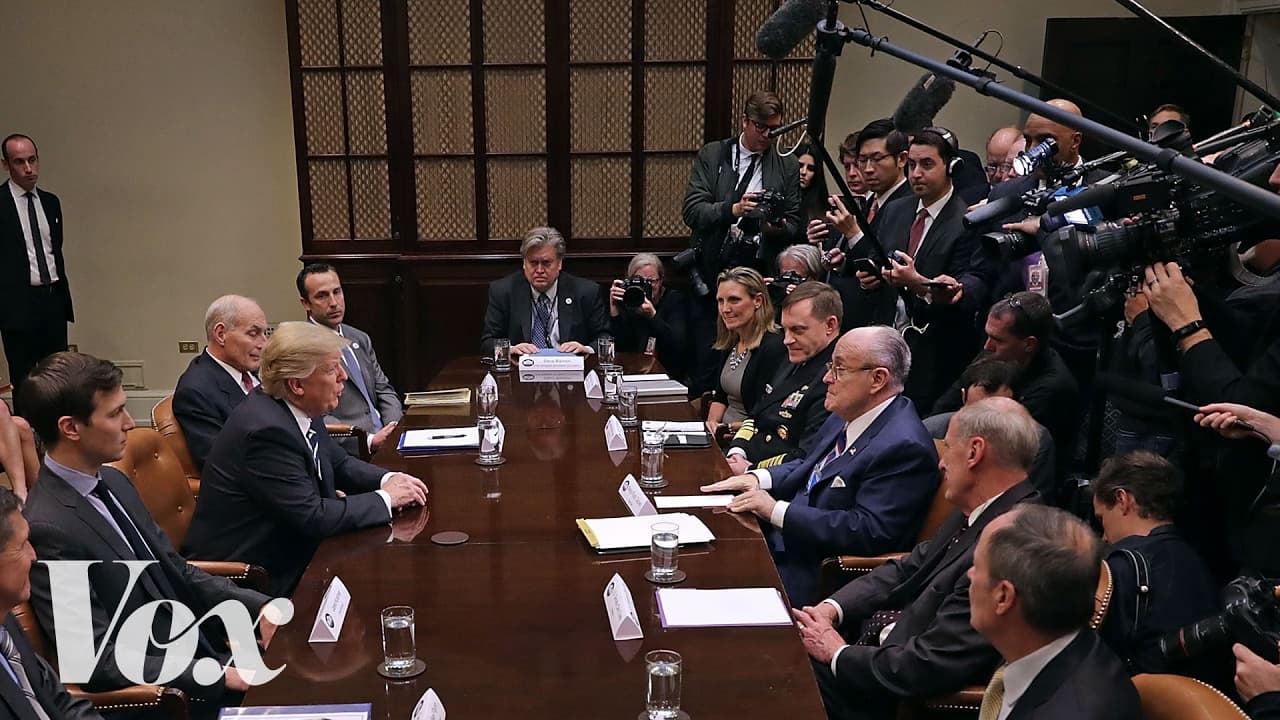
TL;DR
Trump's administration challenges journalists with frequent misinformation.
Transcript
Donald Trump's press secretary did something really weird during his first White House Press Conference he walked out in front of a room full of reporters looked them in the eye and told an obvious lie about the size of Trump's inauguration crowd this was the largest audience to ever witness an inauguration period both in person and around the glob... Read More
Key Insights
- The Trump administration, unlike previous ones, is comfortable with providing false information, complicating traditional journalism practices.
- Sean Spicer, Trump's press secretary, set a precedent by lying about inauguration crowd sizes during his first press conference.
- Journalists face the challenge of covering a White House that is unafraid of being caught lying, requiring new reporting strategies.
- News networks need to act as a buffer, critically assessing and verifying information from the White House before dissemination.
- CNN demonstrated a more cautious approach by waiting to report on Spicer's statements until after verifying them, unlike other networks.
- Journalists may need to shift focus from routine press briefings to in-depth investigative reporting to uncover the truth.
- The reliance on White House sources is now questionable, as misinformation can affect the accuracy of news reporting.
- The shift in journalistic approach involves accepting the White House as a potential source of misinformation, akin to a grieving process for lost credibility.
Install to Summarize YouTube Videos and Get Transcripts
Explore YouTube Video Summarizer or Get YouTube Transcript Extractor
Questions & Answers
Q: How did Sean Spicer's first press conference set a precedent?
Sean Spicer's first press conference set a precedent by blatantly lying about the size of Trump's inauguration crowd, challenging journalists to adapt to a new reality where the White House is comfortable with misinformation. This marked a significant departure from previous administrations, where accuracy was more carefully maintained.
Q: What challenges do journalists face with the Trump administration?
Journalists face the challenge of covering a White House that frequently disseminates false information, requiring them to develop new strategies for verifying facts and reporting accurately. This involves a shift from traditional reliance on White House briefings to more investigative approaches to uncover the truth.
Q: How should news networks adapt to misinformation from the White House?
News networks should adapt by acting as a buffer, critically assessing and verifying information from the White House before dissemination. This involves withholding live coverage of press briefings until the facts are verified, as demonstrated by CNN's cautious approach during Spicer's initial press conference.
Q: What role did CNN play in adapting to the new White House communication style?
CNN played a role by refraining from live streaming Sean Spicer's initial press conference, opting instead to verify his statements before reporting. This approach allowed them to present the information with context and accuracy, unlike other networks that aired the briefing live without immediate fact-checking.
Q: Why might journalists need to focus more on investigative reporting?
Journalists might need to focus more on investigative reporting because routine White House briefings have become unreliable sources of information. By investing time in uncovering the truth through investigative methods, journalists can maintain accuracy and credibility in the face of potential misinformation from the administration.
Q: How does the reliance on White House sources affect news reporting?
Reliance on White House sources affects news reporting by potentially compromising accuracy, as the administration may provide misleading information. Journalists must adapt by independently verifying facts and questioning the reliability of traditional sources to ensure their reporting remains credible and truthful.
Q: What does Jay Rosen suggest about covering the Trump administration?
Jay Rosen suggests that seasoned journalists should focus on investigative reporting rather than routine press briefings, which may contain misleading information. He emphasizes the need for newsrooms to adapt by critically evaluating government statements and prioritizing independent verification of facts to maintain journalistic integrity.
Q: What is the 'grieving process' journalists must undergo?
The 'grieving process' refers to journalists accepting the loss of reliable White House sources and adapting to a new reality where misinformation is prevalent. This involves letting go of traditional reporting methods and embracing new strategies to verify facts and maintain credibility in their coverage of the administration.
Summary & Key Takeaways
-
The Trump administration presents unique challenges for journalists due to its comfort with disseminating false information, as exemplified by Sean Spicer's inaugural press conference.
-
News networks must adapt by critically evaluating and verifying White House statements before reporting, acting as a filter against potential propaganda.
-
Journalists need to reconsider their reliance on White House sources and focus more on investigative reporting to maintain credibility in the age of misinformation.
Read in Other Languages (beta)
Share This Summary 📚
Summarize YouTube Videos and Get Video Transcripts with 1-Click
Try YouTube Summary with ChatGPT & Claude or YouTube Transcript Generator
Explore More Summaries from Vox 📚




Summarize YouTube Videos and Get Video Transcripts with 1-Click
Try YouTube Summary with ChatGPT & Claude or YouTube Transcript Generator