LEDs - Light Emitting Diodes - Basic Introduction
TL;DR
LEDs are efficient light-emitting diodes that convert electrical energy into light energy. They have polarity and require a current-limited resistor to prevent burning out.
Transcript
in this video we're going to talk about leds light emitting diodes diodes that convert electrical energy into light energy these devices they stay cool they're not like other lamps that generate a lot of heat so they're very efficient at converting electrical energy into light energy now let's talk about the polarity of an led and how to connect it... Read More
Key Insights
- 🙂 LEDs are efficient at converting electrical energy into light energy and do not generate much heat.
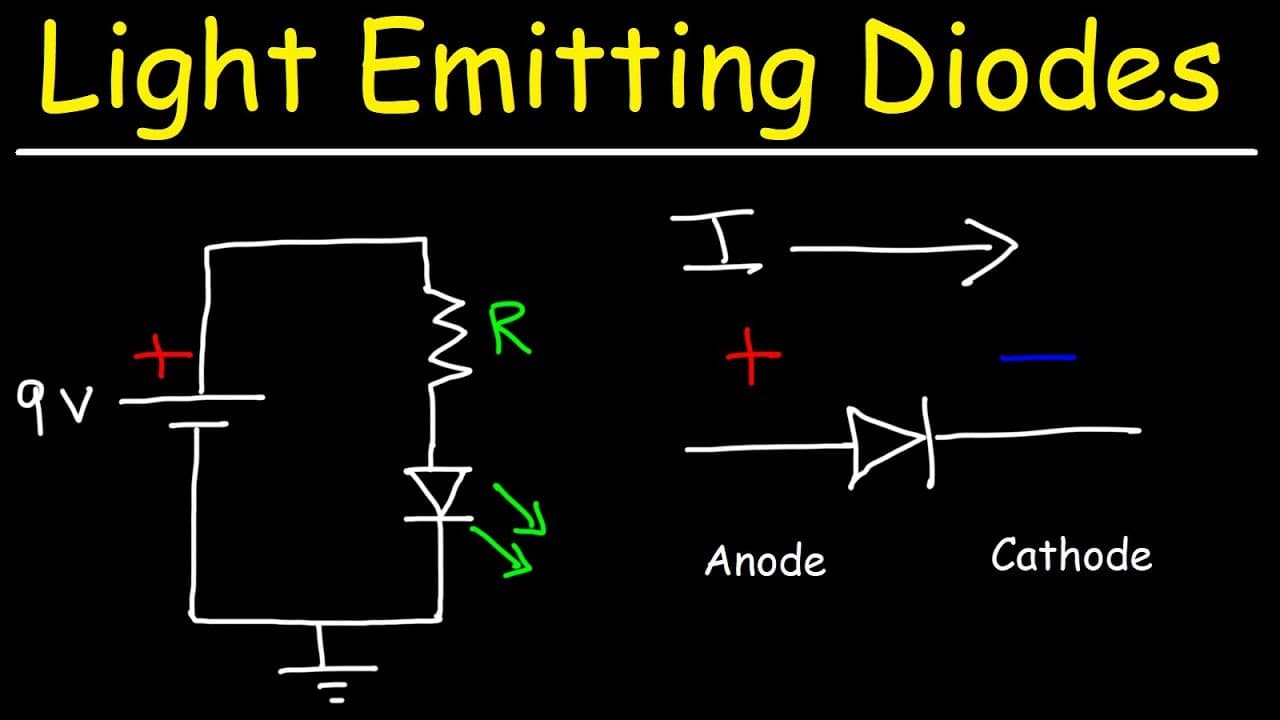
- 👫 LEDs have polarity, with the anode connected to the positive terminal and the cathode connected to the negative terminal of a battery.
- 👫 To prevent burning out, a current-limited resistor should be used in an LED circuit.
- 💦 Factors to consider when buying an LED include forward voltage drop, maximum recommended current, and luminous intensity.
- 💦 The forward voltage drop of an LED can vary depending on the current flowing through it.
- 💦 As the current flowing through an LED increases, the forward voltage drop and luminous intensity also increase.
- 🥺 Exceeding the maximum recommended current can lead to an LED burning out.
Install to Summarize YouTube Videos and Get Transcripts
Explore YouTube Video Summarizer or Get YouTube Transcript Extractor
Questions & Answers
Q: What is the polarity of an LED and how should it be connected in a circuit?
The long side of the LED is the anode, which should be connected to the positive terminal of a battery. The short side is the cathode, which should be connected to the negative terminal.
Q: What does the electrical symbol of an LED look like?
The electrical symbol of an LED is similar to a regular diode, but with two arrows emanating away from it. The positive terminal (anode) is on the left side, and the negative terminal (cathode) is on the right side.
Q: What factors should be considered when buying an LED?
The forward voltage drop, maximum recommended current, and luminous intensity are important factors to consider when buying an LED for an electronics project.
Q: How can the appropriate resistor value be determined for an LED circuit?
By knowing the forward voltage drop of the LED, the desired current, and the voltage of the battery, the appropriate resistor value can be calculated using Ohm's law (V=IR).
Summary & Key Takeaways
-
LEDs are energy-efficient as they convert electrical energy into light energy without generating much heat.
-
LEDs have polarity, with the long side (anode) connected to the positive terminal and the short side (cathode) connected to the negative terminal of a battery.
-
To prevent burning out, an LED circuit requires a current-limited resistor in series with the LED and the battery.
Read in Other Languages (beta)
Share This Summary 📚
Summarize YouTube Videos and Get Video Transcripts with 1-Click
Try YouTube Summary with ChatGPT & Claude or YouTube Transcript Generator
Explore More Summaries from The Organic Chemistry Tutor 📚





Summarize YouTube Videos and Get Video Transcripts with 1-Click
Try YouTube Summary with ChatGPT & Claude or YouTube Transcript Generator