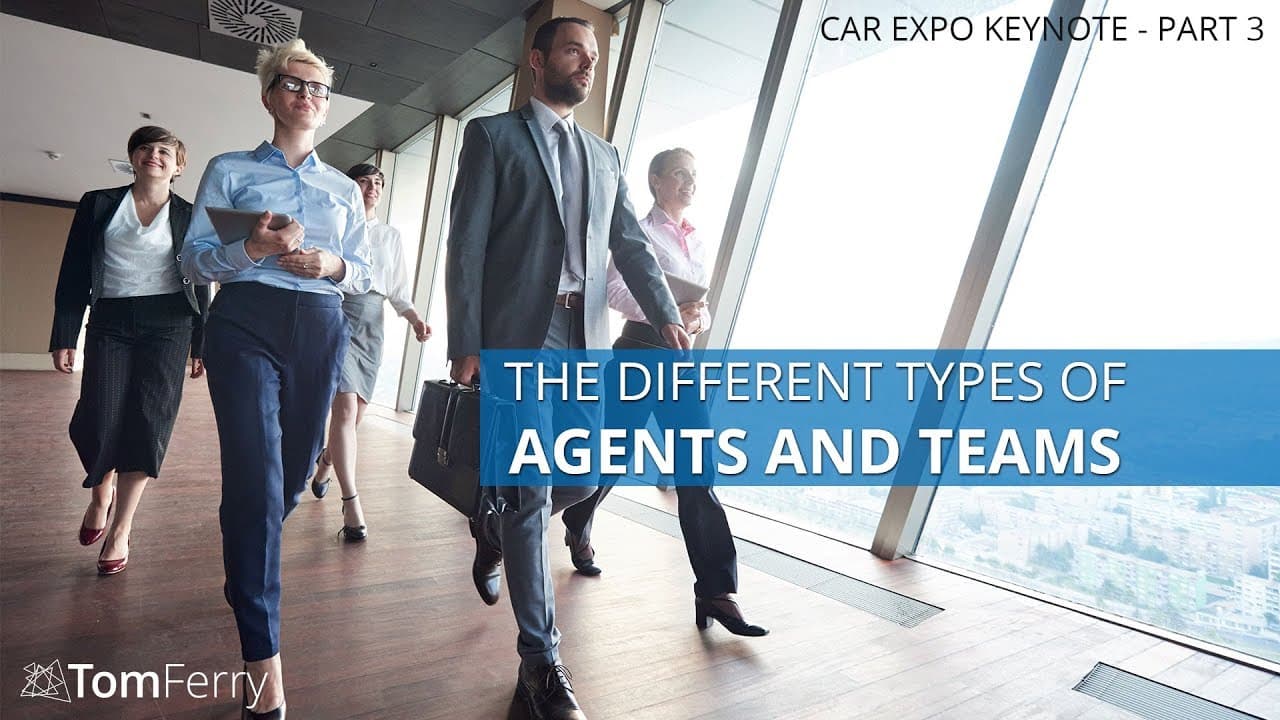
The Different Types of Agents and Teams in Real Estate | Tom Ferry CAR Expo Keynote - Part 3
TL;DR
Explores different real estate team structures and personality archetypes.
Transcript
you are one of three archetypes from a personality standpoint inside this room you're either an artist I'm an artist ready you know what I love I love people and the houses it's totally fun I love the energy it's totally exciting like let's go drinking right like that's real estate artists right I have every piece of software I use none of it you w... Read More
Key Insights
- Real estate professionals typically fall into two archetypes: artists, who thrive on creativity and relationships, and operators, who focus on structure and efficiency.
- Successful real estate teams require a balance of both artists and operators to ensure smooth operations and client satisfaction.
- Team structures vary, but having a dedicated operator is crucial to avoid chaos and ensure cohesive team functioning.
- Family businesses in real estate can extend their legacy by involving younger generations, leveraging their tech-savvy skills.
- Real estate teams thrive not on commission splits but on strong culture, vision, and purpose that motivate members beyond monetary gain.
- The 'hero' archetype in real estate can lead to high turnover of assistants due to micromanagement and over-parenting tendencies.
- Business builders in real estate prioritize creating a mission-driven environment that attracts and retains talent, focusing on client relationships.
- Old-school real estate methods, such as geographic farming and relationship building, remain effective when combined with modern strategies.
Install to Summarize YouTube Videos and Get Transcripts
Explore YouTube Video Summarizer or Get YouTube Transcript Extractor
Questions & Answers
Q: What are the two main personality archetypes in real estate?
The two main personality archetypes in real estate are 'artists' and 'operators.' Artists are driven by creativity, relationships, and emotional connections with clients, while operators focus on structure, efficiency, and ensuring smooth operations. Successful teams often require a balance of both archetypes to function effectively.
Q: Why is having an operator important in a real estate team?
Having an operator in a real estate team is crucial because they ensure that operations run smoothly, client satisfaction is maintained, and the team functions cohesively. Operators focus on using the right solutions and software, reducing transaction breakage, and preventing chaos, which can occur when teams lack structured oversight.
Q: How can family businesses in real estate extend their legacy?
Family businesses in real estate can extend their legacy by involving younger generations, such as tech-savvy children or relatives, in the business. This integration allows the business to leverage new skills, particularly in technology, while continuing to build on the established brand and community relationships developed over the years.
Q: What motivates real estate team members beyond commission splits?
Real estate team members are motivated by a strong culture, vision, and purpose beyond mere commission splits. When team leaders create an environment charged with a mission and a sense of purpose, members feel they are part of something meaningful, which drives motivation and retention more effectively than financial incentives alone.
Q: What challenges does the 'hero' archetype face in real estate?
The 'hero' archetype in real estate often faces challenges such as high turnover of assistants due to micromanagement and over-parenting tendencies. These individuals tend to do everything themselves, leading to burnout and dissatisfaction among team members who seek growth and autonomy. This approach can hinder team development and effectiveness.
Q: How do business builders create successful real estate teams?
Business builders create successful real estate teams by prioritizing a mission-driven environment that attracts and retains talent. They focus on establishing a strong culture, vision, and purpose, ensuring every team member understands their role in changing clients' lives. This approach fosters loyalty and dedication among team members, contributing to long-term success.
Q: What role does old-school methodology play in modern real estate?
Old-school methodology, such as geographic farming and relationship building, remains effective in modern real estate when combined with contemporary strategies. These methods focus on building long-term client relationships and community presence, which can be enhanced by integrating modern technology and marketing techniques to reach a broader audience and increase engagement.
Q: Why might a vice president leave a corporate role for a real estate team?
A vice president might leave a corporate role for a real estate team if the team offers a unique culture, vision, and mission that aligns with their personal values. Such teams provide opportunities to make a direct impact, foster innovation, and build a cohesive environment where every client interaction is meaningful, attracting leaders seeking purpose-driven work.
Summary & Key Takeaways
-
Real estate teams benefit from having both creative 'artists' and structured 'operators' to ensure a balanced approach to client service and business operations.
-
Involving family members in real estate businesses can help extend the brand's legacy and integrate new skills, particularly in technology and client engagement.
-
Successful real estate teams focus on creating a strong culture and mission, which drives motivation and retention more effectively than financial incentives alone.
Read in Other Languages (beta)
Share This Summary 📚
Summarize YouTube Videos and Get Video Transcripts with 1-Click
Try YouTube Summary with ChatGPT & Claude or YouTube Transcript Generator
Explore More Summaries from Tom Ferry 📚
Summarize YouTube Videos and Get Video Transcripts with 1-Click
Try YouTube Summary with ChatGPT & Claude or YouTube Transcript Generator