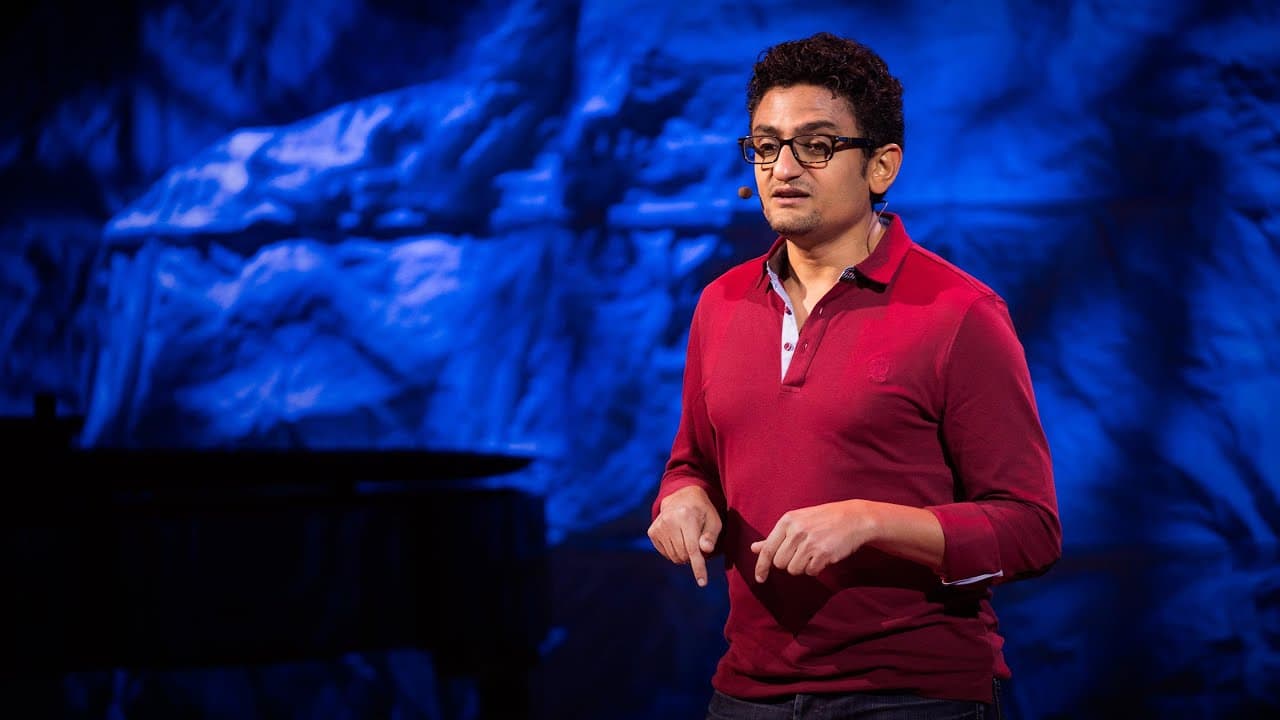
Let's design social media that drives real change | Wael Ghonim
TL;DR
In this talk, the speaker shares their experience in using social media for activism and discusses the challenges and shortcomings it presents.
Transcript
I once said, "If you want to liberate a society, all you need is the Internet." I was wrong. I said those words back in 2011, when a Facebook page I anonymously created helped spark the Egyptian revolution. The Arab Spring revealed social media's greatest potential, but it also exposed its greatest shortcomings. The same tool that united us to topp... Read More
Key Insights
- 🌍 The Arab Spring revealed social media's potential for activism and mobilization, but also its shortcomings in spreading misinformation, rumors, and hate speech.
- 📲 Social media platforms like Facebook played a pivotal role in organizing and uniting people during the revolution, but also contributed to the polarization and division in post-revolution Egypt.
- 🔒 The environment on social media became toxic, with trolls, lies, and hate speech, leading to concerns for personal safety and a feeling of helplessness among those in the center of the political spectrum.
- 🔇 The speaker, after experiencing the negative consequences of social media, chose to go silent for more than two years and reflects on how social media platforms shape human behavior and amplify its impact.
- 📢 There are five critical challenges facing social media today: dealing with rumors, creating echo chambers, online discussions descending into angry mobs, difficulty changing opinions, and platforms favoring broadcasting over engagement and thoughtful discussions.
- 🌐 These challenges are not unique to Egypt, but are seen worldwide, and technology should be part of the solution in designing social media experiences that promote civility, thoughtfulness, and mutual understanding.
- 💡 The speaker's new project aims to create a media platform for conversations that promote mutual understanding, change minds, and tackle divisive issues such as race, gun control, and the refugee debate.
- 🌐 To liberate society, the Internet needs to be liberated from the negative aspects of human behavior, and social media experiences should be redesigned to reward thoughtfulness, civility, and the ability to change one's mind.
Install to Summarize YouTube Videos and Get Transcripts
Explore YouTube Video Summarizer or Get YouTube Transcript Extractor
Questions & Answers
Q: What role did social media play in the Egyptian revolution?
Social media played a crucial role in the Egyptian revolution. It helped unite people, mobilize them for protests, and spread information that the regime tried to suppress.
Q: How did the anonymous Facebook page "We are all Khaled Said" contribute to the revolution?
The Facebook page "We are all Khaled Said" played a significant role in mobilizing Egyptians for the revolution. It gathered over 100,000 people within three days, allowing them to collectively call for actions, share news, and create a decentralized movement for change.
Q: What challenges did the post-revolutionary period bring in terms of social media?
The post-revolution period in Egypt saw an increase in polarization and the spread of misinformation, rumors, and hate speech through social media. This toxic environment created divisions and hindered efforts to build consensus.
Q: What are the critical challenges facing social media today?
The speaker identifies five critical challenges facing social media today: dealing with rumors, creating echo chambers, online discussions turning into angry mobs, difficulty in changing opinions, and a focus on broadcasting rather than engagement.
Q: How can social media be redesigned to promote thoughtfulness and civility?
One suggestion is to design social media experiences that reward thoughtfulness and incentivize engagement over broadcasting. This could involve promoting quality over quantity, encouraging conversations and debate, and rewarding individuals for changing their opinions based on new evidence.
Summary & Key Takeaways
-
The speaker initially believed that the Internet could liberate society, as seen through his experience using social media for activism during the Egyptian revolution.
-
However, he reflects on the negative consequences that emerged from the Arab Spring, such as increased polarization, spread of misinformation, and hateful speech on social media.
-
The speaker calls for a redesign of social media platforms to promote thoughtfulness, civility, and mutual understanding, and shares his work on a media platform for conversations that seeks to change minds and encourage dialogue on divisive issues.
Read in Other Languages (beta)
Share This Summary 📚
Summarize YouTube Videos and Get Video Transcripts with 1-Click
Try YouTube Summary with ChatGPT & Claude or YouTube Transcript Generator
Explore More Summaries from TED 📚


Summarize YouTube Videos and Get Video Transcripts with 1-Click
Try YouTube Summary with ChatGPT & Claude or YouTube Transcript Generator