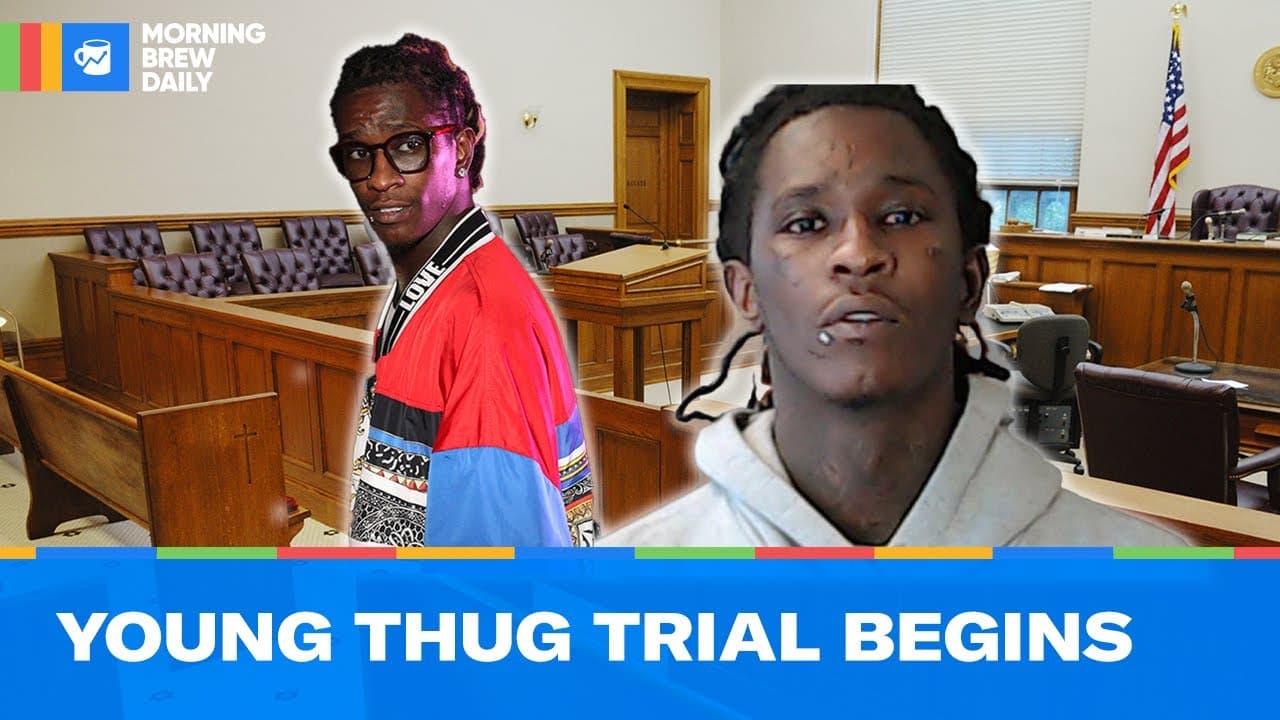
Young Thug's Lyrics Used Against Him In Racketeering Case
TL;DR
Young Thug's lyrics are key evidence in his racketeering trial.
Transcript
good morning Brew Daily Show I'm Neil Fryman and I'm Toby Howell on today's pod major drama ahead of the climate Summit in Dubai later this week then the trial of Atlanta rapper Young Thug kicked off yesterday and it could have big implications for Donald Trump it's Tuesday November 28 let's ride Toby it's giving Tuesday which is not only what a ge... Read More
Key Insights
- Young Thug's trial has started, focusing on his alleged leadership of a gang and using his lyrics as evidence.
- The use of rap lyrics in legal cases is controversial, with critics arguing it infringes on First Amendment rights.
- The trial is drawing parallels to Donald Trump's legal issues, highlighting the use of public statements as evidence.
- It took 10 months for jury selection, indicating the complexity and high-profile nature of the case.
- Young Thug's influence in the rap community is significant, having collaborated with major artists and won a Grammy.
- The trial could set a precedent for how artistic expression is treated in legal contexts.
- California has moved to restrict the use of lyrics in trials, highlighting a growing policy debate.
- The trial is expected to last well into next year, underscoring its extensive nature and potential impact.
Install to Summarize YouTube Videos and Get Transcripts
Explore YouTube Video Summarizer or Get YouTube Transcript Extractor
Questions & Answers
Q: Why are Young Thug's lyrics being used in his trial?
Young Thug's lyrics are being used as evidence in his racketeering trial because prosecutors argue they demonstrate his leadership of a gang. This use of artistic expression in legal proceedings is controversial, with critics claiming it infringes on First Amendment rights and does not accurately reflect real-life actions or intentions.
Q: What are the implications of using lyrics as evidence?
Using lyrics as evidence raises significant First Amendment concerns, as it may infringe on freedom of speech and artistic expression. Critics argue that it unfairly targets certain music genres, like rap, and could set a dangerous precedent for how creative works are interpreted in legal contexts, potentially stifling artistic freedom.
Q: How does Young Thug's trial relate to Donald Trump's legal issues?
Young Thug's trial is being compared to Trump's legal issues due to the use of public statements as evidence. In both cases, prosecutors are using the defendants' own words—lyrics for Young Thug and social media posts for Trump—to build their cases, raising questions about the boundaries of free speech and its legal implications.
Q: What challenges did jury selection face in Young Thug's trial?
Jury selection in Young Thug's trial took 10 months, highlighting the case's complexity and high-profile nature. Finding impartial jurors who can commit to a lengthy trial is challenging, especially given the media attention and the need for jurors to understand the nuances of using artistic expression as evidence in a legal context.
Q: How significant is Young Thug in the rap community?
Young Thug is a prominent figure in the rap community, known for his innovative style and collaborations with major artists like Drake and Travis Scott. He has won a Grammy for co-writing 'This Is America' with Childish Gambino, underscoring his influence and the broader cultural implications of his trial within the music industry.
Q: What is the controversy around the use of lyrics in trials?
The controversy centers on whether lyrics should be admissible as evidence, with critics arguing it discriminates against certain music genres and violates free speech. Proponents claim lyrics can reveal intent or admissions of guilt, but opponents argue they are fictional and artistic, not factual statements, thus inappropriate for legal use.
Q: What legal precedents could Young Thug's trial set?
Young Thug's trial could set precedents regarding the admissibility of artistic expression as evidence, influencing future cases involving creative works. It may impact how courts interpret the First Amendment in relation to artistic content, potentially affecting not only musicians but artists across various mediums and their freedom of expression.
Q: What recent policy changes relate to using lyrics as evidence?
California recently enacted legislation to restrict the use of lyrics in court cases, reflecting growing concern over the fairness and constitutionality of using artistic expression as evidence. This policy change highlights a broader debate on balancing legal needs with protecting artists' rights, potentially influencing legislation in other states.
Summary & Key Takeaways
-
Young Thug's trial began, focusing on his alleged gang leadership and using his lyrics as evidence, sparking First Amendment debates.
-
The trial draws comparisons to Trump's legal issues, emphasizing the use of public statements in court, with jury selection taking 10 months.
-
California's move to limit lyrics in trials highlights the policy debate, with Young Thug's case potentially setting a legal precedent.
Read in Other Languages (beta)
Share This Summary 📚
Summarize YouTube Videos and Get Video Transcripts with 1-Click
Try YouTube Summary with ChatGPT & Claude or YouTube Transcript Generator
Explore More Summaries from Morning Brew Daily 📚


Summarize YouTube Videos and Get Video Transcripts with 1-Click
Try YouTube Summary with ChatGPT & Claude or YouTube Transcript Generator