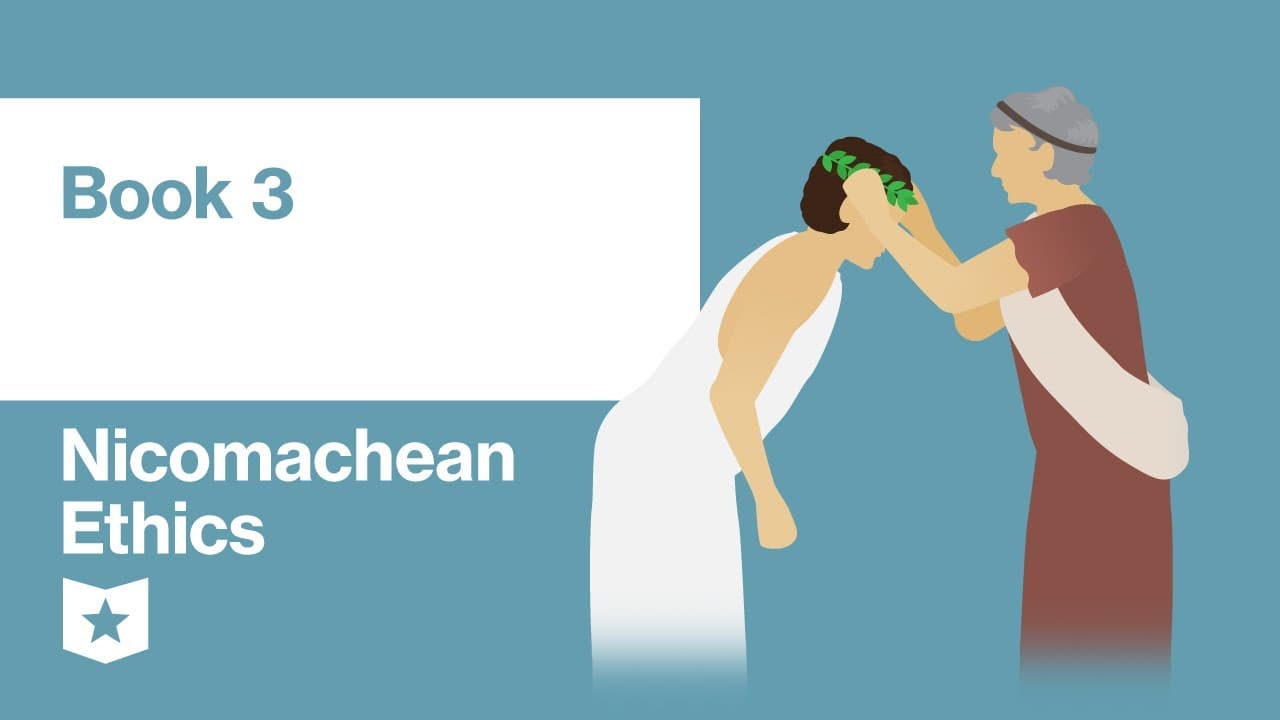
Nicomachean Ethics by Aristotle | Book 3
TL;DR
Aristotle's Nicomachean Ethics explores virtue, choice, and responsibility in actions and decisions.
Transcript
book three of Nicol McKee and ethics is broken into 12 sections in section one Aristotle says virtue concerns feelings and actions that receive either praise or blame but which actions can people be held responsible for section 1 deals with an objection to his theory that people are responsible for their virtuous actions and therefore for their hap... Read More
Key Insights
- ❓ Aristotle's ethical principles focus on virtue, choice, responsibility, and the pursuit of happiness.
- ❓ Voluntary actions are essential in demonstrating moral character and ethical behavior.
- ❤️🩹 Deliberation and decision-making are integral to achieving virtuous ends and fostering personal growth.
- ⚖️ Virtues such as bravery and temperance require a balance between reason and emotions.
- 👋 Understanding the good and the nature of desires plays a crucial role in cultivating character.
- ❓ Ignorance and involuntary actions are distinct from deliberate choices in Aristotle's ethics.
- ❓ The distinction between voluntary and involuntary actions highlights the complexity of moral responsibility.
Install to Summarize YouTube Videos and Get Transcripts
Explore YouTube Video Summarizer or Get YouTube Transcript Extractor
Questions & Answers
Q: How does Aristotle address the responsibility of individuals in their virtuous actions?
Aristotle argues that individuals are responsible for their virtuous actions, which stem from deliberate choices aiming towards a defined end, despite facing challenges or obstacles. He distinguishes between voluntary and involuntary actions.
Q: What role does decision-making play in Aristotle's ethics?
Decision-making, according to Aristotle, is a key aspect of virtue as it involves voluntary actions controlled by individuals to achieve desired ends. Decisions are deliberate, purposeful acts guided by reason towards promoting happiness and moral excellence.
Q: How does Aristotle differentiate between bravery and cowardice in his ethics?
Aristotle defines bravery as the fear of the right things and the willingness to confront dangers when necessary. Cowardice, on the other hand, involves fearing the wrong things or exhibiting excessive fear or overconfidence in the face of challenges.
Q: How does Aristotle explain the concept of temperance in his ethical framework?
Aristotle views temperance as a virtue associated with controlling bodily pleasures, particularly those related to eating, drinking, and sexual desires. It involves moderation and rationality in satisfying one's appetites to maintain a harmonious balance in life.
Summary & Key Takeaways
-
Aristotle discusses virtue and responsibility in various sections of his ethical framework, distinguishing voluntary and involuntary actions.
-
He delves into the concept of decision-making in relation to virtue, highlighting the importance of deliberation and understanding the good.
-
Aristotle explains the nature of virtues such as bravery and temperance, emphasizing the role of reason in controlling appetites.
Read in Other Languages (beta)
Share This Summary 📚
Summarize YouTube Videos and Get Video Transcripts with 1-Click
Try YouTube Summary with ChatGPT & Claude or YouTube Transcript Generator
Explore More Summaries from Course Hero 📚


Summarize YouTube Videos and Get Video Transcripts with 1-Click
Try YouTube Summary with ChatGPT & Claude or YouTube Transcript Generator