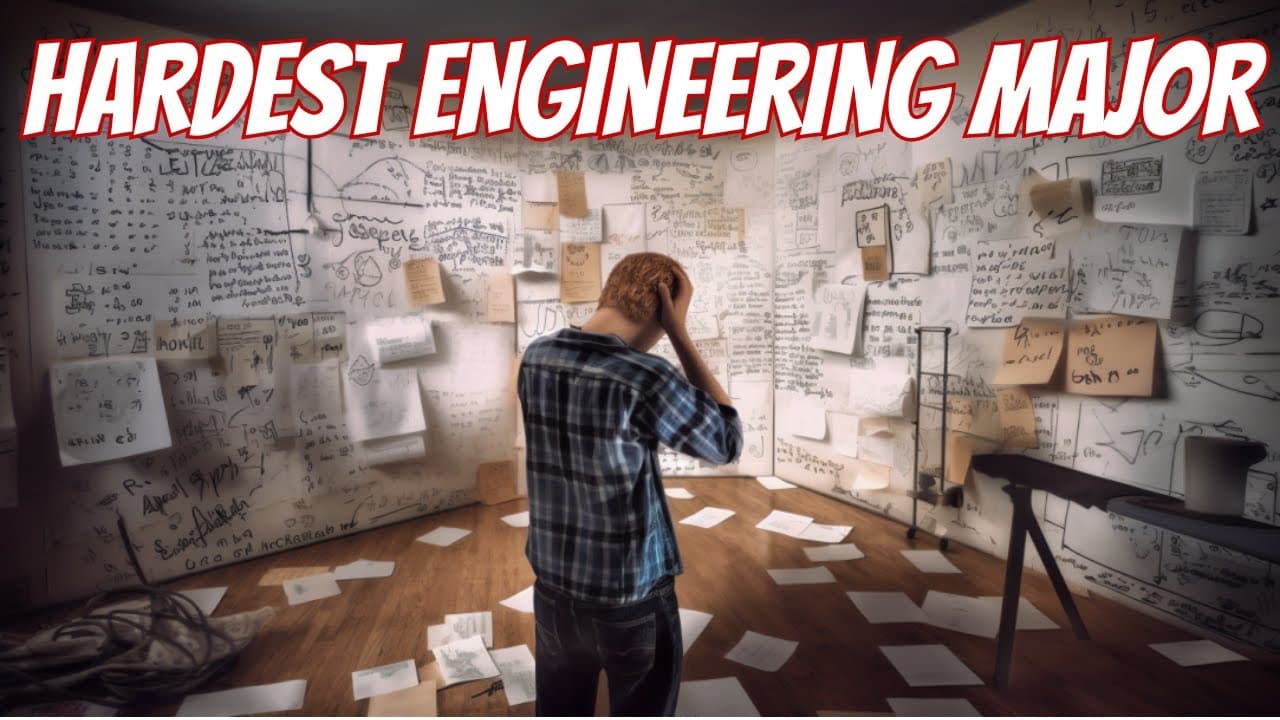
The Hardest Engineering Major and How To Learn It
TL;DR
- Electrical engineering is often seen as the hardest engineering major, with rigorous math and challenging concepts.
Transcript
there are a lot of students in college that are studying to be Engineers but the thing to keep in mind is that there are different engineering Majors so there's mechanical there's industrial there's electrical there's environmental and I'm sure I'm missing several but there's tons there's tons of choices in this video I want to talk about what is c... Read More
Key Insights
- ❓ Electrical engineering is often perceived as the most challenging engineering major due to its emphasis on mathematics and complex concepts.
- 📔 The book "Electrical Engineering Principles and Applications" by Allen R. Hamley provides a modern yet detailed introduction to electrical engineering concepts.
- 🧑🎓 Despite its difficulty, learning electrical engineering can be rewarding for students interested in practical applications and problem-solving.
- 🖤 The lack of exercise answers in the book may present a challenge for students seeking immediate feedback on their understanding.
- 🧑🎓 Practical examples and systematic approaches in the book help students apply mathematical principles to solve real-world electrical engineering problems.
- 👮 Understanding circuit variables, laws, and circuit elements is essential for mastering electrical engineering concepts.
- 🎨 The book's accessible layout, modern design, and focus on fundamental concepts make it a valuable resource for aspiring electrical engineers.
Install to Summarize YouTube Videos and Get Transcripts
Explore YouTube Video Summarizer or Get YouTube Transcript Extractor
Questions & Answers
Q: Why is electrical engineering often regarded as the hardest engineering major?
Electrical engineering is considered challenging due to its extensive math requirements, complex concepts like llaa transforms, and rigorous coursework, making it a formidable discipline for students.
Q: What does the book "Electrical Engineering Principles and Applications" offer to learners?
Allen R. Hamley's book provides a comprehensive overview of electrical engineering concepts, covering topics like circuit analysis, laws, resistive circuits, inductance, capacitance, and more, making it an ideal resource for aspiring electrical engineers.
Q: Are there any downsides to using the book for learning electrical engineering?
One major downside is the lack of answers to exercises in the book, which can be challenging for students seeking feedback on their understanding and application of the concepts presented.
Q: How does the book incorporate mathematics into learning electrical engineering?
The book includes practical examples and mathematical methods like Kramer's Rule for solving systems of equations, demonstrating the application of math in electrical engineering contexts, making it a valuable resource for students.
Summary & Key Takeaways
-
Many students study engineering majors, with various disciplines like mechanical, industrial, electrical, and environmental engineering.
-
Electrical engineering is commonly considered the toughest major due to its complex mathematics and demanding coursework.
-
The book "Electrical Engineering Principles and Applications" by Allen R. Hamley offers a modern yet accessible approach to learning electrical engineering concepts.
Read in Other Languages (beta)
Share This Summary 📚
Summarize YouTube Videos and Get Video Transcripts with 1-Click
Try YouTube Summary with ChatGPT & Claude or YouTube Transcript Generator
Explore More Summaries from The Math Sorcerer 📚


Summarize YouTube Videos and Get Video Transcripts with 1-Click
Try YouTube Summary with ChatGPT & Claude or YouTube Transcript Generator