Copy on Write
TL;DR
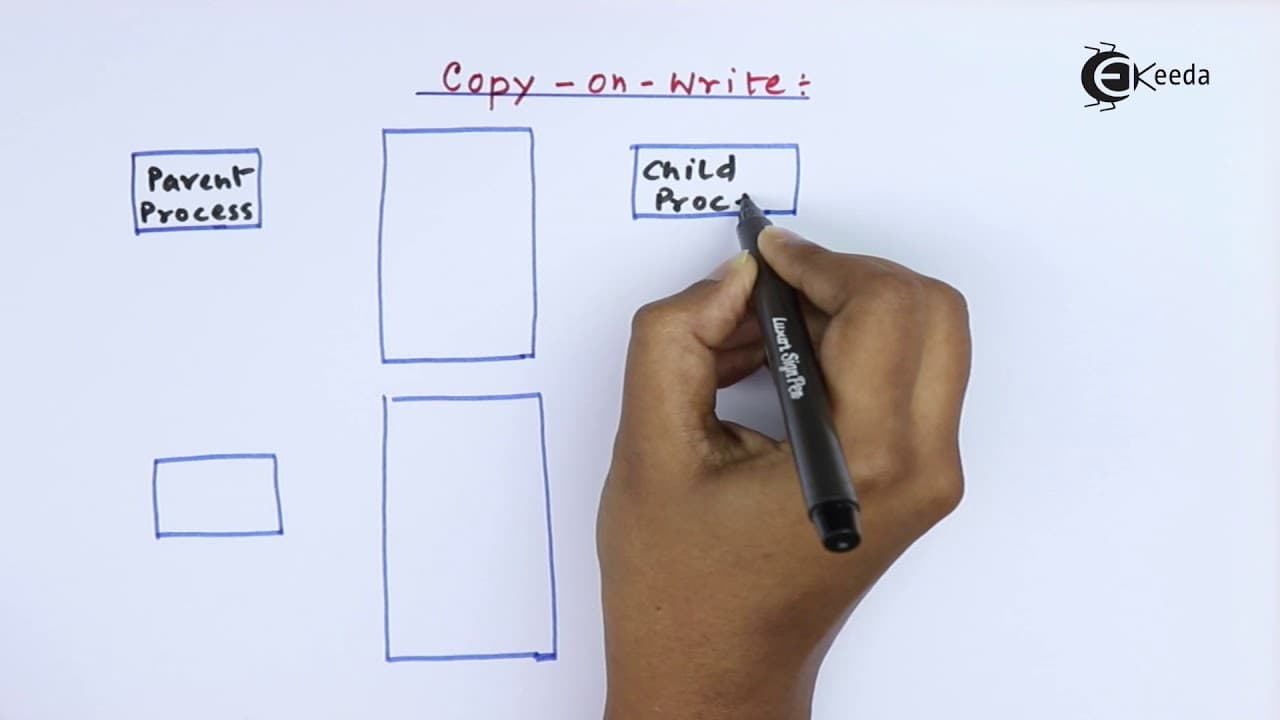
Copy-on-Write is a technique in process creation that allows for shared processes among parent and child processes, minimizing the need for allocating new pages. It offers advantages such as efficient memory usage and process creation, but has some limitations.
Transcript
click the bell icon to get latest videos from akira hello friends today we will discuss about a process creation technique which will eventually helps in a virtual memory management scheme and this technique is known as copy-on-write which help to create shared process among the parent and child processes we will see that how to implement it what a... Read More
Key Insights
- 👪 Copy-on-Write allows for sharing memory pages between parent and child processes, reducing memory usage and speeding up process creation.
- 🤙 It minimizes the need for unnecessary page copying, especially when the child process immediately calls the exec system call.
- 📁 The technique is commonly used for stack modification, virtual memory allocation, and file management.
- 👪 Executing modifications in the child process's address space does not affect the parent's copy, ensuring data integrity.
- 🍽️ Variations of the fork system call, like Vfork, provide more control and efficiency in certain scenarios.
- 💋 Unmodifiable pages, such as executable code, are not marked for copy-on-write.
- ©️ Copy-on-Write is widely implemented in various operating systems, including Windows XP, Solaris, and Linux.
Install to Summarize YouTube Videos and Get Transcripts
Explore YouTube Video Summarizer or Get YouTube Transcript Extractor
Questions & Answers
Q: What is copy-on-write (COW) in process creation?
COW is a technique where shared memory pages are initially created between parent and child processes, and new copies are made only when either process modifies a shared page.
Q: How does COW differ from the traditional fork system call?
The fork system call duplicates the parent's address space for the child, while COW shares memory pages initially and creates new copies only when needed.
Q: What are the advantages of using copy-on-write?
COW allows for efficient memory usage, faster process creation, and saves time by avoiding unnecessary page copying if the child process immediately calls the exec system call.
Q: When is copy-on-write useful in process creation?
COW is useful when there are multiple child processes that may modify the shared pages. It helps minimize memory usage and avoids unnecessary page copying.
Q: Can copy-on-write be used for stack modification?
Yes, COW can be used for stack modification. The operating system maps pages in memory for the child process's address space, allowing modifications without affecting the parent's copy.
Q: What types of pages are typically marked as copy-on-write?
Pages that may be modified by the child process, such as stack pages, are marked as copy-on-write. Unmodifiable pages, like executable code, are not marked for copy-on-write.
Q: Are there variations of the fork system call with copy-on-write?
Yes, there are variations like Vfork or virtual fork where the child process operates in the parent's address space. The parent is notified of any modifications when it resumes execution.
Q: Where is copy-on-write commonly implemented?
Copy-on-write is generally accepted in many operating systems like Windows XP, Solaris, and Linux for efficient process creation and memory management.
Summary & Key Takeaways
-
Copy-on-Write (COW) is a process creation technique that allows for sharing memory pages between parent and child processes.
-
Traditionally, the fork system call duplicates the parent's address space for the child but can be wasteful if the child immediately calls the exec system call.
-
COW creates shared pages initially and only creates new copies when either process tries to modify the shared page.
-
COW can be implemented for process creation, stack modification, and file management.
Read in Other Languages (beta)
Share This Summary 📚
Summarize YouTube Videos and Get Video Transcripts with 1-Click
Try YouTube Summary with ChatGPT & Claude or YouTube Transcript Generator
Explore More Summaries from Ekeeda 📚



Summarize YouTube Videos and Get Video Transcripts with 1-Click
Try YouTube Summary with ChatGPT & Claude or YouTube Transcript Generator