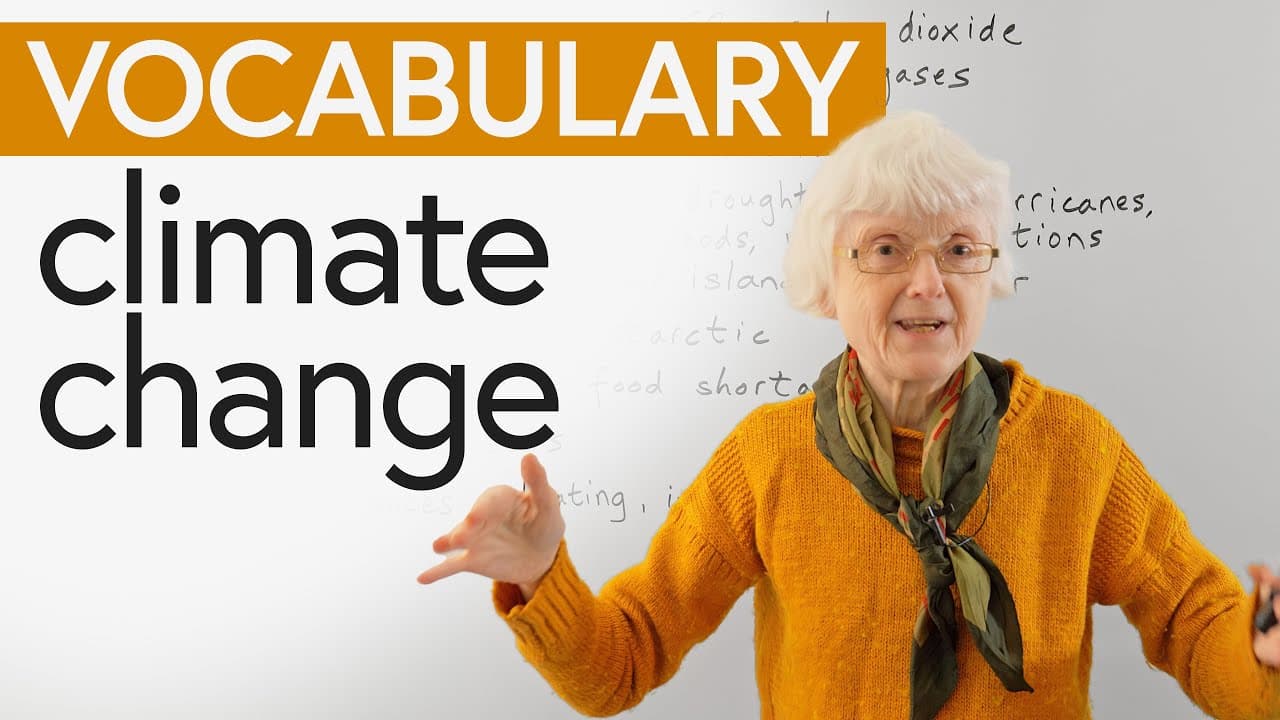
English Vocabulary: CLIMATE CHANGE
TL;DR
Learn key terms related to climate change and global warming to understand the environmental crisis better.
Transcript
Hello. I'm Gill at engVid. And, today, we have a lesson on some vocabulary, and it's all connected with climate change. So, if you... you probably know a lot about this subject already, but if English isn't your first language, then this might be useful for you to teach you some of the main terms which are used in English to do with climate change,... Read More
Key Insights
- 🫢 Climate change is synonymous with global warming, driven by the use of fossil fuels like oil, gas, and coal.
- ☀️ Extreme weather events like heatwaves, droughts, storms, wildfires, and floods are consequences of climate change.
- 🇲🇵 Melting ice in the North Pole and Antarctic contributes to rising sea levels, threatening coastal areas and low-lying islands.
- 💱 Lifestyle changes such as using public transport, electric cars, and improving home insulation can help combat climate change.
- 🪸 The impact of climate change extends beyond human life to include the extinction of species like coral reefs and ecosystem disruption.
- 🫠 Scientists suggest that volcanic eruptions could be linked to global warming due to glacier melt affecting volcanic activity.
- 😨 Trends in electric car usage and sustainable home practices can mitigate the environmental impact of climate change.
Install to Summarize YouTube Videos and Get Transcripts
Explore YouTube Video Summarizer or Get YouTube Transcript Extractor
Questions & Answers
Q: What are fossil fuels and why are they linked to climate change?
Fossil fuels like oil, gas, and coal are non-renewable energy sources that release CO2 when burned, contributing to global warming and climate change.
Q: How do extreme weather events like heatwaves and storms relate to climate change?
Climate change intensifies extreme weather events by increasing temperatures, leading to heatwaves and altering global weather patterns, resulting in storms and hurricanes.
Q: How does melting ice contribute to rising sea levels and why is it a concern?
Melting ice in the North Pole and Antarctic raises sea levels, endangering low-lying islands and coastal areas with the potential to cause flooding and habitat loss.
Q: What steps can individuals take to mitigate climate change in their daily lives?
Individuals can reduce their carbon footprint by using public transport, electric cars, improving home insulation, and adopting sustainable practices to combat climate change.
Summary & Key Takeaways
-
Climate change is synonymous with global warming, driven by rising temperatures caused by the use of fossil fuels like oil, gas, and coal.
-
The impact of climate change includes threats to human life, extinction of species, extreme weather events like heatwaves, droughts, storms, wildfires, floods, and rising sea levels.
-
Individuals can combat climate change through lifestyle changes like using public transport, electric cars, and improving home insulation.
Read in Other Languages (beta)
Share This Summary 📚
Summarize YouTube Videos and Get Video Transcripts with 1-Click
Try YouTube Summary with ChatGPT & Claude or YouTube Transcript Generator
Explore More Summaries from Learn English with Gill · engVid 📚






Summarize YouTube Videos and Get Video Transcripts with 1-Click
Try YouTube Summary with ChatGPT & Claude or YouTube Transcript Generator