Why Israelis and Palestinians both claim Jerusalem
TL;DR
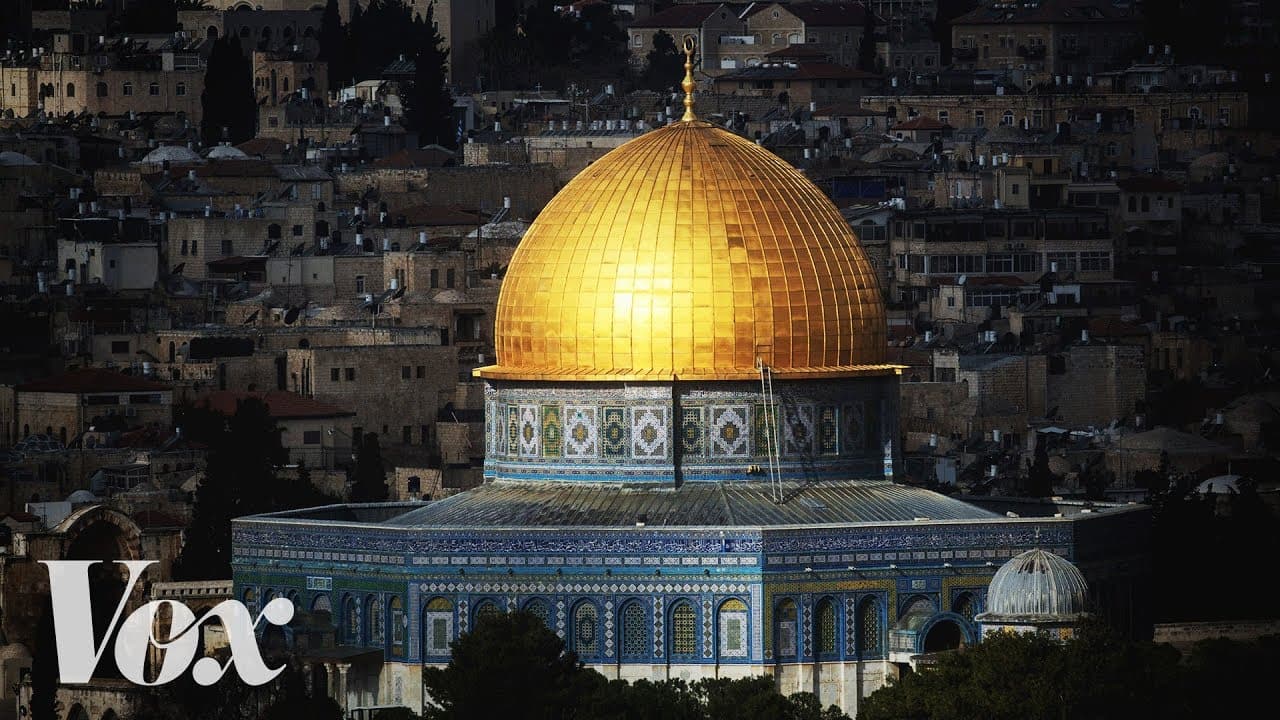
Jerusalem's status fuels Israeli-Palestinian conflict, intensified by US embassy move.
Transcript
“It is time to officially recognize Jerusalem as the capital of Israel.” The US has officially moved its embassy in Israel from Tel Aviv to Jerusalem, and in doing so, President Trump has reversed decades of consensus about the city’s status. While Israeli leaders celebrated, Palestinians denounced the move, deepening divides between two sides of a... Read More
Key Insights
- The U.S. moved its embassy to Jerusalem, recognizing it as Israel's capital, reversing decades of diplomatic consensus.
- Jerusalem is a focal point of Israeli-Palestinian conflict due to its significance to both parties as a capital city.
- East Jerusalem, captured by Israel in 1967, is considered occupied territory by the international community.
- The United Nations condemned Israel's annexation of East Jerusalem, while Palestinians seek it as their future state's capital.
- Jerusalem houses sacred sites for Jews and Muslims, leading to complex power dynamics and historical tension.
- The second intifada was sparked by contested claims over Jerusalem's Temple Mount, highlighting the city's volatility.
- Most countries moved their embassies from Jerusalem following international condemnation of Israel's annexation.
- President Trump's decision to move the U.S. embassy intensified protests and violence, impacting regional stability.
Install to Summarize YouTube Videos and Get Transcripts
Explore YouTube Video Summarizer or Get YouTube Transcript Extractor
Questions & Answers
Q: Why is Jerusalem considered a contentious city?
Jerusalem is contentious due to its historical, religious, and political significance. It houses sacred sites for Jews, Muslims, and Christians, making it a focal point for religious tensions. Politically, both Israelis and Palestinians claim it as their capital, complicating peace negotiations and leading to international disputes over its status.
Q: What was the international community's reaction to Israel's annexation of East Jerusalem?
The international community largely condemned Israel's annexation of East Jerusalem. The United Nations, in particular, denounced the move, considering East Jerusalem occupied territory. This stance has led to most countries relocating their embassies out of Jerusalem and maintaining a diplomatic consensus that the city's status should be resolved through negotiations.
Q: How did the U.S. embassy move impact Israeli-Palestinian relations?
The U.S. embassy move to Jerusalem intensified Israeli-Palestinian tensions. It was seen as a significant shift in U.S. policy, aligning with Israeli claims to the city and undermining Palestinian aspirations for East Jerusalem as their capital. The move triggered protests, violence, and further complicated efforts toward a peaceful resolution of the conflict.
Q: What are the religious implications of the conflict over Jerusalem?
Jerusalem's religious significance exacerbates the conflict, as it is home to key holy sites for Jews, Muslims, and Christians. The Temple Mount is sacred to Jews and Muslims, leading to disputes over access and control. These religious dimensions add layers of complexity to the political conflict, making resolution challenging.
Q: How have past peace negotiations addressed the status of Jerusalem?
Past peace negotiations, such as the Oslo Accords, initially set aside the issue of Jerusalem to avoid derailing talks. The city's status remains a core issue in any comprehensive peace agreement, requiring concessions from both sides. Successful negotiations must address the conflicting claims and religious sensitivities associated with Jerusalem.
Q: What role did the second intifada play in the Jerusalem conflict?
The second intifada was a significant escalation in the Jerusalem conflict, sparked by Ariel Sharon's visit to the Temple Mount. This visit was perceived as an assertion of Israeli control, leading to widespread Palestinian protests. The ensuing violence lasted five years, resulting in thousands of deaths and highlighting the city's volatile nature.
Q: Why did most countries relocate their embassies from Jerusalem in the 1980s?
Most countries relocated their embassies from Jerusalem following the UN Security Council's condemnation of Israel's annexation of East Jerusalem in 1980. The international consensus was that Jerusalem's status should be resolved through negotiations, prompting countries to move their embassies to Tel Aviv to align with this diplomatic stance.
Q: What was President Trump's rationale for moving the U.S. embassy to Jerusalem?
President Trump's decision to move the U.S. embassy to Jerusalem was part of a broader policy to recognize the city as Israel's capital. This move was seen as fulfilling a campaign promise and aligning with Israeli claims. However, it was controversial, as it deviated from previous U.S. administrations' policies and international consensus.
Summary & Key Takeaways
-
The U.S. formally moved its embassy from Tel Aviv to Jerusalem, recognizing the city as Israel's capital, which has intensified the longstanding Israeli-Palestinian conflict. Both Israelis and Palestinians claim Jerusalem as their capital, making the city a central issue in peace negotiations.
-
Jerusalem's status remains contentious due to its religious significance and historical divisions. The international community views East Jerusalem as occupied territory, and the United Nations condemned Israel's annexation, while Palestinians aspire to establish their capital there.
-
The U.S. embassy move has heightened tensions, with protests and violence marking the ongoing struggle. Jerusalem's sacred sites for Jews and Muslims add complexity to the conflict, necessitating careful negotiation to achieve lasting peace in the region.
Read in Other Languages (beta)
Share This Summary 📚
Summarize YouTube Videos and Get Video Transcripts with 1-Click
Try YouTube Summary with ChatGPT & Claude or YouTube Transcript Generator
Explore More Summaries from Vox 📚



Summarize YouTube Videos and Get Video Transcripts with 1-Click
Try YouTube Summary with ChatGPT & Claude or YouTube Transcript Generator