How the Catholic Church censored Hollywood's Golden Age
TL;DR
Catholic Church censored Hollywood films from 1934 to 1954.
Transcript
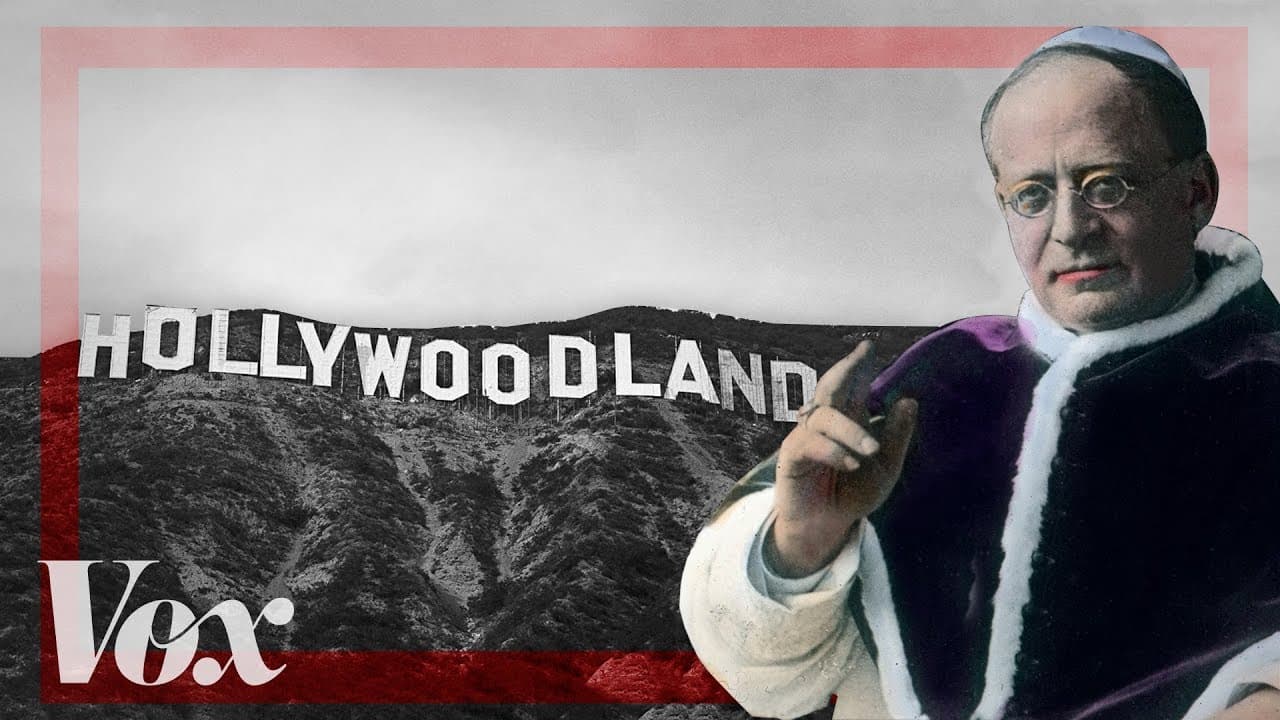
These are some of the most beloved films in the history of American cinema. But they all share something else in common: They were all censored by the Catholic Church. In fact, for decades, there’s a good chance you didn’t see anything in a Hollywood movie unless the Catholic Church wanted you to. Hollywood in the late ’20s was chock-full of films ... Read More
Key Insights
- The Catholic Church played a significant role in censoring Hollywood films, enforcing a strict moral code from 1934 to 1954.
- The Motion Picture Production Code, created by Catholics Martin Quigley and Father Daniel Lord, set moral guidelines for films, including prohibiting nudity and interracial romance.
- Hollywood studios voluntarily adopted the Production Code to avoid government censorship, fearing a federal censorship agency might be established.
- The Great Depression led studios to prioritize ticket sales, briefly relaxing the code until the Legion of Decency enforced stricter adherence.
- The Legion of Decency, formed by Catholics, rated films and organized boycotts, compelling studios to comply with the Production Code.
- Joseph Breen, a devout Catholic, led the Production Code Administration, making him one of the most powerful figures in Hollywood.
- The 1948 US v. Paramount Pictures case ended the studios' monopoly on theaters, allowing independent films to bypass the Production Code.
- The Production Code was replaced by the Motion Picture Association of America's ratings system in 1967, marking the end of an era.
Install to Summarize YouTube Videos and Get Transcripts
Explore YouTube Video Summarizer or Get YouTube Transcript Extractor
Questions & Answers
Q: What was the Motion Picture Production Code?
The Motion Picture Production Code was a set of moral guidelines for Hollywood films created in 1929 by Martin Quigley and Father Daniel Lord, two devout Catholics. It aimed to ensure films promoted Catholic values by prohibiting content such as nudity, indecent dancing, and interracial romance, while promoting themes where good triumphed over evil.
Q: Why did Hollywood studios adopt the Production Code?
Hollywood studios adopted the Production Code voluntarily to avoid potential government censorship. During the late 1920s and early 1930s, there was a fear that President Roosevelt's New Deal government might establish a federal censorship agency. By adhering to the code, studios hoped to deter government interference in their productions.
Q: Who enforced the Production Code in Hollywood?
The Production Code was enforced by the Production Code Administration (PCA), which was led by Joseph Breen, a devout Catholic. Breen and his office reviewed every script, line of dialogue, and film element to ensure compliance with the code, making him a powerful figure in Hollywood during the code's enforcement from 1934 to 1954.
Q: What role did the Legion of Decency play in Hollywood?
The Legion of Decency, formed by Catholics in response to perceived moral decay in films, played a significant role in enforcing the Production Code. They rated films based on moral acceptability and organized boycotts against those deemed unworthy, compelling studios to adhere strictly to the code to avoid financial losses.
Q: How did the US v. Paramount Pictures case impact Hollywood?
The 1948 US v. Paramount Pictures Supreme Court case was a landmark antitrust decision that ended the studios' monopoly on theater ownership. This ruling forced studios to sell their theaters, allowing independent and European films to enter the market without adhering to the Production Code, thus diversifying the types of films available to audiences.
Q: What changes occurred in Hollywood after the Production Code ended?
After the Production Code ended in 1967, the Motion Picture Association of America (MPAA) introduced a new ratings system. This shift allowed filmmakers more creative freedom, as they were no longer bound by the strict moral guidelines of the code. The new system categorized films based on content suitability for different audiences, rather than enforcing specific moral standards.
Q: How did the Production Code influence film content during its enforcement?
During its enforcement from 1934 to 1954, the Production Code significantly influenced film content by imposing strict moral guidelines. Films were required to promote Catholic values, with restrictions on content such as nudity, indecent behavior, and interracial relationships. This led to a period where films had to creatively work within these constraints, resulting in a unique era of American cinema.
Q: Why is the Production Code era considered significant in film history?
The Production Code era is considered significant in film history because it shaped the content and creative direction of Hollywood films for two decades. It enforced a moral standard that filmmakers had to navigate, leading to innovative storytelling within constraints. The era produced many classic films that are still appreciated today, and its end marked a shift towards greater creative freedom in cinema.
Summary & Key Takeaways
-
From 1934 to 1954, Hollywood films were subject to the Motion Picture Production Code, a set of moral guidelines created by Catholics to ensure films adhered to Catholic values. Studios adopted the code to avoid government censorship, and the Legion of Decency enforced compliance through ratings and boycotts.
-
Joseph Breen led the Production Code Administration, reviewing every script and film element to ensure adherence to the code. This made him one of the most influential figures in Hollywood, as studios needed his approval to release their films. The code shaped Hollywood's output for two decades.
-
The 1948 Supreme Court case US v. Paramount Pictures ended the studios' control over theaters, allowing independent and European films to enter the market without adhering to the code. The Production Code was eventually replaced by the MPAA ratings system in 1967, changing the landscape of American cinema.
Read in Other Languages (beta)
Share This Summary 📚
Summarize YouTube Videos and Get Video Transcripts with 1-Click
Try YouTube Summary with ChatGPT & Claude or YouTube Transcript Generator
Explore More Summaries from Vox 📚

Summarize YouTube Videos and Get Video Transcripts with 1-Click
Try YouTube Summary with ChatGPT & Claude or YouTube Transcript Generator