A plan to recycle the unrecyclable | Ashton Cofer
TL;DR
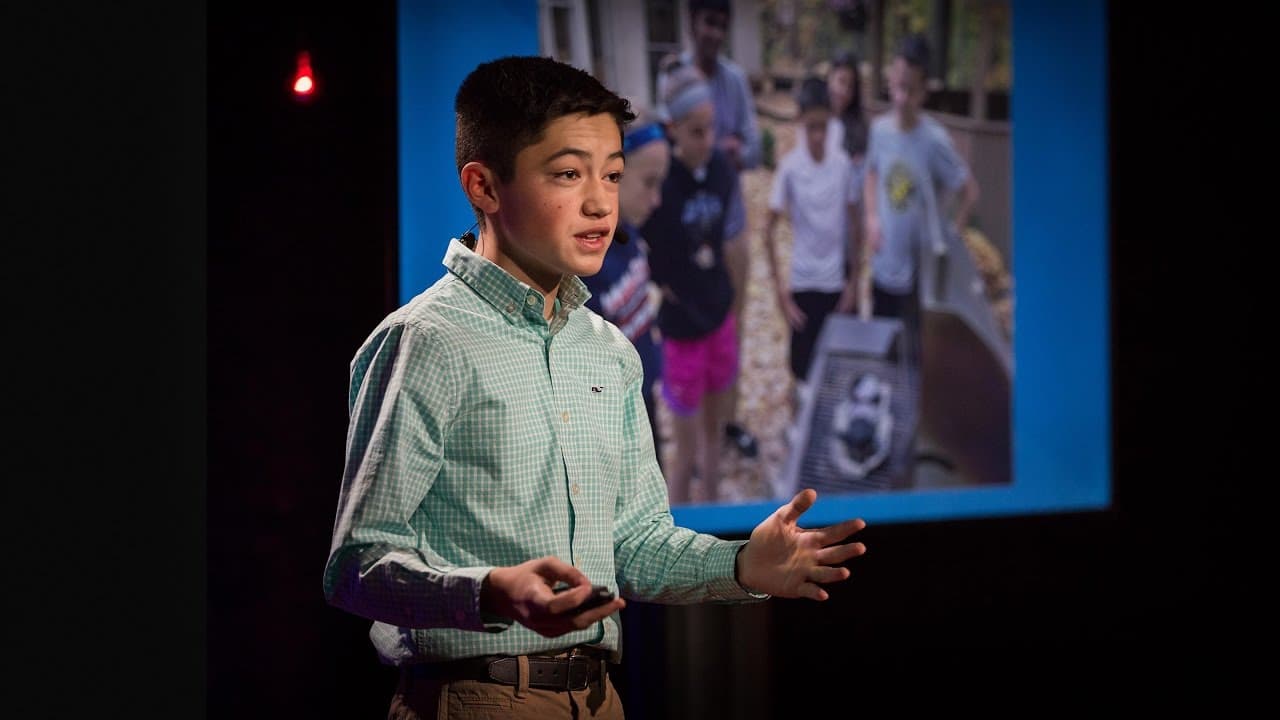
This is the story of a team of students who turned Styrofoam waste into activated carbon and solved two global problems with one solution.
Transcript
It was just an ordinary Saturday. My dad was outside mowing the lawn, my mom was upstairs folding laundry, my sister was in her room doing homework and I was in the basement playing video games. And as I came upstairs to get something to drink, I looked out the window and realized that there was something that I was supposed to be doing, and this i... Read More
Key Insights
- 🔥 Styrofoam waste is a significant environmental problem, filling landfills and oceans, taking centuries to degrade, and making up a significant portion of landfills.
- 🤔 Existing solutions for recycling Styrofoam are too expensive and potentially contaminated, making it nonviable and nonrenewable.
- ♻️ The project aimed to use the carbon in Styrofoam to create activated carbon, a material used in water and air filtration systems.
- 🧪 Multiple heating tests were conducted, resulting in failures, but the team persevered in their efforts to find a solution.
- 🌍 The successful test result showed that activated carbon could indeed be created from Styrofoam waste, solving two global problems at once.
- 💡 The team received funding, recognition, and awards for their innovative project, demonstrating the potential impact of their solution.
- 💪 Perseverance and resilience were key factors in the team's success, proving that failure is a stepping stone to success.
- 🔥 The project showcases the importance of taking risks, pursuing ideas, and embracing failure in order to achieve groundbreaking results.
Install to Summarize YouTube Videos and Get Transcripts
Explore YouTube Video Summarizer or Get YouTube Transcript Extractor
Questions & Answers
Q: What inspired the speaker and their team to start working on their science project?
The speaker and their team were inspired to start their science project after seeing beaches littered with Styrofoam during a trip to Central America taken by some of their teammates. This led them to start thinking about the prevalence of Styrofoam in everyday life and the lack of existing solutions for its disposal.
Q: Why is Styrofoam considered a nonrenewable material?
Styrofoam is considered a nonrenewable material because there is very little market demand for recycled polystyrene, making it neither feasible nor viable to recycle. This results in the accumulation of Styrofoam waste in landfills and oceans, taking over 500 years to degrade. Many cities have even passed ordinances banning the production of products containing polystyrene.
Q: Why is there a lack of recycling for Styrofoam?
Recycled polystyrene is too expensive and potentially contaminated, leading to very little market demand for its recycling. As a result, Styrofoam is not commonly recycled like many plastics, making it a nonrenewable material. The high cost and contamination risks make recycling polystyrene undesirable.
Q: How did the speaker's team propose to solve the problem of Styrofoam waste?
The speaker's team hypothesized that they could use the carbon already present in Styrofoam to create activated carbon, which is commonly used in water filters. Activated carbon works by using micropores to filter out contaminants from water or air. Their goal was to repurpose Styrofoam waste into something useful and reduce its accumulation.
Q: What were some of the challenges the speaker's team encountered during their project?
The speaker's team faced numerous challenges during their project. They conducted various heating tests, but many of their samples vaporized or exploded, leaving them discouraged. Despite the failures and the initial temptation to give up, they persisted and eventually achieved success by finding the right temperatures, times, and chemicals to create activated carbon from Styrofoam waste.
Summary & Key Takeaways
-
The speaker describes a science project that involves turning Styrofoam waste into activated carbon for water filtration.
-
Styrofoam waste is a significant environmental problem, with over 2 billion pounds produced in the US alone each year.
-
Despite initial failures, the team persevered and successfully created activated carbon from Styrofoam waste, solving two global problems with one solution.
Read in Other Languages (beta)
Share This Summary 📚
Summarize YouTube Videos and Get Video Transcripts with 1-Click
Try YouTube Summary with ChatGPT & Claude or YouTube Transcript Generator
Explore More Summaries from TED 📚






Summarize YouTube Videos and Get Video Transcripts with 1-Click
Try YouTube Summary with ChatGPT & Claude or YouTube Transcript Generator