FAILED Investment Property Deal Analysis (Pics, Walkthrough & Numbers!)
TL;DR
A failed investment property teaches crucial real estate lessons.
Transcript
[Applause] Wow hey everybody I'm Terrell harbour with fixated real estate and today we're going to be doing a case study brought to you guys by BiggerPockets and my company fixated real estate recently we completed this project in Seattle off one hundred and second Street and I wanted to go over it with you guys today to teach you a few lessons and... Read More
Key Insights
- Unexpected issues can arise in real estate projects, such as structural problems and hidden damages, which can significantly impact budget and timelines.
- Having multiple exit strategies is crucial in real estate investing to mitigate potential losses and adapt to changing circumstances.
- Thorough inspections and evaluations are essential before proceeding with renovations, especially in properties with hidden damages or hoarder conditions.
- Flexibility and adaptability in project plans can help address unforeseen challenges, such as structural repairs and budget overruns.
- Real estate projects can suffer from external factors like problematic neighbors, which may require additional investments to mitigate.
- Effective communication with contractors and engineers is vital to address unexpected structural issues and ensure safety and compliance.
- Real estate investors must be prepared to cut losses and move on from projects that are no longer viable, focusing on minimizing financial damage.
- Successful real estate investing requires resilience, learning from mistakes, and applying lessons to future projects to improve outcomes.
Install to Summarize YouTube Videos and Get Transcripts
Explore YouTube Video Summarizer or Get YouTube Transcript Extractor
Questions & Answers
Q: What was the initial plan for the investment property?
The initial plan for the investment property was to conduct cosmetic updates, open up the floor plan, and then use it as a BRRR (Buy, Rehab, Rent, Refinance, Repeat) property. The idea was to renovate it back into a three-bedroom, two-bath house and later rent it out for steady income while refinancing to pull out equity.
Q: What unexpected issues arose during the project?
The project faced several unexpected issues, including hidden structural damages where the ceiling dropped due to lack of proper load-bearing walls. Additionally, the presence of a large number of tires, squatter-related waste, and problematic neighbors added to the challenges. These issues significantly impacted the budget and timeline, requiring extensive repairs and modifications.
Q: How did the project strategy change due to unforeseen challenges?
Due to the unforeseen challenges, the project strategy shifted from a BRRR approach to a fix-and-flip strategy. The structural issues and increased costs made it unfeasible to maintain the property as a rental. Instead, the focus shifted to making the necessary repairs and enhancements to sell the property quickly and recover as much investment as possible.
Q: What lessons were learned from this failed investment?
Key lessons learned include the importance of thorough inspections and evaluations before proceeding with renovations, especially in properties with hidden damages. Having multiple exit strategies is crucial to adapt to changing circumstances. Additionally, being prepared to cut losses and move on from non-viable projects is essential to minimize financial damage and focus on more promising opportunities.
Q: How did the project budget and timeline change due to the issues encountered?
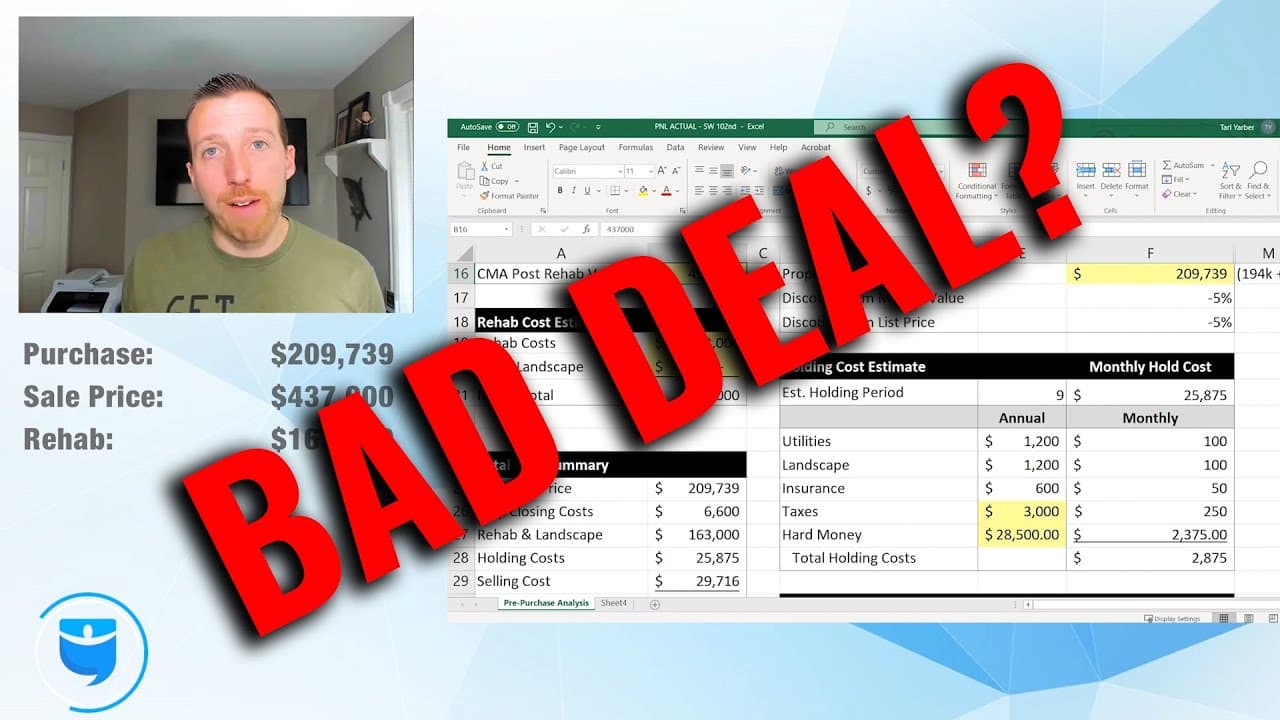
The project budget increased from an initial estimate of $100,000 to $163,000 due to unforeseen structural repairs and additional costs like building fences to mitigate neighbor issues. The timeline extended from the planned five months to nine months because of the need for engineering assessments, permitting, and additional construction work to address the structural challenges.
Q: What measures were taken to address the structural issues found in the property?
To address the structural issues, color ties and new beams were installed throughout the property to ensure proper load-bearing support. Engineers were brought in to assess and redesign the structural elements, and extensive reframing was done to stabilize the building. These measures ensured that the property was safe and structurally sound for future occupants.
Q: How did the presence of problematic neighbors influence the project?
Problematic neighbors influenced the project by necessitating the construction of fences to block out noise and unsightly views, which could deter potential buyers. The presence of aggressive dogs and a neighbor who disposed of garbage on the property were specific issues that needed to be addressed to make the property more appealing to prospective buyers.
Q: What was the final outcome of the project in terms of financial results?
The final outcome of the project was a modest profit of $2,070, significantly lower than the initially projected profit of $80,000. Despite the challenges and increased costs, the property was sold for $437,000, slightly above the expected sale price, which helped offset some of the additional expenses incurred during the renovation process.
Summary & Key Takeaways
-
In this video, Tarl Yarber from Fixated Real Estate discusses a failed investment property project in Seattle, highlighting unexpected challenges and lessons learned. The property, initially intended as a simple rehab, faced structural issues, leading to increased costs and a shift from a rental strategy to selling.
-
The project encountered numerous obstacles, including hidden structural damages, problematic neighbors, and increased budget requirements. These challenges necessitated changes in strategy, such as building fences to address neighbor issues and reinforcing the building's structure to ensure safety.
-
Despite the setbacks, the property was eventually sold, albeit with minimal profit. The experience underscores the importance of thorough property inspections, having multiple exit strategies, and the ability to adapt and cut losses when necessary in real estate investing.
Read in Other Languages (beta)
Share This Summary 📚
Summarize YouTube Videos and Get Video Transcripts with 1-Click
Try YouTube Summary with ChatGPT & Claude or YouTube Transcript Generator
Explore More Summaries from BiggerPockets 📚




Summarize YouTube Videos and Get Video Transcripts with 1-Click
Try YouTube Summary with ChatGPT & Claude or YouTube Transcript Generator