Stanford Seminar-Design of Online Environments and the Quality of Democratic Discourse At-Scale
TL;DR
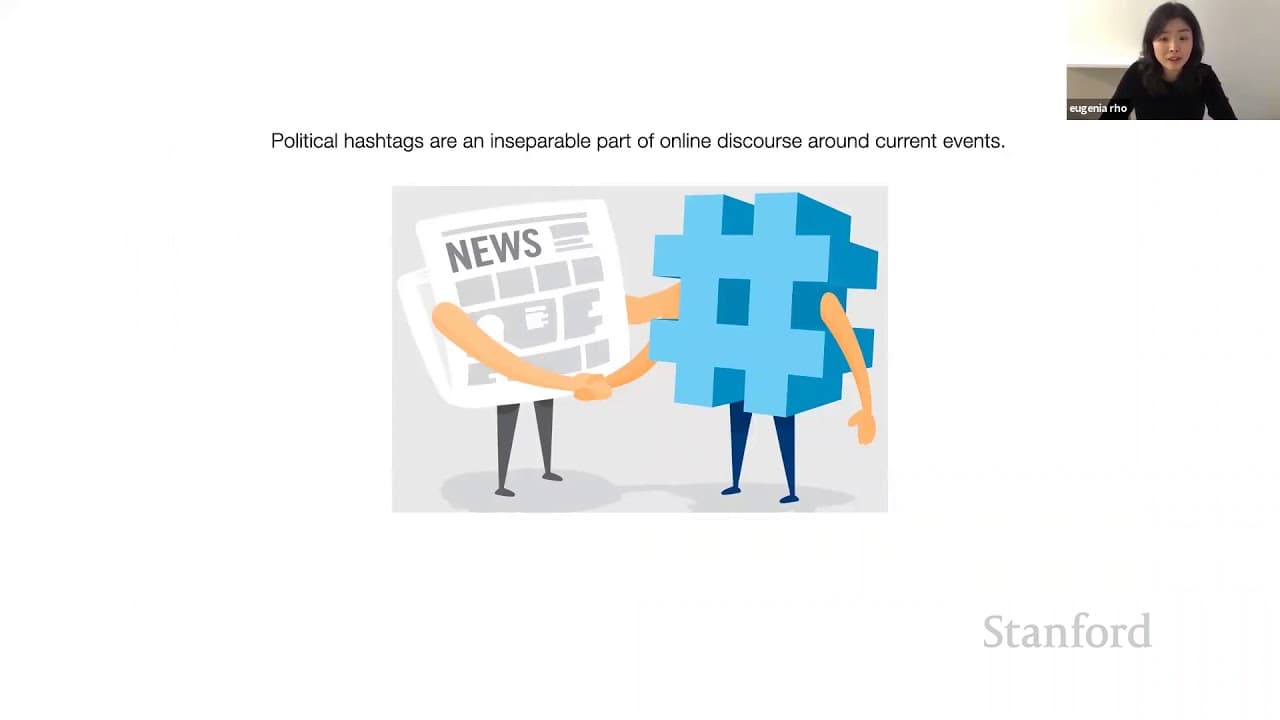
The design of online spaces, particularly the use of political hashtags, significantly affects the quality and nature of online discourse, contributing to polarization and divisiveness.
Transcript
um so again thank you so much for the wonderful introduction michael and thank you everyone for having me here i know it's a tricky time for a lot of people at the moment um with covid and so on um so i'm really grateful to have you all join my talk and i look forward to meeting many of you and i'm happy to answer any questions or follow up individ... Read More
Key Insights
- 😒 The design of online environments, particularly the use of political hashtags, significantly impacts the quality and nature of online discourse.
- ⏯️ Linguistic factors, such as the use of negative affective language and topic focus, play a crucial role in the divide and polarization observed in online conversations around political hashtags.
- 🥺 Political hashtags can lead to a perception of greater partisanship and controversy, reducing motivation to engage with social issues.
- 💨 Hashtags have intertextual meaning and can become charged with additional semiotic values, shaping the way they are perceived and discussed.
- 👤 It is important to consider the impact of political hashtags on passive content consumers and non-users, as their perceptions and motivations differ from those actively using hashtags.
- 🎨 To improve online discourse, it is necessary to consider both functional and intertextual aspects of design and increase awareness among journalists, policymakers, and activists about the impact of hashtags on discourse quality.
Install to Summarize YouTube Videos and Get Transcripts
Explore YouTube Video Summarizer or Get YouTube Transcript Extractor
Questions & Answers
Q: How do linguistic factors related to discourse quality contribute to the divide in online conversations around political hashtags?
Linguistic factors, such as the use of profanity and words related to anger and sex, contribute to the perception of greater partisanship and negativity in discussions around political hashtags. This negativity bias can hinder constructive discourse and create divisions among participants.
Q: How do political hashtags shape the language people use in their comments?
When political hashtags are included in news posts, people use more words associated with anger, fear, and disgust. Furthermore, they tend to focus more on the hashtag itself rather than the main subject matter of the news content. This linguistic behavior can lead to a shallow discussion that lacks substantive engagement.
Q: Why are politically moderate participants more affected by political hashtags than conservatives?
Politically moderate participants are more sensitive to the presence of political hashtags because they fall between the two extremes. They are more likely to perceive news content as partisan when hashtags are included, which decreases their motivation to engage with social issues. Conservatives, on the other hand, tend to perceive news content as partisan regardless of the presence of hashtags.
Q: How can online platforms and news outlets address the negative impact of political hashtags on discourse quality?
To address the negative impact of political hashtags, online platforms and news outlets could consider visually indicating the polarity of hashtags and increasing awareness among journalists and writers about how hashtags can shape the perception of news content. It's important to find a balance between facilitating discussions around important social topics and avoiding the creation of divisive and shallow conversations.
Summary & Key Takeaways
-
Political hashtags on social media have become a common feature of online discussions around current events, influencing the way people perceive and engage with news content.
-
Linguistic factors, such as the use of negative affective language and topic focus, contribute to the divide in online conversations around political hashtags.
-
The presence of political hashtags in news posts leads to a perception of greater partisanship and controversy, reducing motivation to engage with social issues.
Read in Other Languages (beta)
Share This Summary 📚
Summarize YouTube Videos and Get Video Transcripts with 1-Click
Try YouTube Summary with ChatGPT & Claude or YouTube Transcript Generator
Explore More Summaries from Stanford Online 📚


Summarize YouTube Videos and Get Video Transcripts with 1-Click
Try YouTube Summary with ChatGPT & Claude or YouTube Transcript Generator