What Are Angus Deaton's Views on Foreign Aid and Inequality?
TL;DR
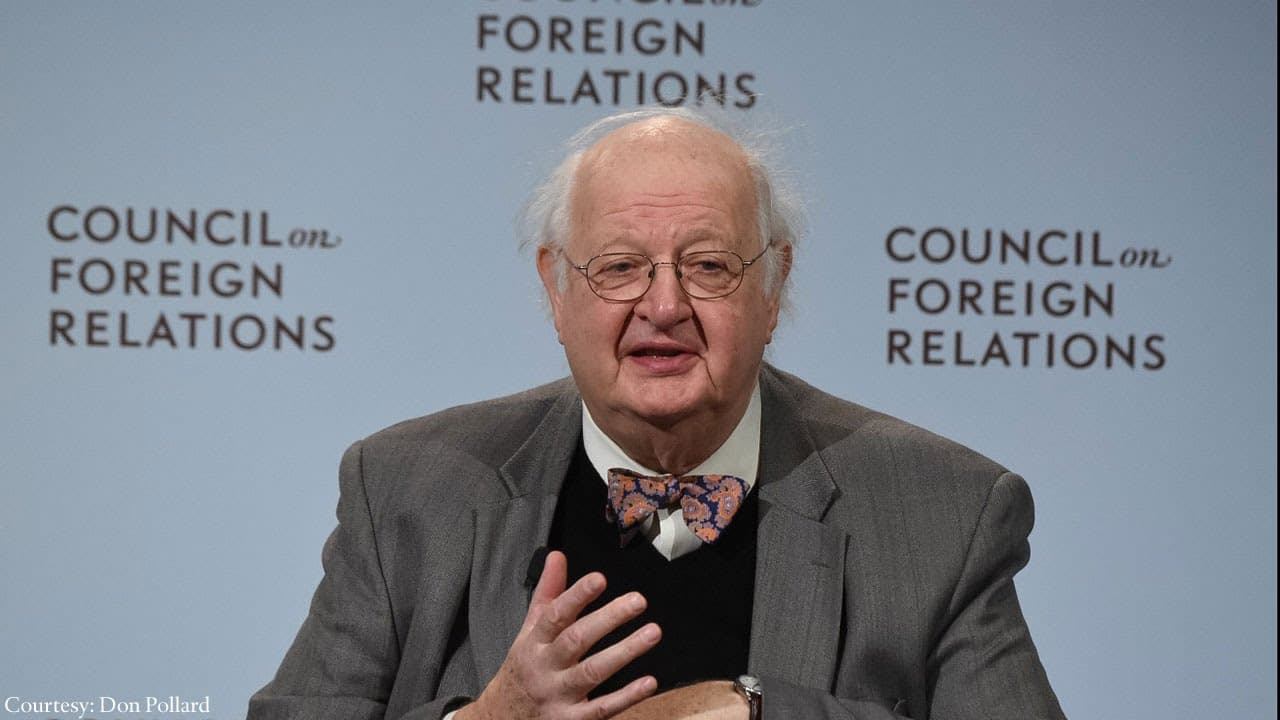
Angus Deaton argues that foreign aid can harm government accountability in Africa, advocating for aid targeting public health instead. He highlights rising mortality rates among middle-aged white Americans due to economic decline and calls for better distribution of globalization's benefits. Deaton also questions the efficacy of randomized controlled trials in philanthropy and suggests prioritizing technical assistance in development.
Transcript
FALK: Welcome, welcome. Today I am delighted to be moderating this conversation with Angus Deaton at the Council on Foreign Relations meeting, which is part of the C. Peter McColough Series on International Economics and presented by the Maurice Greenberg Center for Geoeconomic Studies�maybe we can get to that at the end. I would like to welcome al... Read More
Key Insights
- Angus Deaton critiques foreign aid, emphasizing that aid dependency can undermine governments in Africa by reducing their accountability to citizens.
- Deaton supports foreign aid focused on global public goods, like health advancements, which have shown significant benefits in developing countries.
- He highlights the success of China and India in reducing poverty with minimal aid, contrasting with persistent poverty in heavily aided African nations.
- Deaton points out the alarming increase in mortality rates among middle-aged white Americans, linking it to economic decline and lack of opportunity.
- He questions the effectiveness of randomized controlled trials in philanthropy, suggesting that solutions are not one-size-fits-all.
- Deaton calls for a reevaluation of globalization's benefits, urging for a fair distribution to those adversely affected in developed countries.
- He advocates for technical assistance over direct financial aid in international development, emphasizing the need for sustainable solutions.
- Deaton expresses concern over the diversion of talented individuals into finance, urging a focus on socially beneficial careers.
Install to Summarize YouTube Videos and Get Transcripts
Explore YouTube Video Summarizer or Get YouTube Transcript Extractor
Questions & Answers
Q: Why does Angus Deaton criticize certain forms of foreign aid?
Angus Deaton criticizes foreign aid that leads to dependency, particularly in African countries where it can undermine government accountability. He argues that when governments rely heavily on aid, they become more accountable to aid agencies than to their citizens, which can stifle development and entrench corruption.
Q: What type of foreign aid does Deaton support?
Deaton supports foreign aid that builds global public goods, such as advancements in health. He cites examples like HIV/AIDS research and vaccination programs, which have had significant positive impacts in developing countries by providing life-saving benefits without fostering dependency.
Q: What alarming trend did Deaton and Anne Case discover in the U.S.?
Deaton and Anne Case discovered a troubling rise in mortality rates among middle-aged white Americans with relatively low education. This increase is largely due to deaths from drug overdoses, alcoholism, and suicide, which they link to economic decline and a loss of life narrative among this demographic.
Q: How does Deaton view the role of globalization in poverty reduction?
Deaton acknowledges that globalization has lifted millions out of poverty, particularly in China and India. However, he urges for a more equitable distribution of its benefits, noting that some groups in developed countries have been adversely affected, as evidenced by rising mortality rates among certain demographics in the U.S.
Q: What is Deaton's stance on randomized controlled trials in philanthropy?
Deaton is skeptical of the effectiveness of randomized controlled trials in philanthropy, arguing that they often oversimplify complex issues. He believes that solutions should be context-specific and warns against the assumption that an intervention effective in one location will work universally.
Q: What does Deaton suggest as a more effective approach to international development?
Deaton advocates for technical assistance over direct financial aid in international development. He believes that providing expertise and building local capacities can lead to more sustainable outcomes than financial aid, which can foster dependency and corruption if not managed carefully.
Q: What concerns does Deaton have about the career choices of talented individuals?
Deaton expresses concern that many talented young individuals are drawn to high-paying finance jobs, like those in hedge funds, rather than pursuing careers with significant social impact. He suggests that this trend diverts talent away from areas that could contribute to solving global challenges, such as healthcare or poverty reduction.
Q: How does Deaton propose addressing the adverse effects of globalization on certain demographics?
Deaton calls for policies that ensure a fair distribution of globalization's benefits, particularly to those negatively impacted in developed countries. He suggests that education and opportunity creation are crucial in helping affected demographics, like middle-aged white Americans, regain their economic footing and life narrative.
Summary & Key Takeaways
-
Angus Deaton critiques certain forms of foreign aid, arguing that they can undermine government accountability in African countries. He supports aid that focuses on global public goods, like health, which have been beneficial.
-
He discusses the rise in mortality rates among middle-aged white Americans, linking it to economic decline and reduced opportunities, and calls for a fairer distribution of globalization's benefits.
-
Deaton questions the effectiveness of randomized controlled trials in philanthropy, emphasizing that solutions should be context-specific. He also highlights the need for technical assistance over financial aid in development.
Read in Other Languages (beta)
Share This Summary 📚
Summarize YouTube Videos and Get Video Transcripts with 1-Click
Try YouTube Summary with ChatGPT & Claude or YouTube Transcript Generator
Explore More Summaries from Council on Foreign Relations 📚

Summarize YouTube Videos and Get Video Transcripts with 1-Click
Try YouTube Summary with ChatGPT & Claude or YouTube Transcript Generator