Why visual effects artists love this shiny ball
TL;DR
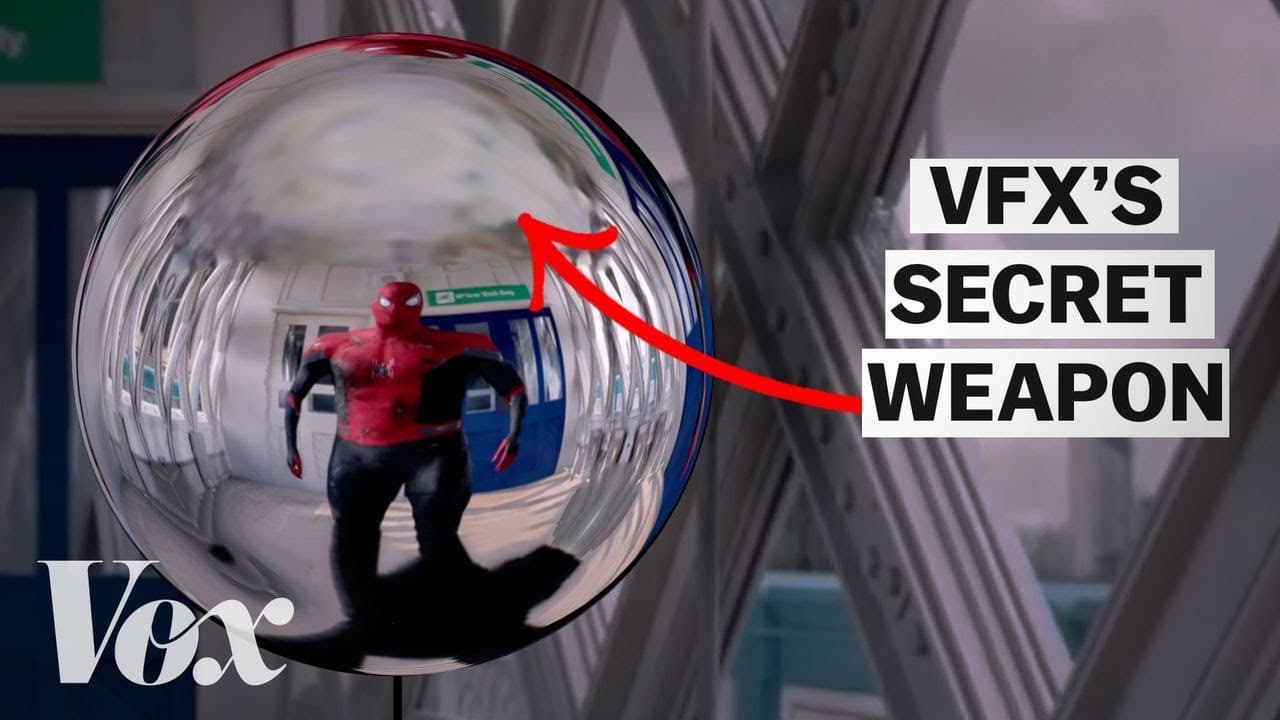
Visual effects artists love the shiny chrome ball because its reflection can be converted into an HDRI panorama that captures real lighting for virtual objects. The resulting light data helps software reproduce a scene’s highlights, shadows, and reflections, making additions such as a replacement Lincoln Memorial look convincing. Read on to see how chrome balls, Theta cameras, and Paul Debevec’s pioneering method fit into the workflow.
Transcript
This box — right here — it holds one of the unsung heroes of Hollywood production, the tool that makes War Machine suit look like it's actually there. It's a method that started with a teapot and became ubiquitous. It's an essential part of a VFX film set, but it's not a camera or a green screen. You have to search hard to see it in behind the scen... Read More
Key Insights
- HDRI, or High Dynamic Range Imaging, is crucial for matching digital objects with real-world lighting, ensuring realistic visual effects.
- VFX artists use shiny balls, like chrome balls, to capture 360-degree panoramic images that help simulate real lighting conditions.
- The process involves meshing different exposures of a scene to capture all details, which are then used to apply realistic lighting to digital objects.
- HDRI technology allows VFX supervisors to quickly capture lighting data on hectic shoot days, minimizing guesswork in post-production.
- Paul Debevec pioneered the use of HDRIs in the 90s, transforming the way synthetic objects are rendered into scenes.
- HDRIs are now mainstream, with large libraries available for download, enabling the simulation of diverse environments.
- VFX artists still need to manually adjust lighting, but HDRIs significantly reduce the time and effort required.
- The technique is widely used in the industry, from major film productions to TV shows, enhancing the realism of digital creations.
Install to Summarize YouTube Videos and Get Transcripts
Explore YouTube Video Summarizer or Get YouTube Transcript Extractor
Questions & Answers
Q: Why do visual effects artists use a shiny chrome ball?
A chrome ball reflects the surrounding environment, allowing artists to photograph lighting from many directions at once. Software unwraps its reflection into a panoramic HDRI that can help virtual objects match the real scene’s highlights, shadows, and reflections.
Q: What is an HDRI in visual effects?
An HDRI is a high dynamic range image made by combining different exposures so bright and dark areas retain useful detail. When captured as a panorama, it gives software enough data to simulate how light behaves throughout a scene.
Q: How does an HDRI make a virtual object look real?
Software uses the captured environmental light to illuminate the virtual object with appropriate highlights, shadows, and reflections. The HDRI can light the object directly or serve as a reference while artists add lights and make manual adjustments.
Q: How is a chrome-ball photograph turned into lighting data?
Artists photograph the reflections visible across the round, shiny surface. Suitable software then unwraps that image into a panoramic view that represents the surrounding environment and its light.
Q: What other methods can VFX crews use to capture an HDRI?
A reflective ball is one of the main approaches described in the transcript. Crews can also rotate a camera, use a very wide lens, or place a compact Theta camera in the scene to capture the surroundings quickly.
Q: Why might a VFX supervisor choose a Theta camera instead of a chrome ball?
The Theta is small, unobtrusive, and can capture the required images very quickly during a hectic shoot. A chrome ball requires setting up a tripod and positioning the ball, so the Theta helps the supervisor get in and out between takes.
Q: How did HDRI help recreate the Lincoln Memorial for The Handmaid's Tale?
VFX supervisor Leo Bovell captured the real location’s light during the shoot because the Lincoln statue and surrounding elements had to be replaced. The HDRI provided immediate lighting feedback in the computer and helped the team apply shaders and materials that emulated marble realistically.
Q: What did Paul Debevec contribute to HDRI-based visual effects?
Paul Debevec and his colleagues pioneered creating HDRIs from multiple images and using them to light virtual scenes. Their approach reduced reliance on the labor-intensive process of positioning lights, copying reference photographs, and programming reflections manually.
Summary & Key Takeaways
-
HDRI technology is a game-changer in visual effects, allowing digital objects to be lit with realistic, scene-specific lighting. By capturing a full range of light data, VFX artists can seamlessly integrate digital creations into real-world environments, enhancing the overall realism of the scene.
-
The use of shiny balls, such as chrome balls, is a key method for capturing HDRIs on set. These tools allow VFX supervisors to quickly gather lighting data, even in chaotic shooting environments, ensuring that digital effects match the real light conditions of the scene.
-
Pioneered by Paul Debevec in the 90s, HDRI technology has become a staple in the visual effects industry. It reduces the labor-intensive process of manually positioning lights and programming reflections, allowing artists to focus on refining the visual quality of their digital creations.
Read in Other Languages (beta)
Share This Summary 📚
Summarize YouTube Videos and Get Video Transcripts with 1-Click
Try YouTube Summary with ChatGPT & Claude or YouTube Transcript Generator
Explore More Summaries from Vox 📚



Summarize YouTube Videos and Get Video Transcripts with 1-Click
Try YouTube Summary with ChatGPT & Claude or YouTube Transcript Generator