Stop Trying To Solve Life, Start Living It – Søren Kierkegaard
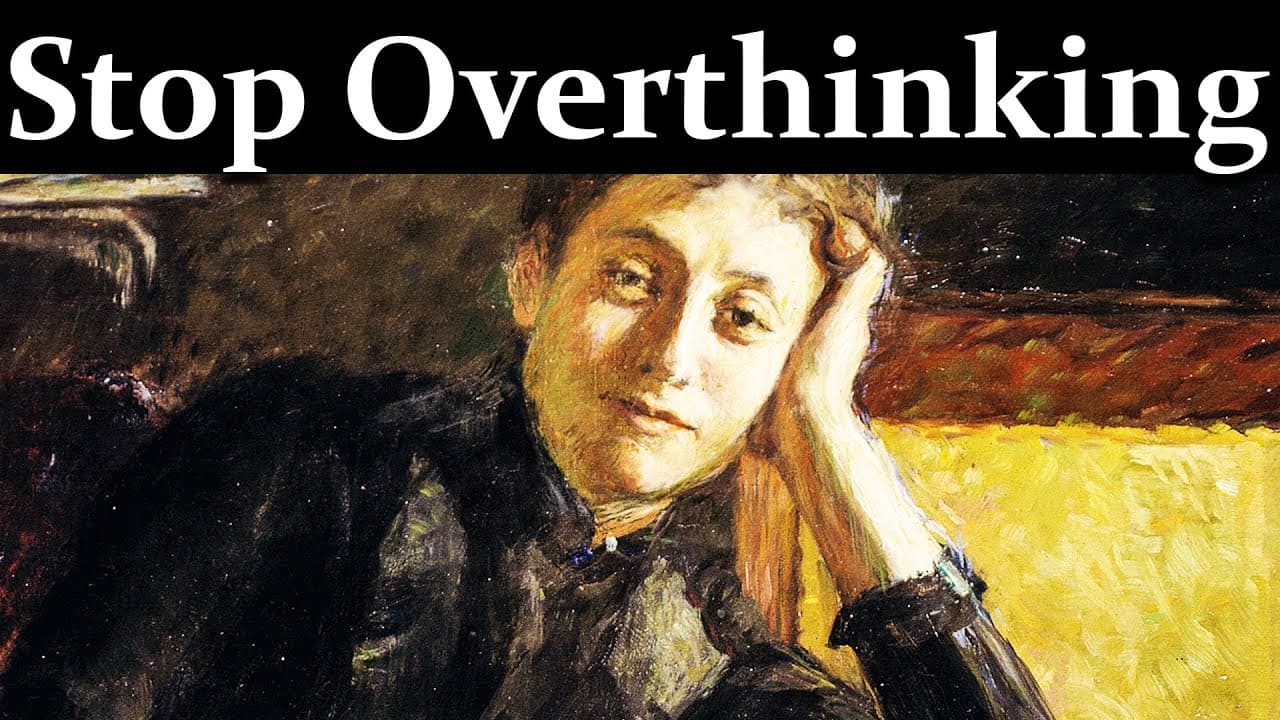
TL;DR
Kierkegaard urges living life fully over seeking answers.
Transcript
In 1957, Swedish filmmaker Ingmar Bergman released one of the most powerful images ever recorded in the history of cinema. A medieval knight, freshly returned from the Crusades, plays chess with death on a desolate beach while dark clouds herald the end of times. The game is not just for his physical life, but for answers. The knight wants to know ... Read More
Key Insights
- Kierkegaard argues that life is not a problem to be solved but a reality to be lived, urging us to embrace the uncertainties and experiences of life.
- The Seventh Seal's chess game with death symbolizes humanity's futile quest for absolute answers, reflecting our struggle with existential questions.
- Kierkegaard identifies three stages of life: aesthetic, ethical, and religious, each representing different approaches to dealing with existential anxiety.
- The aesthetic stage focuses on pleasure and novelty, but ultimately leads to emptiness and dissatisfaction as the search for new experiences becomes monotonous.
- The ethical stage seeks stability and meaning through duty, morality, and social conventions, yet it can also become a way to avoid confronting life's uncertainties.
- The religious stage involves a leap of faith, accepting life's paradoxes and uncertainties, and living with passion despite the lack of guarantees.
- Kierkegaard's concept of the 'teleological suspension of the ethical' explores moments when individuals prioritize absolute purposes over universal ethical norms.
- The leap of faith embodies courage and freedom, urging individuals to live passionately and embrace life's mysteries without the need for absolute certainty.
Install to Summarize YouTube Videos and Get Transcripts
Explore YouTube Video Summarizer or Get YouTube Transcript Extractor
Questions & Answers
Q: What is the main message of the video?
The main message of the video is to stop trying to solve life as a problem and instead embrace living it fully. Kierkegaard urges individuals to accept life's uncertainties and experiences, emphasizing that true freedom and authenticity come from engaging with life's mysteries rather than seeking absolute answers.
Q: How does Kierkegaard view the role of intellect in understanding life?
Kierkegaard views the intellect as a tool that can both liberate and imprison us. While it helps us understand the world, an overreliance on reason can trap us in endless reflections and abstractions, distancing us from the raw experiences of life. He warns against using intellect to try to capture life in rigid systems and categories.
Q: What are the three stages of life according to Kierkegaard?
According to Kierkegaard, the three stages of life are the aesthetic, ethical, and religious stages. The aesthetic stage focuses on pleasure and novelty, the ethical stage seeks stability through duty and morality, and the religious stage involves a leap of faith, accepting life's paradoxes and uncertainties while living with passion and courage.
Q: What does the 'teleological suspension of the ethical' mean?
The 'teleological suspension of the ethical' refers to situations where an individual prioritizes an absolute purpose over universal ethical norms. It involves recognizing that some experiences transcend common ethical criteria. Kierkegaard uses the biblical story of Abraham and Isaac to illustrate this concept, highlighting the complexity and depth of human decision-making in the face of absolute calls.
Q: What is the significance of the chess game in The Seventh Seal?
The chess game in The Seventh Seal symbolizes humanity's quest for absolute answers and the struggle with existential questions. The knight's game with death reflects our desire to negotiate with fate and reality, seeking certainty and meaning in life. It represents the modern human condition of trying to solve life as a mathematical equation.
Q: How does Kierkegaard define anxiety?
Kierkegaard defines anxiety as the vertigo of freedom, a deep discomfort arising from the realization of one's freedom and the infinite possibilities available. Unlike fear, which has a specific object, anxiety is more diffuse and relates to the openness of the possible. It is both a burden and an invitation to recognize our radical freedom and live authentically.
Q: What is the 'leap of faith' according to Kierkegaard?
The 'leap of faith' is Kierkegaard's concept of embracing life's uncertainties and mysteries with courage and passion. It is not about blind belief but rather accepting the limits of reason and choosing to live fully despite the lack of guarantees. The leap involves trusting that there is meaning beyond our understanding, embodying the courage to exist and participate in life.
Q: Why does Kierkegaard believe life cannot be solved by reason?
Kierkegaard believes life cannot be solved by reason because it is inherently paradoxical, fragile, and uncertain. He argues that life's mysteries and experiences transcend the capacity of intellect and rational systems. Instead of seeking absolute answers, he encourages embracing the raw and vital pulse of immediate experience, living passionately despite uncertainties and contradictions.
Summary & Key Takeaways
-
Kierkegaard challenges the notion of solving life as a problem, advocating instead for embracing life's experiences and uncertainties. He critiques the human tendency to seek absolute answers through intellect, systems, and philosophies.
-
He describes three stages of life: aesthetic, ethical, and religious, each offering different ways to cope with existential anxiety. The religious stage involves a leap of faith, accepting life's paradoxes and living with passion.
-
Kierkegaard's philosophy emphasizes the freedom and courage required to live authentically, urging individuals to stop being spectators and engage passionately with life's mysteries and uncertainties.
Read in Other Languages (beta)
Share This Summary 📚
Summarize YouTube Videos and Get Video Transcripts with 1-Click
Try YouTube Summary with ChatGPT & Claude or YouTube Transcript Generator
Explore More Summaries from Psyphoria 📚

Summarize YouTube Videos and Get Video Transcripts with 1-Click
Try YouTube Summary with ChatGPT & Claude or YouTube Transcript Generator