What Caused the Boeing 737 MAX Crashes?
TL;DR
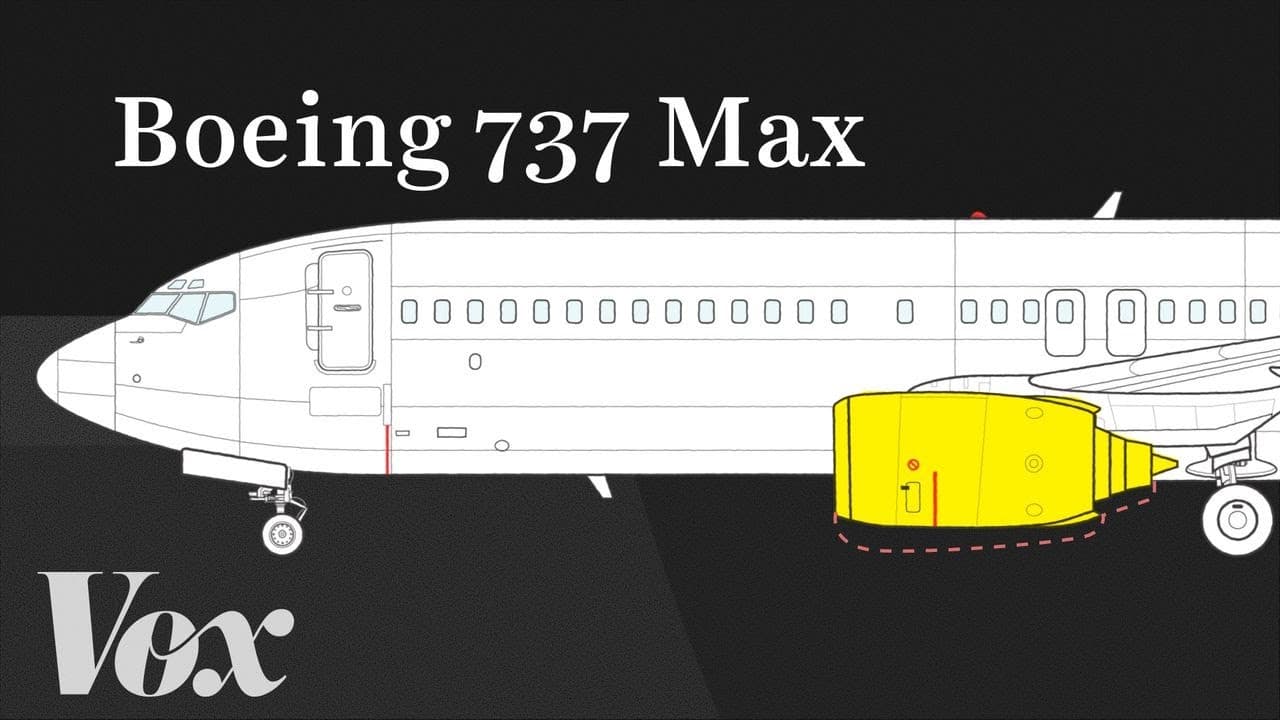
The Boeing 737 MAX crashes were caused by the new engine placement that altered its aerodynamics, leading to uncontrollable nose dives. The Maneuvering Characteristics Augmentation System (MCAS) introduced to address this issue was poorly communicated to pilots and relied on faulty sensor data, exacerbating the situation. Rushed certification by the FAA and inadequate pilot training further contributed to the tragedies.
Transcript
This is an airplane engine. It's sitting in a field in Bishoftu, Ethiopia— part of the wreckage of Ethiopian Airlines Flight 302, which crashed on March 10, 2019. 157 people died. This was just a few months after another flight, Lion Air 610, crashed in Indonesia and killed 189 people. These two flights were operating the same plane: The Boeing 737... Read More
Key Insights
- The Boeing 737 MAX 8 crashes were linked to the new engine design, which altered the plane's aerodynamics during takeoff, causing the nose to rise excessively.
- Boeing introduced the Maneuvering Characteristics Augmentation System (MCAS) to counteract the altered aerodynamics but failed to adequately inform pilots about this system.
- The MCAS system relied on sensor data, which was faulty in the crashes, leading to the planes nosediving uncontrollably.
- Boeing's decision to not re-engineer the plane but instead add software was driven by competition with Airbus to quickly release a fuel-efficient plane.
- Airbus's A320 NEO, with a larger engine, prompted Boeing to modify the 737, despite spatial constraints under the wing, leading to design compromises.
- Pilots received insufficient training on the 737 MAX, with only a brief iPad course and no detailed information on the MCAS system.
- The Federal Aviation Administration (FAA) is under scrutiny for expediting the certification process of the 737 MAX without thorough checks.
- Boeing's response to the crashes includes software updates to the MCAS and promises of increased pilot training, yet confidence in the aircraft remains shaken.
Install to Summarize YouTube Videos and Get Transcripts
Explore YouTube Video Summarizer or Get YouTube Transcript Extractor
Questions & Answers
Q: What caused the Boeing 737 MAX crashes?
The crashes were primarily caused by a design change that altered the plane's aerodynamics, necessitating the MCAS software to prevent stalls. However, faulty sensor data led the MCAS to push the plane's nose down uncontrollably, and pilots were not adequately trained to handle this situation.
Q: How did Boeing's competition with Airbus influence the 737 MAX design?
Boeing's competition with Airbus drove them to quickly release a fuel-efficient plane to match the A320 NEO. This urgency led to design compromises, such as moving the engine placement, which altered aerodynamics and required the addition of the MCAS software instead of a more extensive re-engineering.
Q: What role did the FAA play in the 737 MAX situation?
The FAA is under scrutiny for its role in expediting the certification process of the 737 MAX. Critics argue that the FAA relied too heavily on Boeing's assessments and did not conduct thorough independent checks, contributing to the oversight of critical safety issues that led to the crashes.
Q: What was the MCAS system designed to do?
The MCAS system was designed to prevent the 737 MAX from stalling by automatically adjusting the plane's nose downward if it detected an excessive angle of attack. This was necessary due to the altered aerodynamics from the new engine placement, but it malfunctioned due to faulty sensor data.
Q: Why were pilots unprepared to handle the MCAS malfunction?
Pilots were unprepared because Boeing marketed the 737 MAX as similar to its predecessor, requiring minimal additional training. As a result, many pilots only received a brief iPad course and were not informed about the MCAS system, leaving them unequipped to handle its malfunctions during flight.
Q: What changes has Boeing made in response to the crashes?
In response to the crashes, Boeing has implemented software updates to make the MCAS less aggressive and has committed to increasing pilot training to ensure they are fully informed about the system and how to disable it in case of malfunction, aiming to prevent future incidents.
Q: What are the implications of the 737 MAX crashes for Boeing?
The crashes have severely damaged Boeing's reputation and trust in their aircraft. The company faces increased scrutiny from regulators and the public, and it must address safety concerns comprehensively to restore confidence in the 737 MAX and its brand as a whole.
Q: How did the design of the 737 MAX differ from its predecessor?
The 737 MAX differed from its predecessor primarily in its engine placement. The engines were moved up and forward on the wing to accommodate larger, more fuel-efficient engines. This change altered the plane's aerodynamics, creating conditions that could lead to a stall, which the MCAS was designed to mitigate.
Summary & Key Takeaways
-
Boeing's 737 MAX faced two fatal crashes due to design changes made to compete with Airbus's A320 NEO. The new engine placement altered the plane's aerodynamics, requiring a software fix (MCAS) that was poorly communicated to pilots.
-
The MCAS system's reliance on faulty sensor data led to uncontrollable nosedives. Pilots were inadequately trained on this system, contributing to the inability to prevent the crashes. Boeing's rush to market compromised safety.
-
The FAA is criticized for its expedited certification of the 737 MAX. Boeing's subsequent software updates and increased pilot training aim to address the issues, but the company's reputation and trust in the aircraft have been damaged.
Read in Other Languages (beta)
Share This Summary 📚
Summarize YouTube Videos and Get Video Transcripts with 1-Click
Try YouTube Summary with ChatGPT & Claude or YouTube Transcript Generator
Explore More Summaries from Vox 📚



Summarize YouTube Videos and Get Video Transcripts with 1-Click
Try YouTube Summary with ChatGPT & Claude or YouTube Transcript Generator