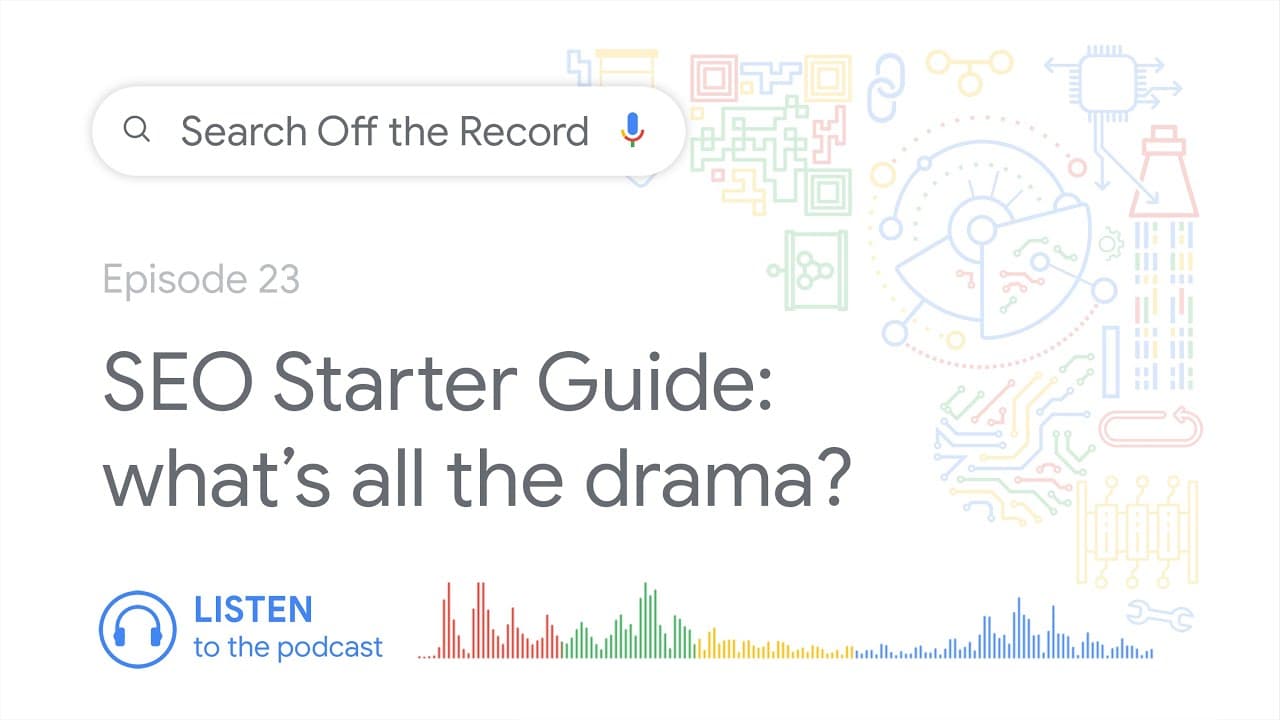
SEO Starter Guide: What’s all the drama?
TL;DR
Google's SEO guide offers timeless advice on search optimization.
Transcript
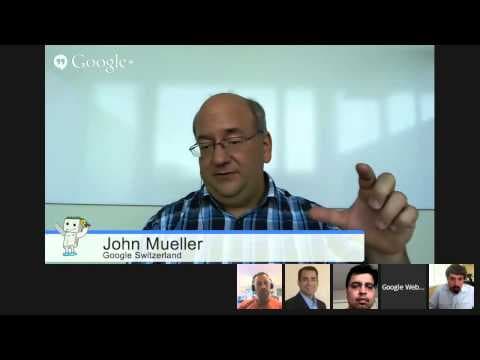
[MUSIC PLAYING] JOHN MUELLER: Welcome, everyone, to another episode of the Search Off the Record podcast. Our plan for this series is to talk a bit about what's happening at Google Search, how things work behind the scenes, and, who knows, maybe have some fun along the way. My name is John Mueller. I'm a search advocate on the Search Relations team... Read More
Key Insights
- The SEO Starter Guide was created to provide advice directly from Google on SEO, addressing both internal and external queries. It aimed to clarify that Google is not against SEO if done correctly.
- The guide initially started as a PDF and later became a booklet with a cartoon Googlebot character, which has since become iconic.
- Robots.txt should not be used to block sensitive information, as it only instructs compliant crawlers and can be easily bypassed by users or rogue crawlers.
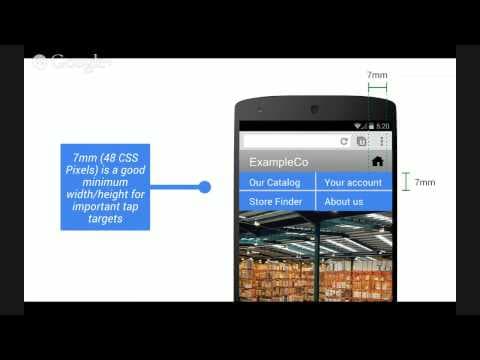
- Mobile-friendly websites are crucial for online presence, as most people use mobile devices for searching. Google's experiments since 2016 prioritize mobile content for ranking.
- Promotion of websites should be thoughtful, focusing on significant updates rather than every small piece of content. This approach is more effective for user engagement.
- Social media's role in SEO has evolved. Initially, it was about traffic, but now it's more about marketing as search engines do not heavily weigh social media links.
- Titles and meta descriptions are vital for attracting targeted visitors. They should be crafted with users in mind, not just search engines, to improve click-through rates.
- Creating compelling content is the most influential factor for a website's success, fostering organic word-of-mouth promotion and building a site's reputation.
Install to Summarize YouTube Videos and Get Transcripts
Explore YouTube Video Summarizer or Get YouTube Transcript Extractor
Questions & Answers
Q: What was the original purpose of the SEO Starter Guide?
The SEO Starter Guide was created to provide clear and direct advice from Google on SEO practices. It aimed to address frequent questions about SEO both internally at Google and externally from the public. The guide was also intended to clarify that Google is not against SEO when it is done correctly and according to best practices.
Q: Why is robots.txt not suitable for blocking sensitive information?
Robots.txt is not suitable for blocking sensitive information because it only instructs well-behaved crawlers not to access certain pages. It does not prevent non-compliant crawlers or curious users from accessing the content by directly entering the URL. Sensitive information should be protected using more secure methods, such as authentication or access restrictions.
Q: Why is having a mobile-friendly site important?
Having a mobile-friendly site is crucial because the majority of users access the internet via mobile devices. A site that is not optimized for mobile can be difficult to navigate on smaller screens, leading to a poor user experience. Since 2016, Google has prioritized mobile content for ranking, meaning that a mobile-friendly site is essential for maintaining a strong online presence and visibility in search results.
Q: What is the role of social media in SEO according to the guide?
Initially, social media's role in SEO was more about driving traffic to websites. However, the guide suggests that its role has evolved into a marketing tool rather than a direct SEO factor. Search engines do not heavily weigh social media links due to their typically nofollow status. The guide emphasizes thoughtful promotion and engagement with audiences rather than spamming links across social platforms.
Q: How should titles and meta descriptions be crafted according to the guide?
Titles and meta descriptions should be crafted with the user in mind, focusing on clarity and relevance. They are crucial for attracting targeted visitors and improving click-through rates. The guide suggests using descriptive and concise language that accurately reflects the content of the page, rather than stuffing keywords solely for search engine optimization purposes.
Q: What does the guide say about creating content for websites?
The guide emphasizes that creating compelling and useful content is the most influential factor for a website's success. Quality content is likely to attract users and encourage them to share it through various means, such as social media, blogs, or forums. This organic promotion helps build the site's reputation and is favored by both users and search engines.
Q: What was one of the challenges mentioned in maintaining the SEO Starter Guide?
One challenge in maintaining the SEO Starter Guide was ensuring that the advice remained relevant and applicable across different regions and languages. The guide needed to be adaptable to various cultural contexts and search behaviors, which required input from Google's global teams to ensure the content was accurate and effective for diverse audiences.
Q: What is an example of how the guide's recommendations have evolved over time?
An example of the guide's evolution is its approach to mobile optimization. Initially, mobile-friendly design was a recommendation, but as mobile usage grew, it became a critical factor for SEO. Google's algorithms began prioritizing mobile content for indexing and ranking, reflecting the guide's shift from optional advice to essential practice for staying competitive in search results.
Summary & Key Takeaways
-
The SEO Starter Guide was created to provide clear, Google-endorsed advice on SEO practices, emphasizing that Google supports well-executed SEO. It began as a PDF and later became a booklet, introducing the Googlebot character.
-
Robots.txt should not be used for blocking sensitive information as it is not secure. The guide emphasizes the importance of mobile-friendly sites, as Google prioritizes mobile content for ranking.
-
Effective website promotion involves thoughtful content updates and understanding social media's role in SEO. Titles and meta descriptions should focus on user engagement, and compelling content is key to building a site's reputation.
Read in Other Languages (beta)
Share This Summary 📚
Summarize YouTube Videos and Get Video Transcripts with 1-Click
Try YouTube Summary with ChatGPT & Claude or YouTube Transcript Generator
Explore More Summaries from Google Search Central 📚
Summarize YouTube Videos and Get Video Transcripts with 1-Click
Try YouTube Summary with ChatGPT & Claude or YouTube Transcript Generator