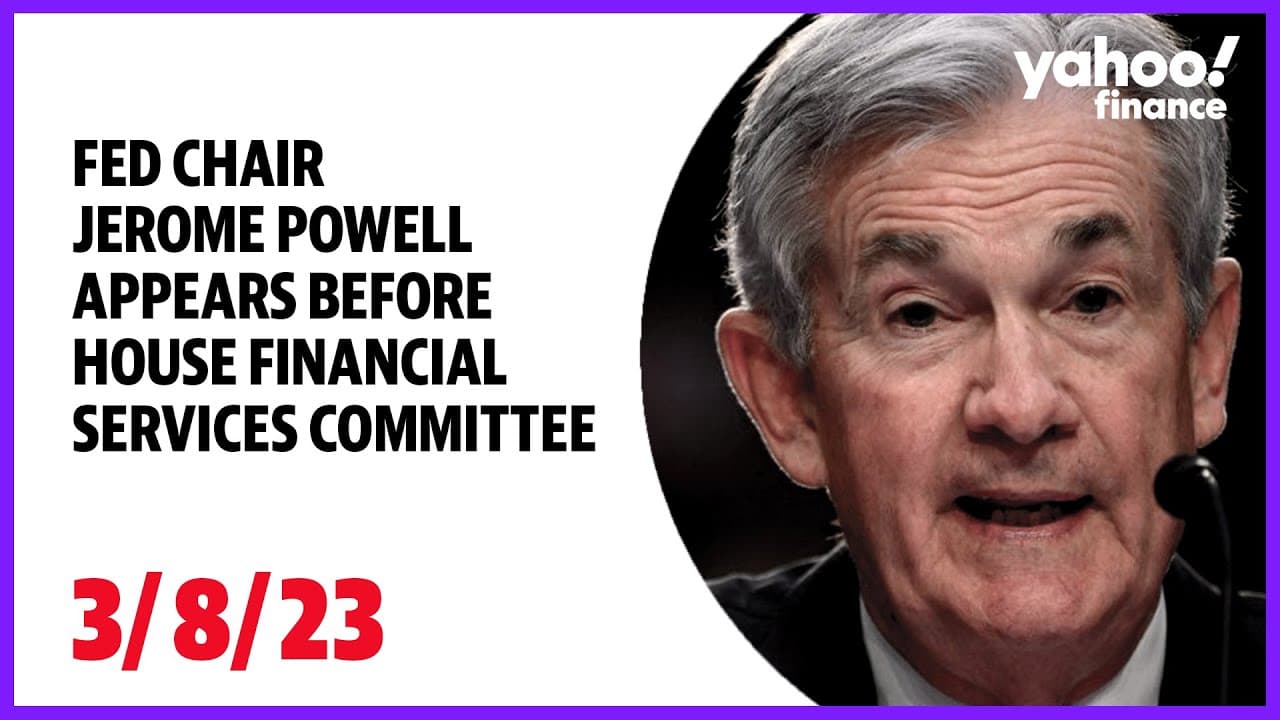
What Did Fed Chair Powell Say in Congress 2023?
TL;DR
Federal Reserve Chair Jerome Powell reassured Congress about the Fed's commitment to price stability and clarified that the central bank will not engage in climate policy. Lawmakers expressed concern over inflation and emphasized the urgency of raising the debt limit to avoid economic repercussions from a potential default.
Transcript
objection all members will have five legislative days within which to submit extraneous materials to the chair for inclusion in the record and I'll note at the outset that this hearing has a hard stop of 1 pm this is traditional for the Fed chair um and uh which we intend to strictly observe um I now recognize myself for four minutes given an openi... Read More
Key Insights
- 🔍 Employment and Inflation: The Fed is committed to restoring price stability and achieving maximum employment. Despite historically low unemployment rates, inflation remains elevated.
- 🏛️ Political Pressure: Democrats are pressuring the Fed to expand its mandate, but Chair Powell emphasizes the Fed's commitment to its dual mandate of price stability and maximum employment.
- 💰 Inflation Concerns: Inflation rates have significantly increased since President Biden took office, negatively impacting workers and retirees. The Fed is working to bring down inflation and ease the burden on Americans.
- 🔍 Regulatory Review: The Federal Reserve is conducting a comprehensive review of bank capital and its regulatory regime. Concerns have been raised about transparency and the potential economic effects of new regulations.
- 🌍 Climate Policy: The Fed is being urged to address climate change, but Chair Powell stresses that climate policy should originate from elected representatives in Congress, not from the central bank.
- 💱 Central Bank Digital Currency (CBDC): The Fed is conducting research and technical experimentation on CBDCs, but no decisions have been made. The focus is on exploring the technology and policy implications of CBDCs.
- 💵 The Dollar's Reserve Currency Status: The US dollar is widely accepted as the world's principal reserve currency due to factors such as democratic institutions, liquid markets, and the rule of law. Other countries may desire alternative currencies, but the dollar's credibility remains strong.
- ⚖️ Equity in Capital Standards: The Fed is committed to tailoring capital requirements based on the size and risk characteristics of financial institutions. There are no plans to subject regional and smaller banks to the same capital standards as larger banks.
- 🌍 Global Economic Developments: Actions by countries like Russia and China to de-dollarize their reserves and conduct transactions in non-US dollars are monitored. The dollar's reserve currency status remains strong.
- 💲 FedNow and Stablecoins: The Fed is developing FedNow, a new real-time payment system, which will offer real-time payments to banks and customers. The Fed is also closely monitoring stablecoins but has not made any decisions regarding their regulation or impact on payment systems.
- 🔎 Scenario Planning: The Fed conducts scenario planning to anticipate potential economic effects, including those related to technology and health care costs. It is essential to consider future developments and their macroeconomic impacts.
Install to Summarize YouTube Videos and Get Transcripts
Explore YouTube Video Summarizer or Get YouTube Transcript Extractor
Questions & Answers
Q: What concerns do members of Congress have regarding the Federal Reserve's involvement in climate policy and regulations on regional banks?
Members of Congress are concerned that the Federal Reserve may stray from its primary focus on price stability and venture into climate policy or impose stringent regulations on regional banks, potentially harming the economy and the banking industry. They worry about the Fed overstepping its bounds and making policy decisions that should be left to elected officials. These concerns highlight the importance of ensuring the Federal Reserve stays within its narrow mandate and refrains from overregulation.
Q: Why do members of Congress stress the need for a timely increase in the debt limit?
Members of Congress stress the need for a timely increase in the debt limit to avoid the serious consequences of defaulting on the nation's debt. They highlight the potential economic catastrophe and the impact it could have on businesses, consumers, and the global economy. Defaulting on the debt would lead to higher borrowing costs, mass job losses, and global instability. By raising the debt limit in a timely manner, Congress can protect the economy and prevent significant harm to businesses, consumers, and the overall financial system.
Q: What is the Federal Reserve's response to concerns about its involvement in climate policy and regulations on regional banks?
The Federal Reserve Chair reassures Congress that the Fed is focused on its primary mission of price stability and is not seeking to become a climate policy maker or overregulate regional banks. The Chair emphasizes that the Fed's role is to maintain a stable financial system, ensure the soundness of banks, and protect the economy. The Fed acknowledges the importance of tailoring regulations to address the specific size and risk characteristics of financial institutions and avoids straying into areas beyond its mandate.
Q: What challenges does the Federal Reserve face regarding the debt limit and regulation of regional banks?
The Federal Reserve faces challenges related to the debt limit in ensuring that the Treasury has the necessary funds to pay the country's bills. While the Fed does not directly participate in the debt ceiling discussions, it recognizes the need for Congress to fulfill its obligation to raise the debt limit in a timely manner. Regarding regulation of regional banks, the Fed must strike a balance between implementing appropriate regulations that safeguard the financial system and avoiding burdensome regulations that could hinder the functioning of regional banks. It is critical for the Fed to tailor regulations to fit the smaller size and risk profiles of regional banks while still maintaining stability in the financial system.
Summary & Key Takeaways
-
Members of Congress express concerns about the Federal Reserve potentially straying into climate policy and implementing regulations on regional banks.
-
Members also urge a timely increase in the debt limit to avoid the negative consequences of defaulting on the nation's debt.
-
The Federal Reserve Chair reassures Congress that the Fed is focused on price stability and will not venture into climate policy or overregulate regional banks.
-
The Fed Chair also emphasizes the importance of raising the debt limit in a timely manner to protect the economy.
Read in Other Languages (beta)
Share This Summary 📚
Summarize YouTube Videos and Get Video Transcripts with 1-Click
Try YouTube Summary with ChatGPT & Claude or YouTube Transcript Generator
Explore More Summaries from Yahoo Finance 📚




Summarize YouTube Videos and Get Video Transcripts with 1-Click
Try YouTube Summary with ChatGPT & Claude or YouTube Transcript Generator