What Is Machine Learning and How Does It Work?
TL;DR
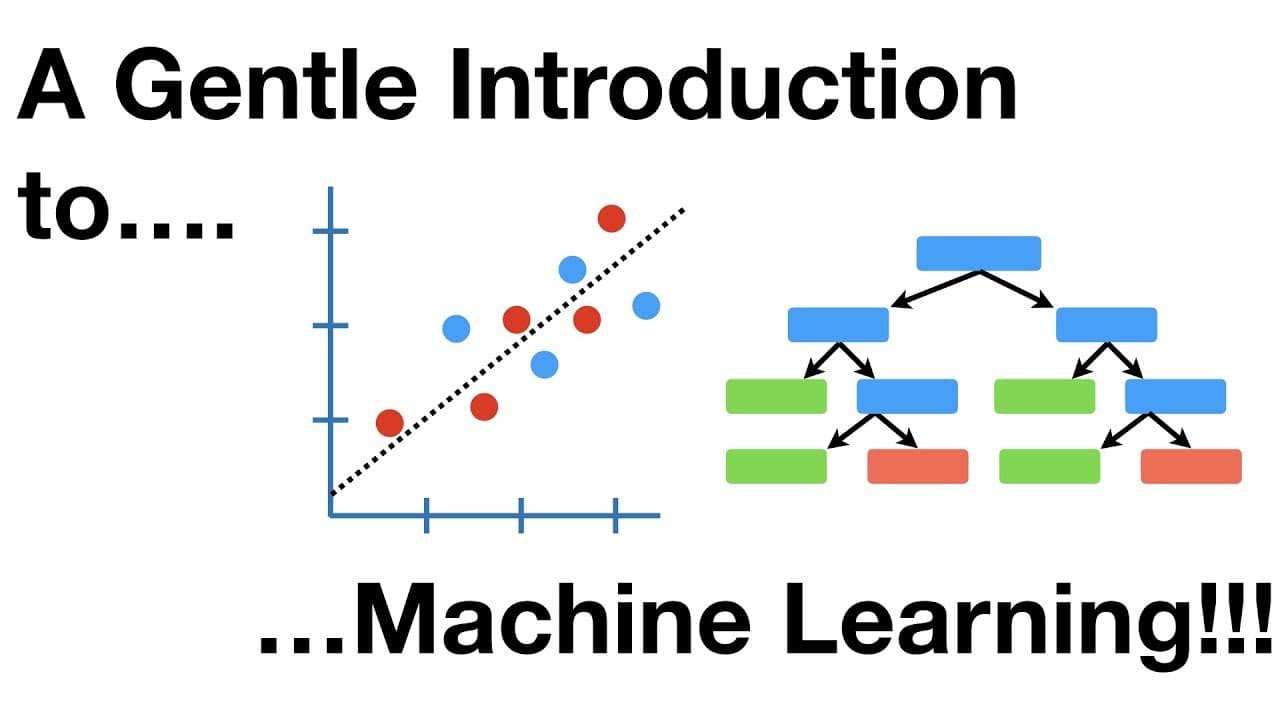
Machine learning involves making predictions and classifications based on data, often illustrated through techniques like decision trees. Key concepts include using training data to create models and testing data to evaluate their performance, emphasizing the bias-variance tradeoff to avoid overfitting. Understanding these fundamentals is crucial for grasping machine learning.
Transcript
gonna start this tech quest with silly song but if you don't like silly songs that's okay stack quests hello I'm Josh stormer and welcome to stack quest today we're going to do a gentle introduction to machine learning note this stack quest was originally prepared for and presented at the Society for scientific advancements annual conference one of... Read More
Key Insights
- 🎶 Incorporating silly songs and machine learning can make learning more enjoyable and engaging.
- 🌳 Decision trees are a simple but powerful machine learning method that can be used for prediction and classification.
- 💡 Understanding decision trees is a key step towards grasping the fundamentals of machine learning.
- 📊 Machine learning involves making predictions and classifications based on training data and evaluating performance using testing data.
- 📈 Evaluating machine learning models involves comparing the predictions made by different methods and choosing the one that performs the best.
- ♂️ The relationship between variables can be visualized using lines or curves, and these can be used to make predictions in machine learning.
- ⚖️ The bias-variance tradeoff is an important concept in machine learning that highlights the importance of finding a balance between underfitting and overfitting data.
- 📚 Proper selection of training and testing data is crucial in machine learning to ensure accurate and reliable predictions.
Install to Summarize YouTube Videos and Get Transcripts
Explore YouTube Video Summarizer or Get YouTube Transcript Extractor
Questions & Answers
Q: How does the decision tree example illustrate the process of classification in machine learning?
The decision tree example in the content shows how the attributes of a person (such as liking silly songs, machine learning, and statistics) are used to predict whether they will love "Stack Quest" or not. By following the decision tree path based on these attributes, the classification of a person is determined.
Q: What is the purpose of using testing data in machine learning?
Testing data is used to evaluate the performance of a machine learning method. It helps measure how well the method's predictions match the actual outcomes. By comparing the predictions to reality, the accuracy of the method can be assessed.
Q: How does the content explain the bias-variance tradeoff?
The content introduces the bias-variance tradeoff as the balance between fitting the training data well and making accurate predictions. It emphasizes that a method may fit the training data perfectly but perform poorly in predicting new data, highlighting the importance of evaluating a method's performance with testing data.
Q: Why is it mentioned that the choice of machine learning method isn't based on how fancy it is?
The effectiveness of a machine learning method is not solely determined by its complexity or novelty. Instead, the most important factor is how well the method performs with testing data, meaning its ability to make accurate predictions and classifications.
Q: How can the determination of training and testing data be done in a more systematic way?
The content briefly mentions that there are methodologies to determine which samples should be used for training data and which ones for testing data. This can involve techniques such as random sampling or using specific algorithms to divide the data. The content suggests referring to other Stat Quest videos for more information on this topic.
Summary & Key Takeaways
-
The content uses silly examples to explain machine learning, starting with a decision tree to predict whether someone will love "Stack Quest."
-
It introduces the concept of fitting a line to data to make predictions and classifications, emphasizing the importance of testing data.
-
The content also touches on the bias-variance tradeoff and mentions that there are various machine learning methods available.
Read in Other Languages (beta)
Share This Summary 📚
Summarize YouTube Videos and Get Video Transcripts with 1-Click
Try YouTube Summary with ChatGPT & Claude or YouTube Transcript Generator
Explore More Summaries from StatQuest with Josh Starmer 📚

Summarize YouTube Videos and Get Video Transcripts with 1-Click
Try YouTube Summary with ChatGPT & Claude or YouTube Transcript Generator