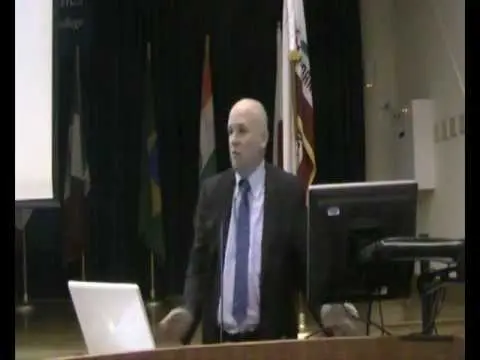
A defense of risk management (as a way of understanding what interpreters can do), Anthony Pym

TL;DR
Risk management is a key concept in translation and interpreting, where mediators navigate uncertain situations to achieve cooperation and manage potential negative outcomes.
Transcript
uh the approach is not new it's not mine uh the first uh publication in translation studies on risk management was by wolfgang wilds in uh 2005 my work on the on the concept uh took off around 2014 okay and uh and then says i used to give it as a series of talks just to try it out to see what happens and get the criticisms and try to make it better... Read More
Key Insights
- ❎ Risk management in translation and interpreting involves navigating uncertainties to achieve cooperation and manage potential negative outcomes.
- ✳️ Different translation and interpreting contexts require varying degrees of risk aversion or risk taking.
- ✳️ Omissions and paraphrases by interpreters can be strategic decisions to enhance understanding and manage risks.
- 🧑🏫 Risk management strategies can be taught to translators and interpreters to improve their decision-making skills in different contexts.
- 🧑🏭 The concept of risk management complements traditional approaches by considering contextual factors and prioritizing effective communication.
- ✳️ The loss of credibility is a significant risk for interpreters, and trust plays a crucial role in risk management.
- 😒 The use of risk management in translation and interpreting is particularly relevant in healthcare and legal settings.
Install to Summarize YouTube Videos and Get Transcripts
Explore YouTube Video Summarizer or Get YouTube Transcript Extractor
Questions & Answers
Q: What is risk management in translation and interpreting?
Risk management in translation and interpreting refers to the practice of navigating uncertainties and potential negative outcomes to achieve cooperation and successful communication.
Q: How does risk management differ from traditional translation approaches?
Risk management shifts the focus from strict adherence to equivalence and accuracy to considering contextual factors, managing potential risks, and prioritizing cooperation and effective communication.
Q: Why do interpreters sometimes omit or paraphrase phrases in their interpretation?
Interpreters may omit or paraphrase phrases to manage risks and enhance understanding. They assess the importance of certain information and make informed decisions based on the stakes involved in the communication.
Q: How does risk management impact the training of translators and interpreters?
Risk management provides a framework for training translators and interpreters to assess the importance of different textual elements, make informed decisions, and allocate cognitive efforts effectively.
Summary & Key Takeaways
-
The concept of risk management in translation and interpreting is not new and has been discussed since 2005.
-
Risk management involves navigating uncertainties to achieve cooperation and avoid negative outcomes.
-
Examples from court interpreting, healthcare interpreting, and CEO interviews showcase how risk management strategies are employed in different contexts.
Read in Other Languages (beta)
Share This Summary 📚
Summarize YouTube Videos and Get Video Transcripts with 1-Click
Try YouTube Summary with ChatGPT & Claude or YouTube Transcript Generator
Explore More Summaries from Anthony Pym 📚





Summarize YouTube Videos and Get Video Transcripts with 1-Click
Try YouTube Summary with ChatGPT & Claude or YouTube Transcript Generator