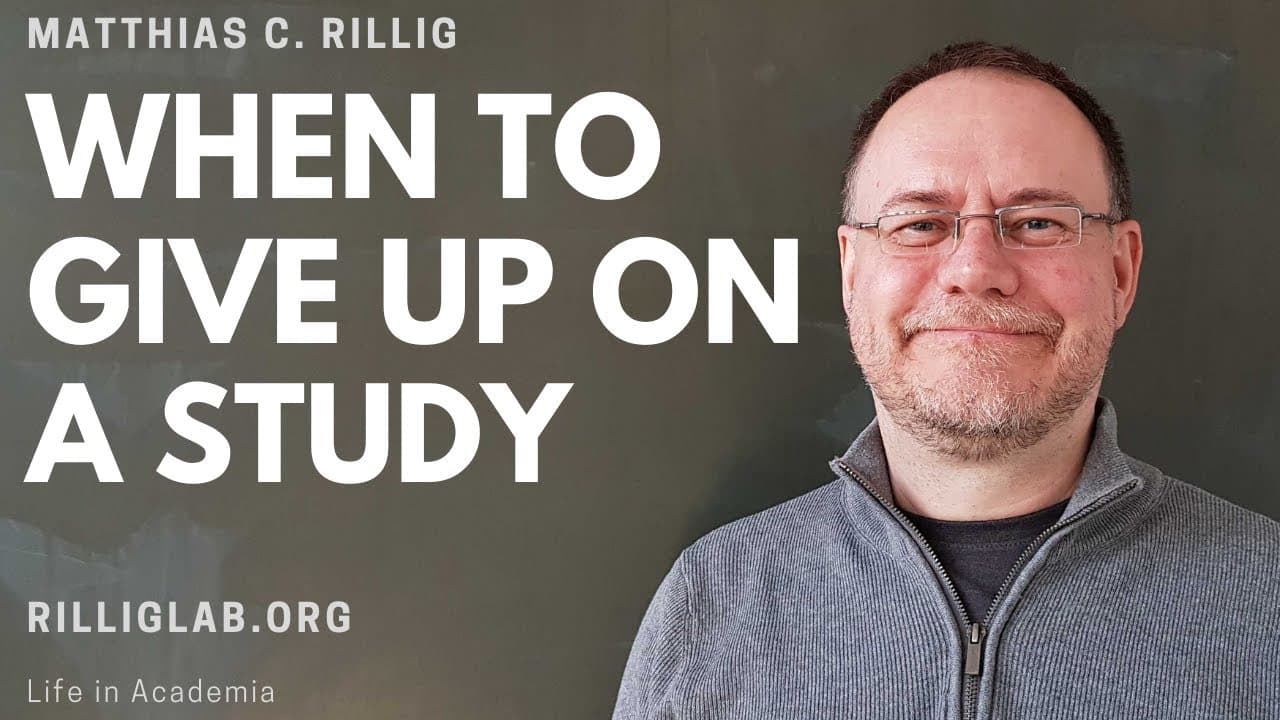
When to give up on a study....and why this is so hard to do. #phd #postdoc #experiments
TL;DR
When faced with a failed experiment, it is important to consider the sunk cost fallacy, analyze the potential next steps, and keep the big picture in mind before deciding whether to give up or continue.
Transcript
well i think we all know that feeling when an experiment didn't really quite work out the way you thought it should and you have that thinking feeling that maybe you should give up and this is a tough decision and this video is about that so to start out let me let me start out by saying that there are various ways how you can maybe minimize the ri... Read More
Key Insights
- 🤝 Failures are normal in scientific research, and how individuals deal with them is crucial for success.
- 🍝 The sunk cost fallacy often influences decision-making, but it is important to focus on the present and future instead of past investments.
- 🧑🏭 Consider factors like energy levels, outlook, next steps, and alignment with goals when deciding whether to give up on a project.
- 💄 Seek advice and involve others in the decision-making process to gain different perspectives and alleviate the burden.
- ❓ Be kind to yourself and recognize that failures do not define your abilities or potential for success.
- ✋ High-risk projects and first-time endeavors can provide valuable learning experiences, even if they don't achieve desired outcomes.
- 🉐 Always strive to learn something from failed experiments, whether it's gaining technical experience or identifying potential improvements for future attempts.
Install to Summarize YouTube Videos and Get Transcripts
Explore YouTube Video Summarizer or Get YouTube Transcript Extractor
Questions & Answers
Q: What is the sunk cost fallacy and how does it affect decision-making?
The sunk cost fallacy is a cognitive bias where individuals consider the time and effort already invested when making decisions, even though these costs are irrelevant to future choices. This biases individuals towards continuing even if the project is unlikely to succeed.
Q: When should one consider giving up on an experiment?
It is important to consider the impact on energy, outlook, and the feasibility of next steps. If the experiment consistently drains your energy, affects your overall outlook, or the next steps are time-consuming, expensive, or difficult, it may be best to move on.
Q: How should one approach decision-making when faced with a failed experiment?
While the final decision rests with the individual, it is recommended to involve close colleagues or supervisors to gain different perspectives. This shared decision-making process can make the situation less daunting and potentially lead to a better outcome.
Q: How should individuals handle the consequences of giving up on a project?
It is important to be kind to yourself and not beat yourself up over the failure. Understand that failures are common in science and focus on moving forward towards your goals. Take the opportunity to learn from the experience and identify lessons that can be applied in future endeavors.
Summary & Key Takeaways
-
Failures are inevitable in experiments, research synthesis, and conceptual work, but there are ways to minimize the risk.
-
The sunk cost fallacy, where individuals consider the time and effort already invested when deciding what to do next, can make it difficult to give up on a project.
-
When deciding whether to give up on an experiment, consider if it zaps your energy, affects your outlook, the difficulty of the next steps, and the overall alignment with your goals.
Read in Other Languages (beta)
Share This Summary 📚
Summarize YouTube Videos and Get Video Transcripts with 1-Click
Try YouTube Summary with ChatGPT & Claude or YouTube Transcript Generator
Explore More Summaries from Life in academia 📚





Summarize YouTube Videos and Get Video Transcripts with 1-Click
Try YouTube Summary with ChatGPT & Claude or YouTube Transcript Generator