What Is the Filibuster and How Does It Affect Legislation?
TL;DR
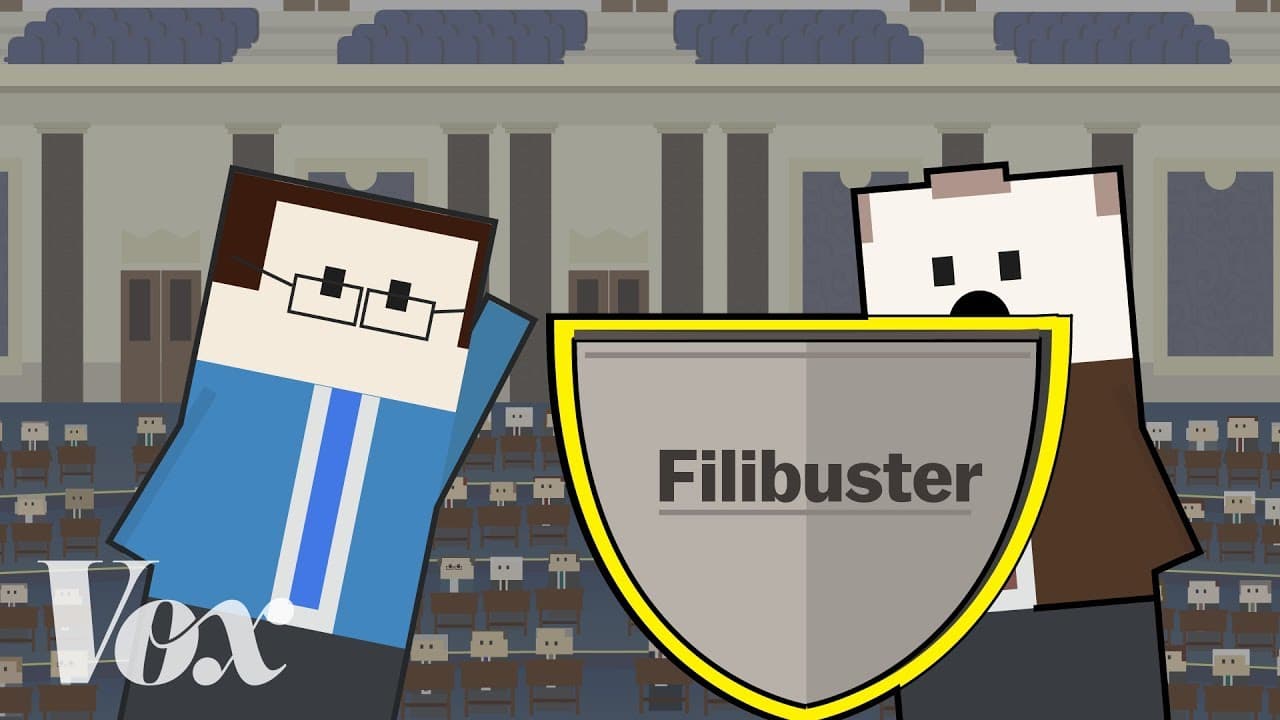
The filibuster allows a minority of 41 senators to block legislation by requiring 60 votes to proceed to a vote. Originating accidentally in the early 1800s, its usage has skyrocketed, leading to significant legislative gridlock and renewed discussions on its relevance in a democratic system, prompting debates on potential elimination.
Transcript
These 100 people are the US senate. They pass laws. They vote, and when a majority says yes, it passes. But these days, the senate doesn't do that very often. See, the senate has this rule. It says before they vote, 60 people have to agree to have the vote. That means just 41 people, a minority, can entirely block a bill. This is called a filibuste... Read More
Key Insights
- The US Senate is hindered by the filibuster, a rule that requires 60 votes to proceed with a vote, allowing a minority to block legislation.
- The filibuster originated by accident in the early 19th century when the Senate removed a rule allowing debate to end with a simple majority.
- Initially, filibusters were rare due to the small size of the Senate, but as the Senate grew, so did the use of filibusters.
- In 1917, to address an obstruction during World War I, the Senate adopted a rule allowing debate to end with a two-thirds majority, later changed to three-fifths.
- Filibusters became more frequent in the 1950s, especially against civil rights legislation, leading to procedural changes that made filibustering easier.
- In recent years, the minority party has increasingly used filibusters to block major legislation, causing a significant increase in their frequency.
- Reforms in 2013 and 2017 limited the filibuster's application to certain confirmation votes, highlighting ongoing debates about its future.
- The House of Representatives eliminated its filibuster rules in 1888 to ensure the majority could pass legislation, raising questions about the Senate's democratic function.
Install to Summarize YouTube Videos and Get Transcripts
Explore YouTube Video Summarizer or Get YouTube Transcript Extractor
Questions & Answers
Q: What is the filibuster and how does it affect the Senate?
The filibuster is a Senate rule that requires 60 votes to end debate on a bill and proceed to a vote. This allows a minority of 41 senators to block legislation, leading to significant gridlock as it has become a common tool for the minority party to obstruct major bills.
Q: How did the filibuster originate in the US Senate?
The filibuster originated by accident in the early 19th century when the Senate removed a rule that allowed debate to end with a simple majority. This change, advocated by Vice President Aaron Burr, meant senators could debate indefinitely without a mechanism to end it, laying the groundwork for the modern filibuster.
Q: Why did the use of the filibuster increase in the 1950s?
The use of the filibuster increased in the 1950s as the Senate began considering civil rights legislation. Southern senators, opposed to these bills, used the filibuster to block them despite lacking the votes to defeat them outright. This period marked a significant rise in the tactic's use to obstruct legislation.
Q: What changes were made to the filibuster rules in 1917?
In 1917, the Senate adopted a rule allowing debate to end with a two-thirds majority vote, known as cloture, in response to a filibuster blocking military action during World War I. This rule aimed to balance the need for debate with the ability to pass legislation, setting a precedent for future filibuster rules.
Q: How did the filibuster rules change in the mid-1970s?
In the mid-1970s, the Senate changed the filibuster rules by lowering the threshold for cloture from two-thirds to three-fifths of the Senate, or 60 votes. This change aimed to make it easier to end debate and proceed to a vote, though it did not significantly reduce the frequency of filibusters.
Q: What reforms were made to the filibuster in 2013 and 2017?
In 2013, the Democratic majority in the Senate changed the rules to eliminate the filibuster for most confirmation votes, a move mirrored by the Republican majority in 2017. These reforms reflected growing frustration with the filibuster's obstruction of the Senate's ability to confirm presidential appointments.
Q: Why is there debate about eliminating the filibuster?
Debate about eliminating the filibuster centers on its role in causing legislative gridlock and undermining majority rule. Critics argue it allows a minority to block the will of the majority, hindering the Senate's ability to pass significant legislation and prompting calls for its removal to enhance democratic governance.
Q: How does the House of Representatives differ in its use of the filibuster?
The House of Representatives eliminated its filibuster rules in 1888 to ensure the majority party could pass legislation, unlike the Senate where the filibuster persists. This decision underscores the tension between protecting minority rights and enabling the majority to govern, fueling ongoing debates about the filibuster in the Senate.
Summary & Key Takeaways
-
The filibuster, a procedural rule in the US Senate, allows a minority of 41 senators to block legislation by requiring 60 votes to proceed to a vote. Initially rare, its use has increased significantly, leading to legislative gridlock and debates about its future.
-
Originating accidentally in the early 1800s, the filibuster was meant to allow unlimited debate. It became problematic as the Senate grew, leading to the 1917 rule allowing debate to end with a supermajority vote, which has evolved over time.
-
Recent reforms have limited the filibuster's scope, particularly for confirmation votes. However, its continued use to block major legislation has sparked discussions about its impact on democracy and potential elimination, similar to changes made in the House.
Read in Other Languages (beta)
Share This Summary 📚
Summarize YouTube Videos and Get Video Transcripts with 1-Click
Try YouTube Summary with ChatGPT & Claude or YouTube Transcript Generator
Explore More Summaries from Vox 📚



Summarize YouTube Videos and Get Video Transcripts with 1-Click
Try YouTube Summary with ChatGPT & Claude or YouTube Transcript Generator