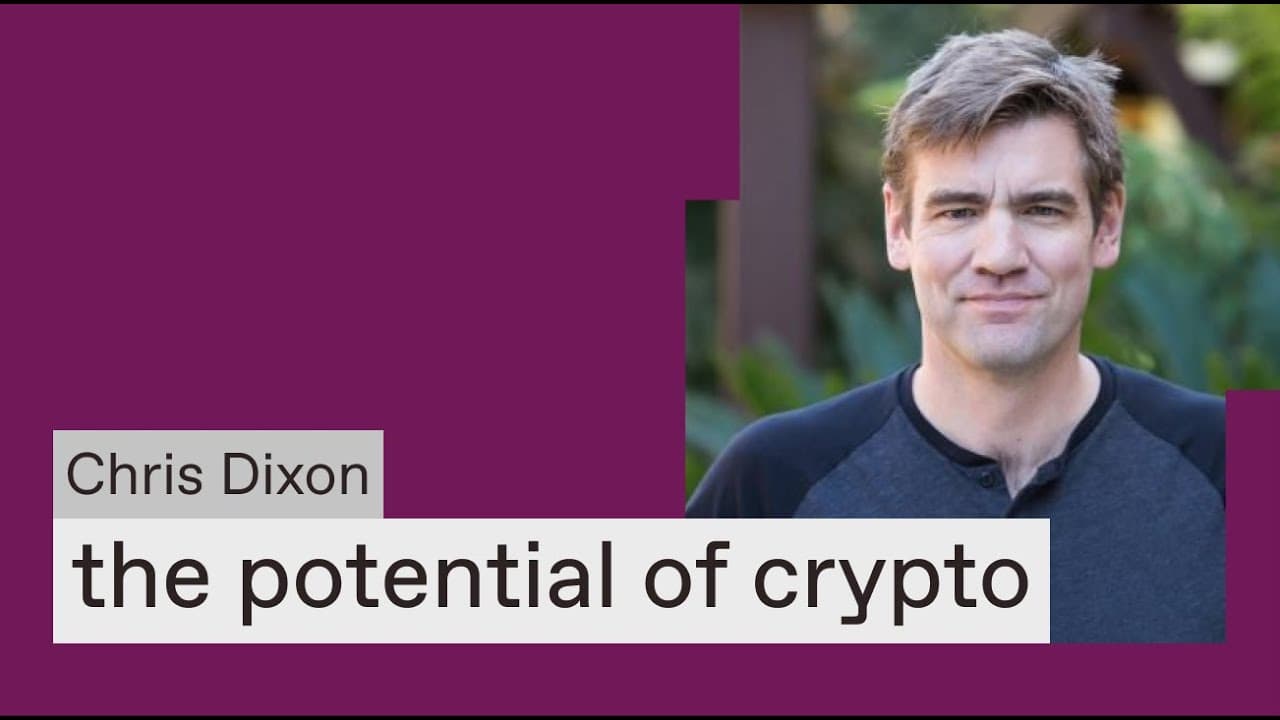
Chris Dixon: Crypto Networks and Why They Matter
TL;DR
Crypto networks matter because recurring waves of price attention bring people into the space, where sustained developer work, new startups, and broader blockchain designs can follow. The talk traces waves around 2011, 2013, and 2017, including the emergence of Coinbase, Ethereum, and Monero. It also explains why price is treated as a hook and lagging indicator rather than the technology’s purpose. Read on for the evidence behind this flywheel.
Transcript
thank you welcome it's awesome to have everybody here um so this is going to be very high level and but don't worry there's I guess hopefully we're going to dig into a lot of it over the next seven weeks we have a lot of reading material we can answer questions so so if it's some of it seems too high level or too abstract I think that's probably ok... Read More
Key Insights
- 🥺 There have been multiple waves of cryptocurrency, each leading to increased interest and innovation in the industry.
- 👾 Price is often used as a proxy for the level of excitement and activity in the cryptocurrency space.
- ❓ Blockchain technology has the potential to revolutionize various industries by providing trust guarantees and enabling secure transactions.
- 🤑 The future of cryptocurrencies lies in the development of new building blocks such as digital money, decentralized organizations, and smart contracts.
- ☄️ Scalability remains a challenge in blockchain technology, but there is optimism that significant improvements will be made in the coming years.
Install to Summarize YouTube Videos and Get Transcripts
Explore YouTube Video Summarizer or Get YouTube Transcript Extractor
Questions & Answers
Q: Why do crypto networks matter according to Chris Dixon?
Crypto networks matter because they attract developers, entrepreneurs, and new ideas that can continue developing after a price wave subsides. Dixon describes a flywheel in which prices generate interest and awareness, people explore the technology, developer activity grows, and new startups emerge.
Q: What crypto waves does Chris Dixon identify?
Dixon describes an early period before 2011, followed by major waves around 2011, 2013, and 2017. He says entrepreneurs commonly trace their entry into crypto to one of those periods, often after friends began buying crypto and prompted them to read about it.
Q: How do crypto prices create a flywheel of activity?
Price movements generate interest, awareness, and social media activity, acting as a hook that draws people into crypto. Some newcomers then follow discussions on Twitter or Reddit, develop ideas, contribute on GitHub, or create startups, allowing activity to persist beyond the price surge.
Q: Does Chris Dixon consider price the purpose of crypto?
No. He says many people first notice crypto because of trading or rising prices but stay because they believe in the technology. He also cautions that prices are not everything, even though people use them as a proxy for excitement in the space.
Q: What happened during the first crypto wave from 2010 through 2012?
Developer activity centered primarily on the Bitcoin GitHub repository. Startup and community activity also began appearing, including Coinbase, miners, wallets, and Reddit communities such as r/Bitcoin.
Q: How was the 2013 crypto wave different from the first wave?
The 2013 price run-up was accompanied by stronger developer, startup, and social media activity. Developer activity remained elevated even after prices fell, while projects such as Ethereum and Monero expanded the field beyond Bitcoin-related wallets into new blockchains and layer-one designs.
Q: What does the data suggest about crypto activity after prices fall?
The analysis indicates that developer activity can remain sustained after a price decline. When the waves are viewed together, developer, startup, and social activity rise significantly, with year-over-year growth remaining substantial even after the drop at the end of the period discussed.
Q: Is price a leading or lagging indicator in crypto?
Dixon describes price as a lagging indicator, consistent with how his firm views startup markets. He notes that investments may be made in projects without revenue or even business models, with a potential sale occurring only about 10 years later.
Summary & Key Takeaways
-
The presentation begins by discussing the different waves of cryptocurrency and how they have led to increased interest and innovation in the industry.
-
It highlights the importance of price as a proxy for the level of excitement and activity in the cryptocurrency space.
-
The presentation emphasizes the potential of blockchain technology to act as a virtual computer that can make commitments and provide trust guarantees.
-
It suggests that the future of cryptocurrencies lies in the development of new building blocks, such as digital money, decentralized organizations, and smart contracts.
Read in Other Languages (beta)
Share This Summary 📚
Summarize YouTube Videos and Get Video Transcripts with 1-Click
Try YouTube Summary with ChatGPT & Claude or YouTube Transcript Generator
Explore More Summaries from a16z crypto 📚





Summarize YouTube Videos and Get Video Transcripts with 1-Click
Try YouTube Summary with ChatGPT & Claude or YouTube Transcript Generator