Working on my Next.js starter kit
TL;DR
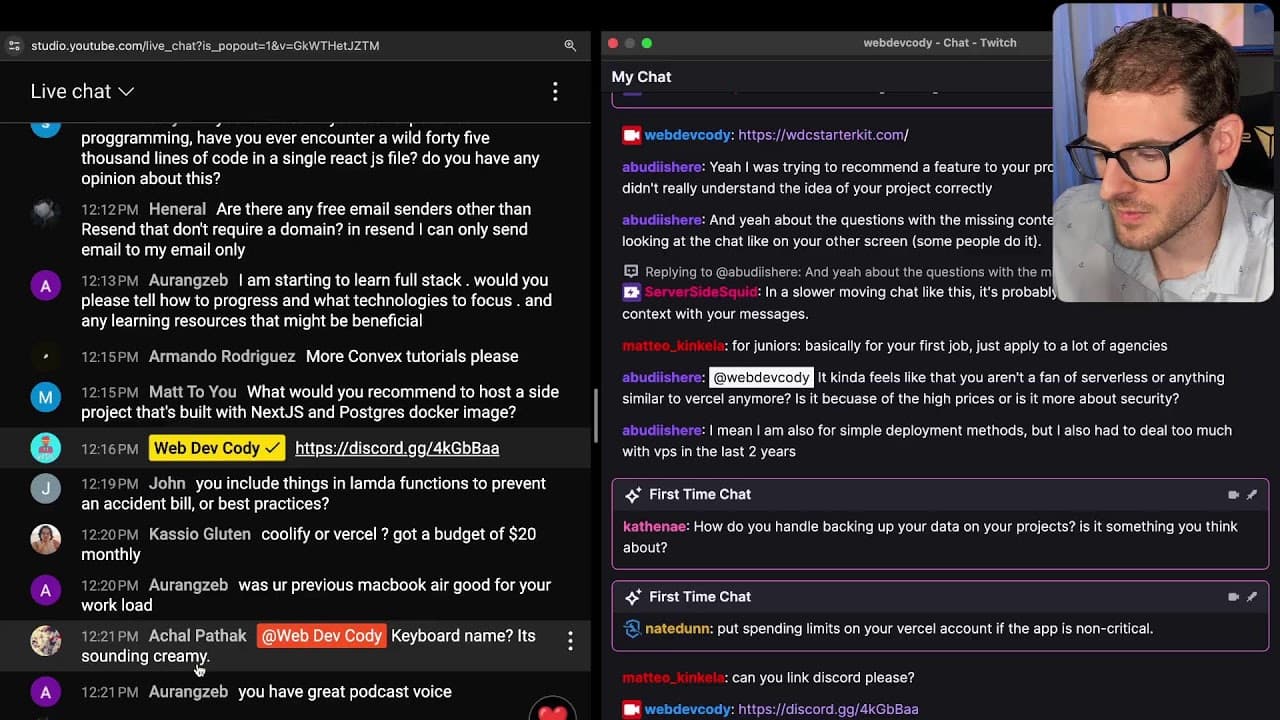
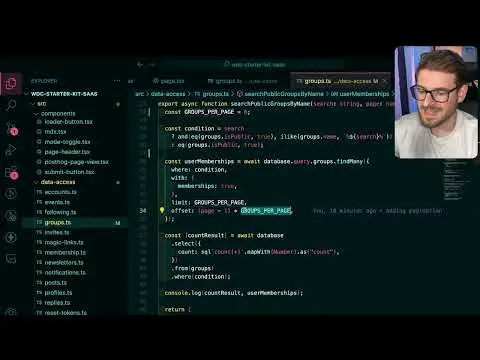
A developer shares insights while coding a profile editing feature live.
Transcript
e e e e e e e e how's it going no one in chat I don't even know if I have the right chat open um yeah if you guys are watching just say one thing in chat make sure I have the right chat window open um but hope you guys are having a good day what we're going to be working on today is I'm trying to continue working and try to finish out my starter ki... Read More
Key Insights
- 🔪 Building a custom starter kit helps streamline development by focusing on essential components and maintaining control over the project structure.
- 👨💻 Interactivity during live coding sessions fosters community engagement, as viewer questions shape the coding direction and introduce diverse topics.
- ❤️🩹 Next.js's server actions provide a robust solution for managing backend interactions directly within the front-end code, optimizing for type safety and efficiency.
- 👤 Consistent UI design, including the use of icons versus labels, plays a vital role in enhancing user experience and navigability across different application pages.
- 👨💼 Navigating the complexities of domain-driven design can be challenging, but clear naming conventions and organized code can still align technical implementations with business requirements.
- 👤 Integrating effective authentication strategies, like using Lucia for user sessions, can simplify user management and elevate security within the application.
- 👨💻 Regular code refactoring is essential for maintaining a clean codebase, improving readability, and ensuring long-term maintainability as projects evolve.
Install to Summarize YouTube Videos and Get Transcripts
Explore YouTube Video Summarizer or Get YouTube Transcript Extractor
Questions & Answers
Q: What motivates you to build your own starter kit instead of using third-party templates?
The motivation behind building my own starter kit lies in the desire for control and simplicity. Many third-party templates come with an abundance of features that I may not need, complicating my project. By crafting my own starter kit, I can include only the necessary components and ensure that the code aligns with my project's specific requirements. This approach also allows for a cleaner, more maintainable codebase tailored to my unique workflow.
Q: How do you handle state management in your Next.js project?
In my Next.js project, I prefer utilizing server actions, which allow me to directly call backend functions with full type safety. This integration simplifies the workflow, as I can manage state directly without needing to rely on additional state management libraries. For more complex components, I still consider local state management patterns, but for the most part, server actions serve my needs effectively, especially in a rapidly evolving development process.
Q: What do you think about the current trend of incorporating icons for buttons in UI design?
I believe incorporating icons into buttons can enhance user experience by providing quick visual cues about the button’s functionality. However, it's crucial to maintain consistency throughout the application. Some users prefer clear labels over icons, asserting that descriptive text provides better context, especially for accessibility. I strive to find a balance, using icons where they add clarity while keeping the text labels informative enough for users to understand the action.
Q: What is your perspective on domain-driven design in software development?
While I find the concept of domain-driven design appealing—aligning code with the business terminology and entities—I often feel overwhelmed by its complexities. It requires careful consideration and a deep understanding of both the technical and business sides of a project. My personal approach has been to maintain clarity in naming conventions and organize code to reflect the underlying business logic, simplifying the process without fully committing to extensive domain-driven design practices.
Summary & Key Takeaways
-
The content features a live coding session where a developer works on a profile editing feature for a project, discussing various technical aspects and challenges.
-
Throughout the stream, the developer interacts with viewers, addressing their questions about frameworks, code structures, and best practices in development.
-
Key topics cover using Next.js, implementing authentication, and considerations for UI consistency and user experience in application design.
Read in Other Languages (beta)
Share This Summary 📚
Summarize YouTube Videos and Get Video Transcripts with 1-Click
Try YouTube Summary with ChatGPT & Claude or YouTube Transcript Generator
Explore More Summaries from Web Dev Cody 📚
Summarize YouTube Videos and Get Video Transcripts with 1-Click
Try YouTube Summary with ChatGPT & Claude or YouTube Transcript Generator