React's useEffect hook always confuses me
TL;DR
Exploring React Hooks reveals the importance of dependency arrays and ref usage in effect management.
Transcript
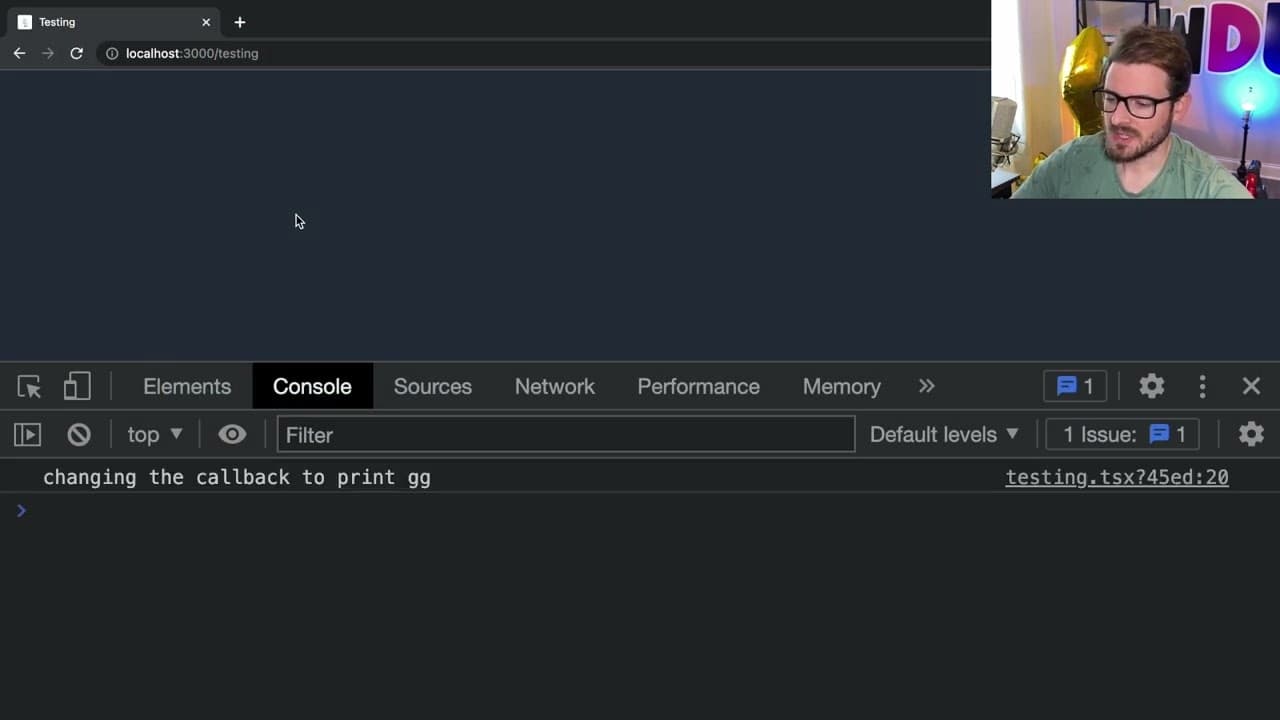
all right so I've been playing around a little bit more with react hooks just trying to understand them a little bit better you think I know them better by now but you know there's always stuff that seems to uh surprise me when I'm learning more about stuff and react but I wanted to share something with you that I think is important to teach becaus... Read More
Key Insights
- 🏃 Dependency arrays are crucial for managing effects in React; they determine when an effect should run based on state or prop changes.
- 🪝 Custom hooks, like the useTimeout, require careful consideration of their dependencies to ensure correct functionality in response to state changes.
- ❓ Without a proper dependency array, React may continue to reference stale closures, resulting in outdated values being used in effects.
- ❓ Managing callbacks with useRef can simplify the complexity of maintaining consistent references and prevent unnecessary re-renders.
- 👶 React 18 introduced new behaviors in strict mode that help identify bugs but may initially confuse new developers encountering repeated initializes.
- 🍳 Developers should balance following linter suggestions and implementing functional logic to avoid breaking the intended behavior of components.
- 😥 Understanding the finer points of useEffect and how updates to state interact with closures is essential for writing robust, production-ready React code.
Install to Summarize YouTube Videos and Get Transcripts
Explore YouTube Video Summarizer or Get YouTube Transcript Extractor
Questions & Answers
Q: Why are dependency arrays important in React Hooks?
Dependency arrays are critical in React Hooks as they dictate when effects should re-run. If you omit dependencies, your effect may not track the latest state changes or variables, leading to potential bugs and unexpected behavior in your application.
Q: What happens if you omit the dependency array in a custom hook?
Omitting the dependency array in a custom hook means that the effect will not re-trigger when state changes. For instance, if you change a state variable, the component's behavior may not reflect these changes, leading to stale closures and outdated values being used in your effects.
Q: How do refs help manage dependency issues in React?
Using refs, such as with useRef, allows you to maintain the latest value of a callback without forcing re-renders or reinitializations. This reduces the overhead of cleaning up effects repeatedly while ensuring the timeout or interval uses the current reference of the callback correctly.
Q: What is the problem with having a frequently changing callback in React effects?
Frequent changes to a callback in React can cause effects to re-initialize unnecessarily. This can result in performance inefficiencies and unexpected timing issues, as each cleanup and reinitialization can disrupt the functionality of timeouts or intervals defined within the effect.
Q: How does React 18's strict mode affect Hooks?
In React 18's strict mode, effects are invoked multiple times during development to reveal potential issues such as improper state management. This behavior helps in debugging by ensuring that effects clean up their previous executions, thus providing clearer visibility into state changes and re-renders.
Q: Why might the linter suggest adding dependencies that can lead to issues?
The linter often suggests adding dependencies to ensure that functions reference the latest state values. However, blindly adhering to these warnings can lead to repeated effect executions, causing excess unwanted re-renders or timeouts, ultimately complicating your application's logic.
Summary & Key Takeaways
-
This content discusses the significance of dependency arrays in React Hooks, particularly in managing state and effects within components. Omitting dependencies can lead to unexpected behavior during re-renders.
-
The author demonstrates how changing state variables can trigger cleanup and reinitialization of effects, showcasing the behavior of custom hooks, including useTimeout.
-
Real-world examples illustrate the complexities of using callbacks in hooks, revealing potential pitfalls and solutions, such as leveraging useRef to stabilize callback references and avoid repeated initializations.
Read in Other Languages (beta)
Share This Summary 📚
Summarize YouTube Videos and Get Video Transcripts with 1-Click
Try YouTube Summary with ChatGPT & Claude or YouTube Transcript Generator
Explore More Summaries from Web Dev Cody 📚


Summarize YouTube Videos and Get Video Transcripts with 1-Click
Try YouTube Summary with ChatGPT & Claude or YouTube Transcript Generator